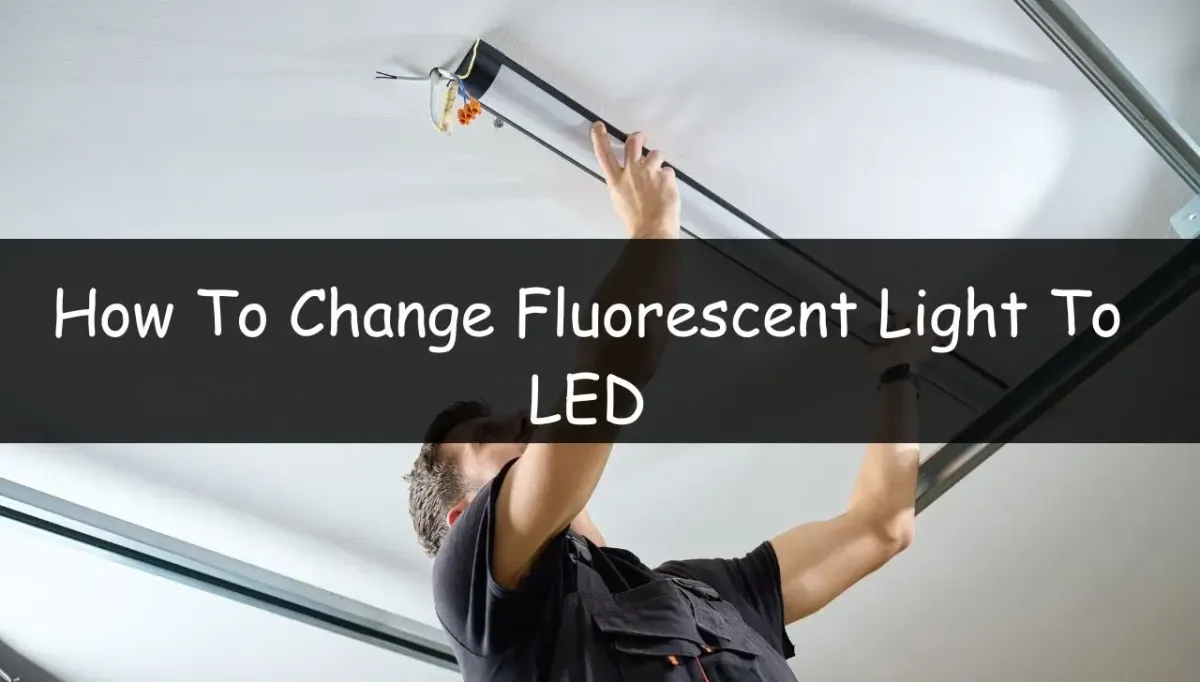
Change a fluorescent light to LED using one of three methods: install a plug-and-play LED tube (Type A) that works with the existing ballast, wire a ballast-bypass LED tube (Type B) directly to line voltage, or replace the entire fixture with a new LED unit. Type A is the fastest - just swap the tube with no rewiring. Type B is the most efficient long-term because it eliminates the ballast, which wastes 3-8 watts and is a future failure point. Complete fixture replacement gives the best light quality and aesthetics but costs the most upfront.
The conversion saves 40-60% on energy costs, eliminates mercury, and provides instant-on light with no warm-up delay. Most conversions pay for themselves within 6-12 months through electricity savings in a commercial setting running lights 10+ hours per day.
Method 1: Plug-and-Play (Type A) LED Tube
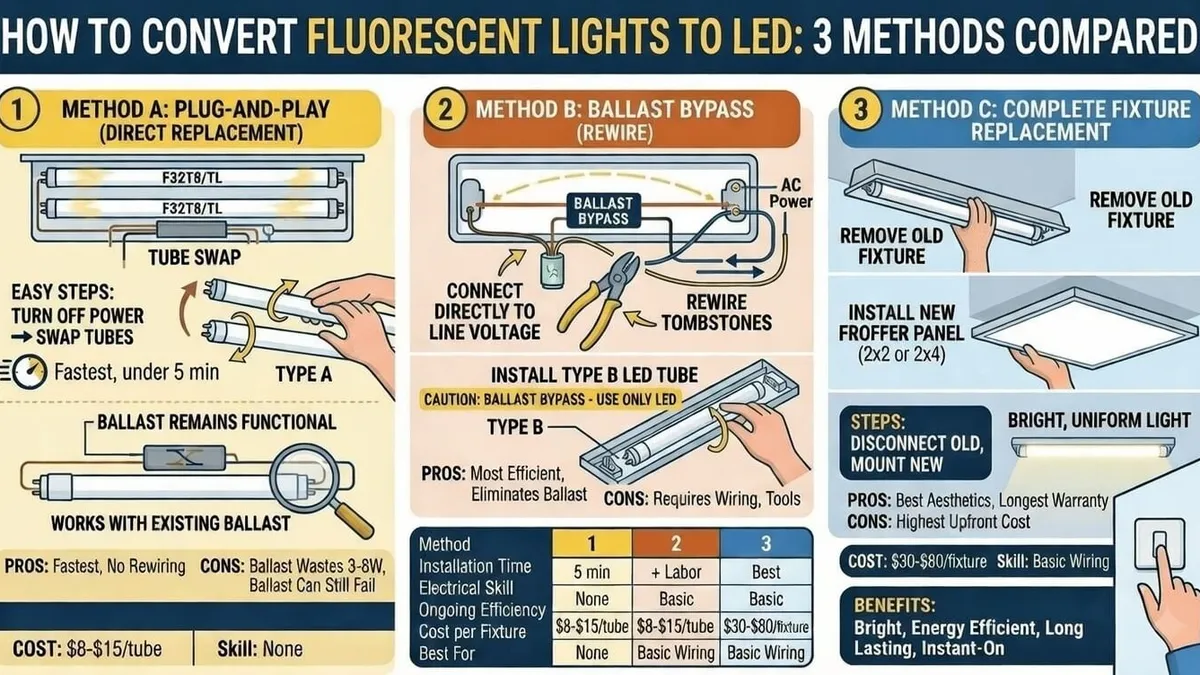
Type A LED tubes work with the existing fluorescent ballast. Turn off the power. Remove the old fluorescent tube by rotating it 90 degrees and sliding it out of the tombstone sockets. Insert the new Type A LED tube the same way - slide the pins into the sockets and rotate 90 degrees to lock. Turn the power back on. The existing ballast powers the LED tube without any wiring changes.
This method takes under 5 minutes per tube and requires no tools or electrical knowledge. The limitation is ballast compatibility - Type A tubes only work with specific ballast types (usually instant-start electronic ballasts). Check the LED tube's compatibility list against the ballast model number printed on the ballast label inside the fixture. If the ballast is magnetic (old style) or not on the compatibility list, use Type B instead.
The other downside is that the ballast continues to consume 3-8 watts of electricity and will eventually fail, requiring either ballast replacement or conversion to Type B. In a commercial setting with hundreds of fixtures, these ballast watts add up. For a quick, low-effort conversion in a home or small office, Type A is perfectly adequate.
Method 2: Ballast Bypass (Type B) LED Tube
Step 1: Turn off the circuit breaker and verify power is off with a non-contact voltage tester. Remove the fluorescent tubes and the fixture cover.
Step 2: Locate the ballast inside the fixture. It is a rectangular metal or plastic box, usually 8-12 inches long, mounted between the tombstone sockets. Cut or disconnect all wires going from the ballast to the tombstone sockets. You can either remove the ballast entirely or leave it in place disconnected - removing it reduces the fixture weight slightly.
Step 3: Identify the incoming power wires (typically black hot and white neutral) and connect them directly to the tombstone sockets. For single-end powered Type B tubes, connect both the hot and neutral wires to the tombstones on one end of the fixture. For double-end powered tubes, connect hot to one end and neutral to the other. The LED tube's packaging specifies which wiring configuration it requires.
Step 4: Secure all wire connections with wire nuts and wrap with electrical tape. Apply a "Caution: Ballast Bypassed - Use Only LED Tubes" label to the fixture. This warning prevents someone from accidentally installing a fluorescent tube in the future, which could cause a short circuit without the ballast. Install the Type B LED tube, restore power, and test.
Method 3: Complete Fixture Replacement
If the fluorescent fixture is old, damaged, or you want a cleaner look, replace the entire unit with a modern LED fixture. LED troffers (2×2 or 2×4-foot flat panels) are the standard replacement for fluorescent grid ceiling fixtures. LED wraparound fixtures replace surface-mounted fluorescent shop lights. Turn off the breaker, disconnect the old fixture from the junction box wiring, remove the old fixture, mount the new LED fixture, connect the wires (black to black, white to white, ground to ground), and restore power.
performance, slimmest profile, and longest warranty. Modern LED flat panels produce more uniform light distribution than tubes with no visible bright spots or shadows.
Which Method Should You Choose?
Factor Type A (Plug-and-Play) Type B (Ballast Bypass) Full Replacement Installation time 2 minutes per tube 15-20 minutes per fixture 30-45 minutes per fixture Electrical skill needed None Basic wiring Basic wiring Ongoing efficiency Good (ballast wastes 3-8W) Best (no ballast loss) Best Future maintenance Ballast will eventually fail Minimal Cost per fixture $8-$15 $8-$15 + labor $30-$80
Conclusion
Converting fluorescent lights to LED is a simple upgrade that improves energy efficiency, lighting quality, and long-term reliability. Plug-and-play (Type A) tubes offer the quickest installation, ballast-bypass (Type B) tubes provide the best efficiency by eliminating the ballast, and full fixture replacement delivers the most modern appearance and performance. Choosing the right method depends on your budget, installation time, and long-term goals, but any of these options can significantly reduce energy use and maintenance while providing brighter, instant-on lighting.
Frequently Asked Questions
Q1: Can I mix fluorescent and LED tubes in the same fixture?
A: With Type A (plug-and-play) tubes, yes - you can replace one tube at a time while leaving the others fluorescent. The ballast powers both types simultaneously. With Type B (ballast bypass), no - once the ballast is removed, only LED tubes will work in that fixture. Mixing types in a ballast-bypass fixture will leave the fluorescent tube unpowered.
Q2: Will LED tubes work with a magnetic ballast?
A: Most Type A LED tubes are designed for electronic ballasts and are not compatible with older magnetic (core-and-coil) ballasts. Some manufacturers offer "Type A+B" hybrid tubes that work with either ballast type or direct wire. If you have magnetic ballasts, check the LED tube's compatibility list carefully, or choose Type B (ballast bypass) to eliminate the issue entirely.
Q3: Do I need an electrician for the conversion?
A: Type A requires no electrician - it is a tube swap. Type B involves basic wiring (cutting ballast connections and rerouting hot and neutral wires to tombstones), which most handy homeowners can do after watching a tutorial. For commercial buildings or if you are uncomfortable working with wiring, hiring an electrician is recommended. Many commercial electrical contractors offer per-fixture pricing for bulk fluorescent-to-LED conversions.