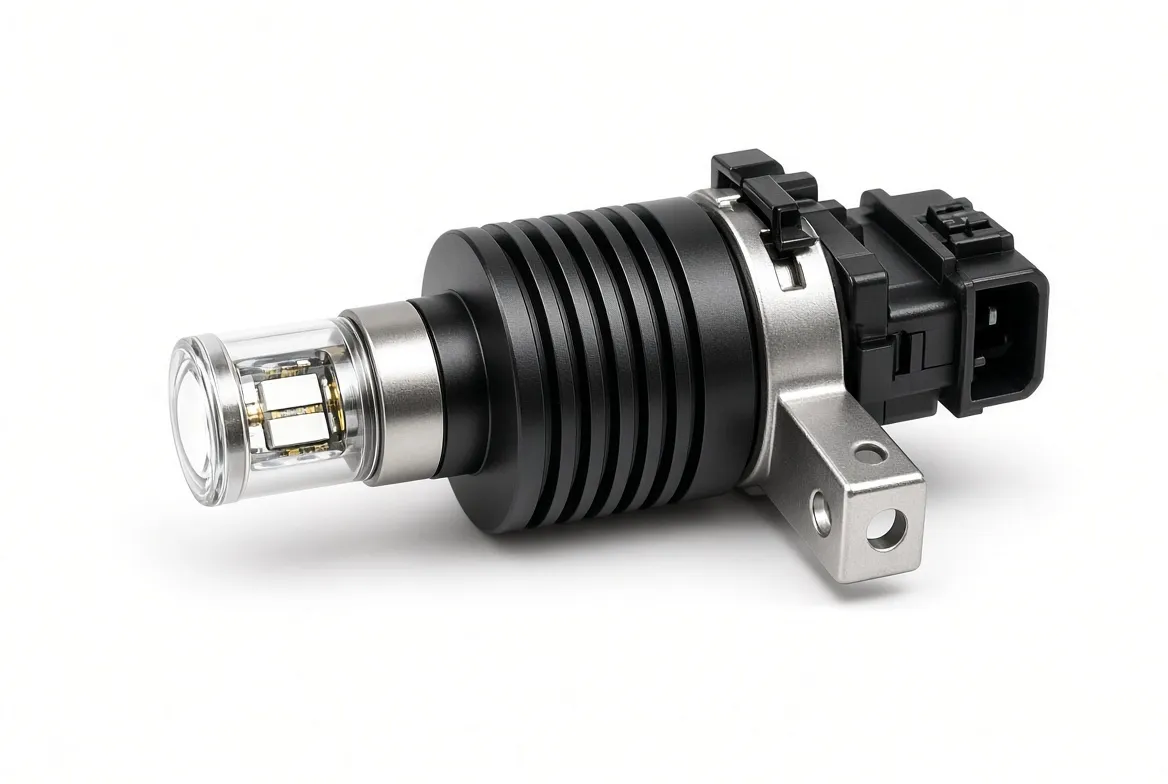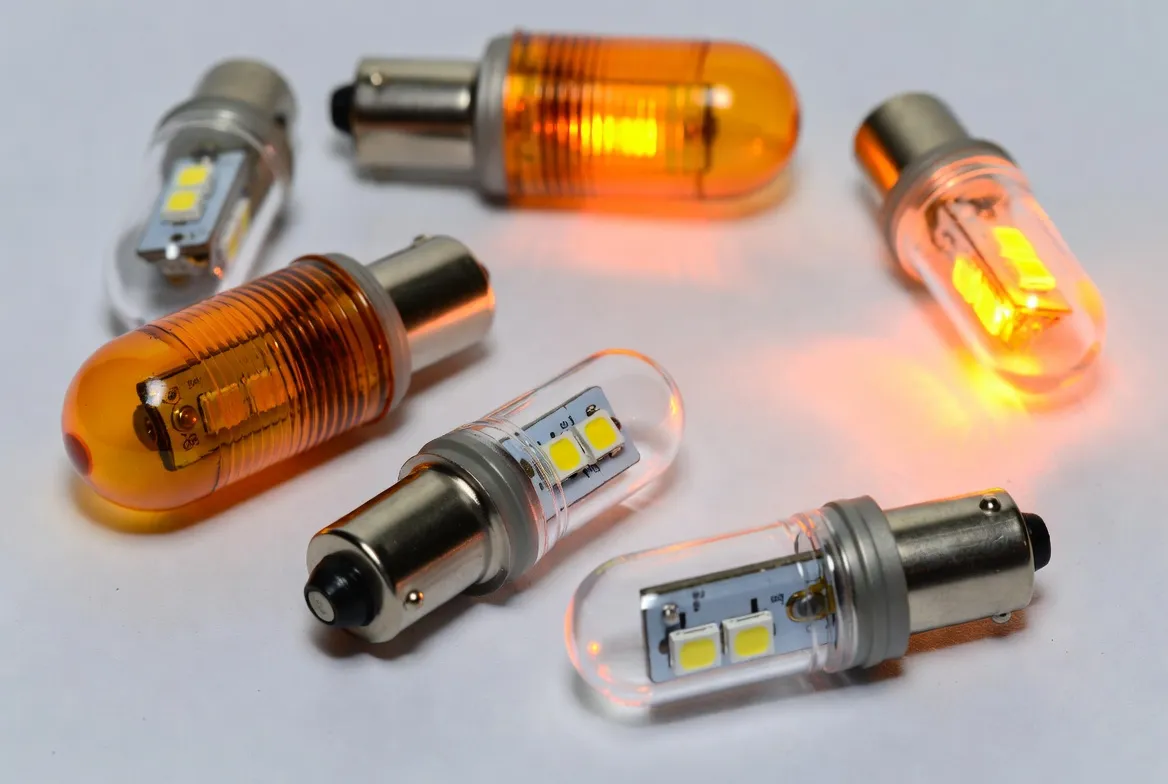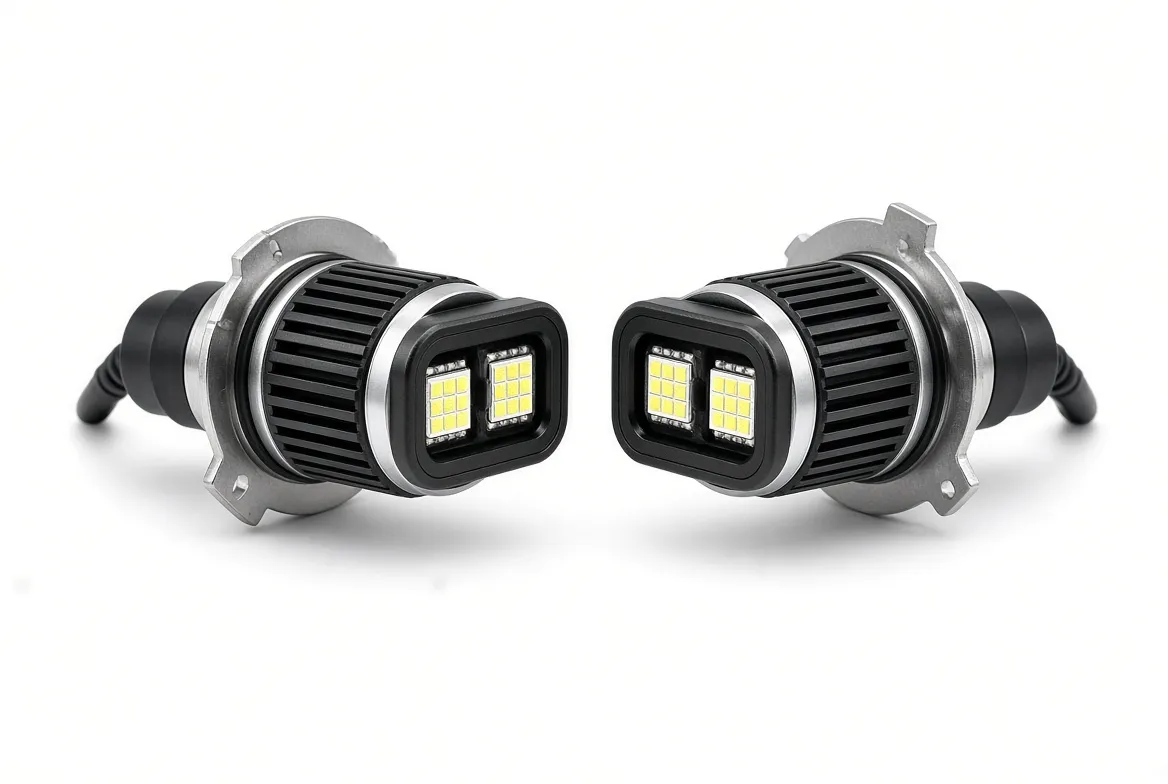
A CANbus LED bulb is a car bulb built to work with a modern vehicle's computer without triggering a warning. It draws or mimics enough power that the car does not think the bulb has failed, so you avoid the dash error, flicker, and radio static that plain LED bulbs often cause.
Here is the part that catches people out: CANbus is not a feature of the bulb at all. It is a system in your car, and once you see what it is actually doing, the flicker and warning lights suddenly make sense.
CANbus LED at a Glance:
CANbus is your car's monitoring network. LEDs use so little power that it reads them as burned out, causing a dash warning or flicker. A CANbus-ready bulb or a decoder fixes it.
What Does CANbus Mean in a Car?
CANbus stands for Controller Area Network bus. It is the communication system that lets your car's computer talk to its parts, including the lights, without a separate wire for each one.
Part of that job is watching each bulb. The computer checks the electrical load on the lighting circuit, and if a bulb burns out, the drop in power tells it to warn you. That safety check is exactly what an LED bulb accidentally sets off.
Why Do LED Bulbs Trigger CANbus Errors?
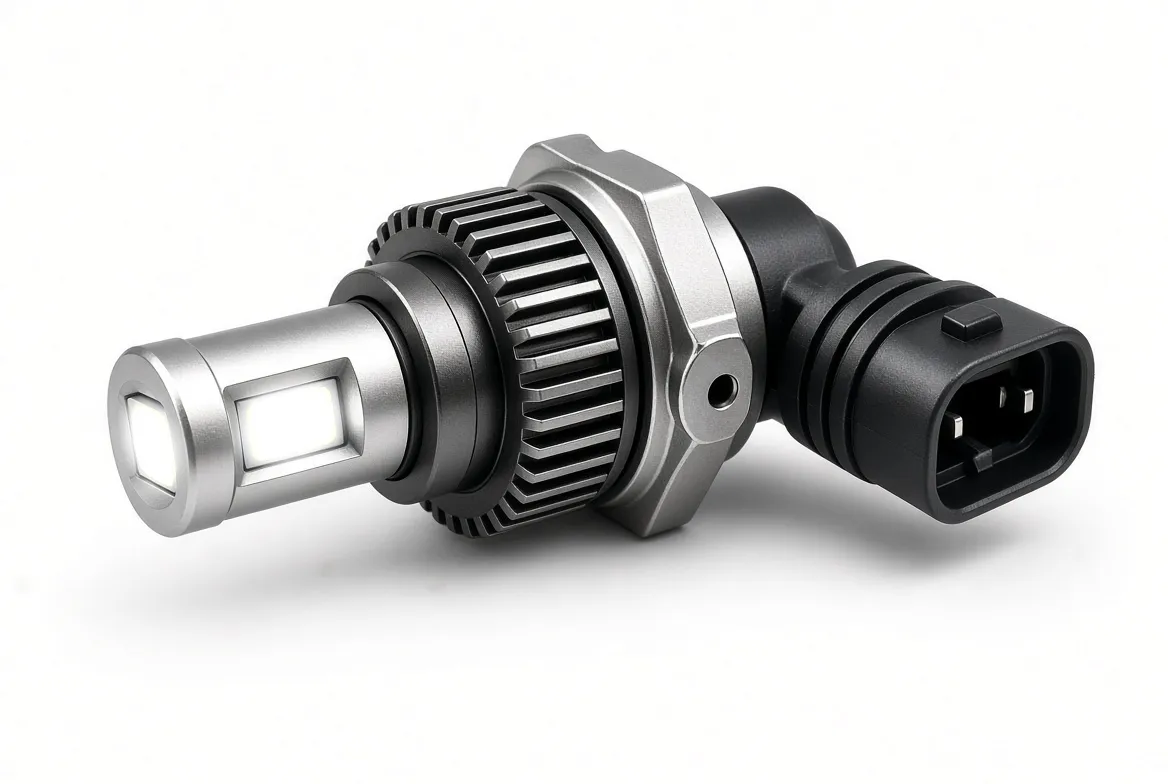
The problem is how little power an LED uses. A halogen bulb might pull 55 watts, while an LED doing the same job pulls only 15 to 20 watts.
To the car's computer, that huge drop in power looks the same as a bulb that has burned out. So it does what it is designed to do and reacts, even though your new bulb is working perfectly.
What You See | Why It Happens |
|---|---|
Dashboard "bulb out" warning | The computer reads the low power as a dead bulb |
Flickering or strobing | The circuit pulses power trying to test the bulb |
Bulb turns off at startup | The system cuts a circuit it thinks has failed |
Radio interference | Electrical noise from a mismatched bulb |
How Does a CANbus LED Bulb Fix This?
A CANbus-ready bulb has extra circuitry built in that either draws a little more power or sends the signal the computer expects. Either way, the car sees a normal, healthy bulb and stays quiet.
This is why bulbs are labeled "CANbus ready" or "error free." They are designed to slip past the car's monitoring so you get plug-and-play LEDs with no warning light. On most vehicles this works with no extra parts.
Do All Cars Need CANbus LED Bulbs?
No, and this is worth checking before you spend more. Many older vehicles, roughly before the mid-2000s, do not monitor bulbs this way, so a standard LED works fine in them.
Newer cars, especially European brands like BMW, Mercedes, Audi, and Volkswagen, are the ones that watch the circuit closely. If your car is newer or shows a bulb warning, a CANbus bulb is the safer choice.
Quick test: Fit a standard LED first. If you get no warning, no flicker, and it stays lit, your car does not need CANbus bulbs. If any of those show up, switch to a CANbus-ready bulb or add a decoder.
What Is a CANbus Decoder?
A CANbus decoder, sometimes called a load resistor or canceller, is a small add-on for when a "CANbus ready" bulb still throws an error. It wires in between the bulb and the socket.
The decoder adds resistance so the circuit draws the power the car expects, canceling the false warning. Some LED bulbs include one in the box, while for others you buy it separately for a few dollars.
CANbus Ready vs Decoder: Which Do You Need?
Option | Best When |
|---|---|
CANbus-ready bulb | Most cars, the simplest plug-and-play fix |
Add a decoder | A CANbus bulb still errors on a sensitive car |
Neither | Older cars that do not monitor bulbs |
Start with a CANbus-ready bulb, since it solves the problem on most vehicles with nothing extra to wire. Keep a decoder as the backup for a stubborn car.
Shopping for bulbs that handle this well? See our guides to the best H11 LED bulbs and the best LED turn signal bulbs, both of which flag CANbus fit.
Is a CANbus LED Bulb Worth It?
For most modern cars, yes. A CANbus-ready bulb is the simplest way to run LEDs without a dash warning, flicker, or radio static, and it costs little more than a standard bulb.
The smart move is to match the bulb to your car. Fit a CANbus-ready bulb on a newer vehicle, keep a decoder handy for a stubborn one, and skip both on an older car that never monitors its bulbs.
(FAQs):
Q1: Does a CANbus LED bulb work on any car?
A: On most, yes, and it does no harm on cars that do not need it. A CANbus-ready bulb works in an older car too, it simply uses the extra circuitry that a non-CANbus car never calls on.
Q2: Will a CANbus bulb hurt a car that does not need one?
A: No. If your car does not monitor bulbs, the CANbus circuitry just goes unused. You may pay a little more than you needed to, but there is no downside to the bulb itself.
Q3: Why does my CANbus bulb still flicker?
A: Some sensitive vehicles need more than a built-in circuit. Adding a separate CANbus decoder between the bulb and socket usually clears the flicker the bulb alone could not.
Q4: Are CANbus and load resistors the same thing?
A: Related but not identical. A load resistor adds power draw to fake a normal bulb. A CANbus decoder does that and can also filter signal errors, so it is the more complete fix on modern cars.