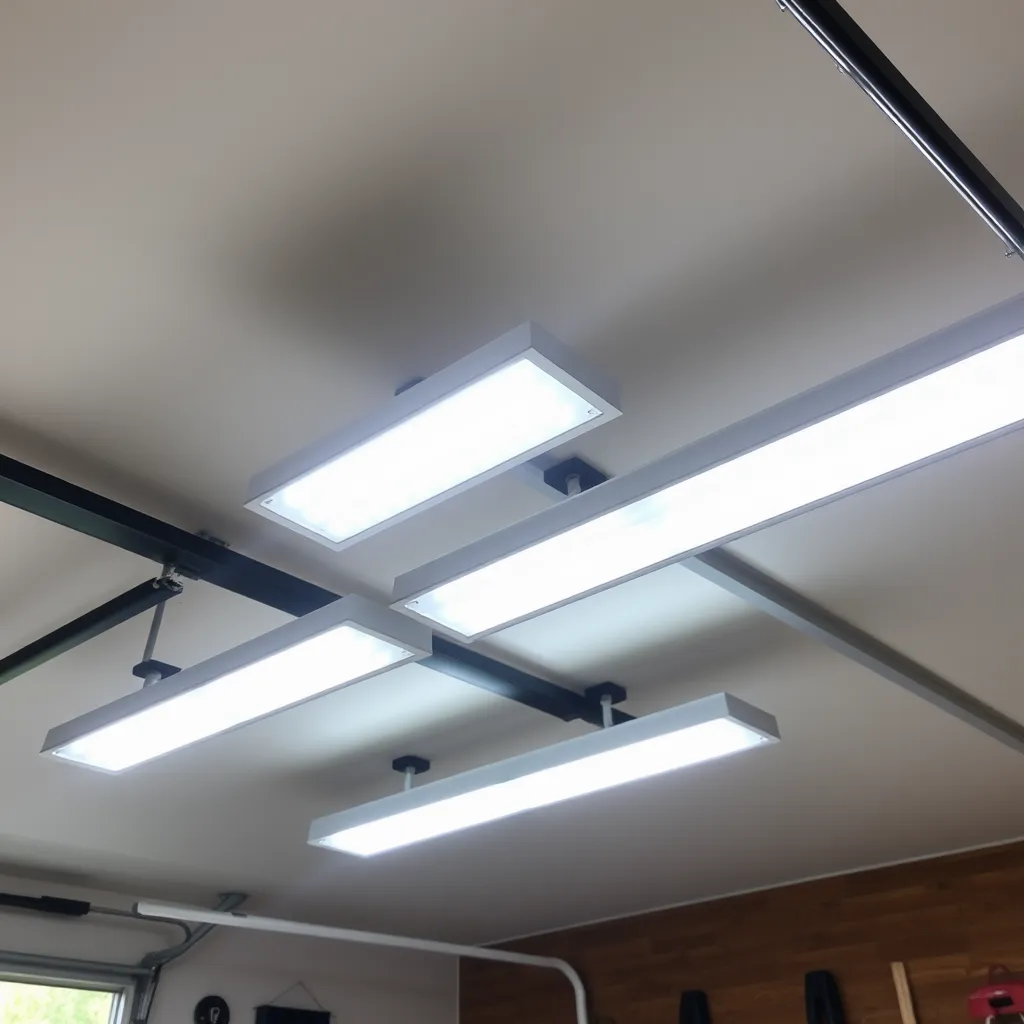
Industrial LED lighting has moved on from just being brighter and cheaper. Five advances now define it: networked smart controls that dim each fixture on its own, efficacy past 200 lumens per watt, tunable-white light for worker wellbeing, Power over Ethernet that runs lights on network cables, and slimmer fixtures built into the building itself.
Together these turn lighting from a dumb utility into a data-driven system that cuts energy 70 to 80% against old HID setups. And one of the five means your lights may soon run on the same cable as your computers, not the electrical panel.
Why This Is More Than Just Brighter Bulbs
The real shift is intelligence, not raw output. Fixtures now sense, dim, schedule, and report on themselves, so a facility spends power only where and when it is needed. That is where the biggest savings and the wellbeing gains come from.
Smart Controls That Manage Every Fixture on Its Own
The biggest change is the jump from simple on/off to networked control. Wireless mesh (Bluetooth mesh, Zigbee, or similar) links every fixture to a central platform, so each light can be dimmed, scheduled, or triggered by its own occupancy and daylight sensors. A 500-fixture warehouse can run each light independently.
The savings stack on top of LED's base efficiency. Occupancy dimming in aisles saves 30 to 40% by dropping to 10% in empty zones and ramping up as workers approach. Daylight harvesting near skylights adds 15 to 25%. Combined with LED's 50 to 60% edge over HID, the total reaches 70 to 80%.
Fixtures That Now Beat 200 Lumens Per Watt
Premium industrial fixtures now top 200 lumens per watt in real installs, up about 30% from the 140 to 160 that was standard a few years ago. Better chips, cooler running, and more efficient drivers drive the gain.
What that means in practice: a 100W fixture now makes the same 20,000 lumens that needed a 150W fixture not long ago, cutting both running cost and heat. If efficacy is new to you, our guide on how many watts LED lights use explains the lumens-per-watt idea.
Tunable White Light Built Around Workers
Tunable-white fixtures shift color temperature from warm 3000K to cool 6500K across the day. In a plant, this supports human-centric lighting, mimicking the natural daylight cycle to keep workers alert and cut fatigue on long shifts.
Cool 5000K to 6500K light in the morning promotes alertness, while warmer 3500K to 4000K later on reduces the harshness that brings on eye strain. Studies link tuned lighting to 15 to 25% less reported fatigue and fewer errors. Tunable fixtures cost 20 to 30% more, but the productivity and safety gains make the case.
Power Over Ethernet: Lights That Run on Network Cables
This is the advance that surprises people. PoE systems deliver both power and data to each fixture over a single Ethernet cable, so a light plugs into a network switch like any other device, no separate high-voltage wiring needed.
It slashes installation labor and gives per-fixture monitoring through the building's IT network. PoE delivers up to 90W per port, plenty for the 30 to 75W fixtures in offices and light industrial spaces. For 100W+ high bays, hybrid setups use PoE for control and sensors while keeping AC for the driver.
The Fixtures Built for Places Lighting Couldn't Go
Fixtures are also shrinking and specializing to fit places old lighting could not go.
Innovation | What It Is | Where It's Used |
|---|---|---|
Linear integrated | LED modules built into ceiling structure | Cleanrooms, food processing |
Ultra-slim high bay | Sub-2-inch fixtures replacing bulky UFO units | Low-clearance warehouses |
Explosion-proof | ATEX/IECEx rated for hazardous areas | Chemical, oil and gas, grain |
Horticultural spectrum | Optimized PAR output for plants | Vertical farms, greenhouses |
Choosing high bays for a facility? Our guides on the best LED warehouse lights and how many high bay lights you need put these advances into practice.
Conclusion:
Industrial LED lighting is now a smart, efficient, worker-focused system. Networked controls, 200+ lumen-per-watt fixtures, tunable white, PoE, and slimmer designs cut energy up to 80%, improve wellbeing, and simplify installs. For most facilities still on HID, the upgrade pays for itself in a few years.
(FAQs):
Q1. What's the ROI on upgrading to smart industrial LED?
A: Usually 1.5 to 3 years for a full HID-to-smart-LED conversion. Energy savings of 60 to 80% lead, followed by lower maintenance and rebates that offset 20 to 40% of fixture cost. Facilities running 16 to 24 hours a day pay back fastest, and most fixtures carry 5 to 10-year warranties.
Q2. Is industrial LED safe for food processing?
A: Yes, when specified right. Look for NSF-listed fixtures with sealed, washdown-rated housings (IP66/IP69K) and shatterproof polycarbonate lenses instead of glass. USDA and FDA inspectors check for these, so always specify food-safe rated fixtures where food is processed or stored.
Q3. How does industrial LED differ from home LED?
A: Same core tech, very different scale. Industrial fixtures handle dust, moisture, and vibration, mount at 15 to 50 feet, run 16 to 24 hours a day, and use 100 to 500W modules against 8 to 15W at home. They also tie into building management systems.