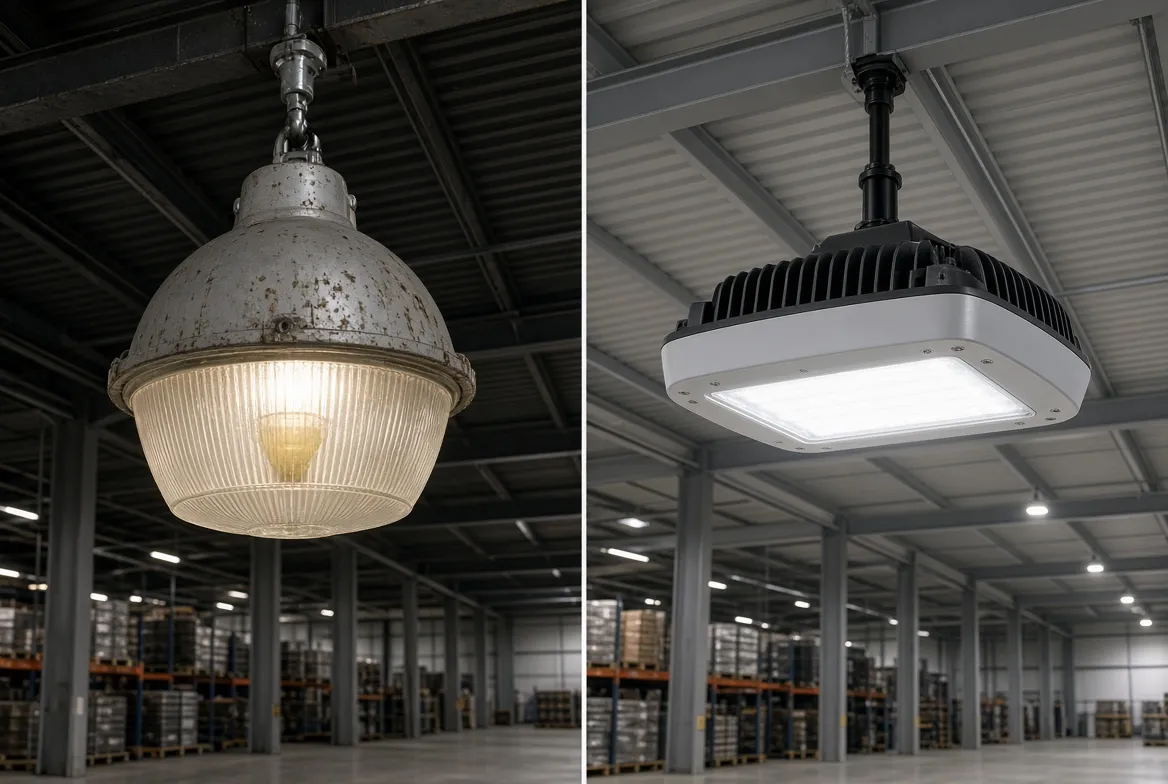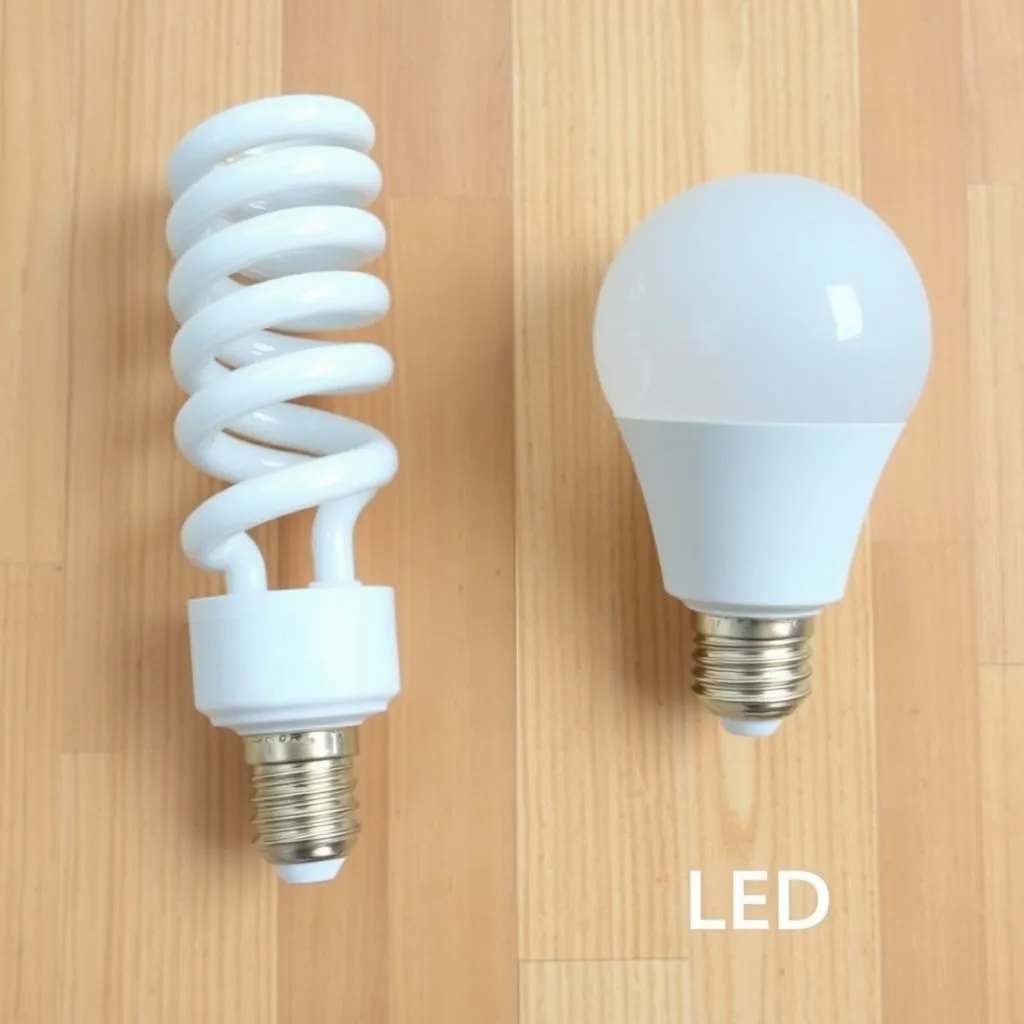
The lighting landscape has shifted fundamentally over the last decade. While fluorescent technology was once the gold standard for energy-efficient commercial and residential lighting, it has been largely superseded by solid-state lighting. Understanding the nuances of fluorescent lights vs LED bulbs is no longer just about picking a "greener" option; it is about navigating a market where older technologies are being phased out by regulation and outperformed by every technical metric.
Fluorescent lighting works by passing an electric current through mercury vapor, which creates ultraviolet (UV) light. This UV light then hits a phosphor coating on the inside of the bulb, causing it to glow. This process is inherently more efficient than heating a filament (incandescent), but it comes with physical limitations, such as warm-up times and the presence of toxic materials. In contrast, LEDs (Light Emitting Diodes) produce light by moving electrons through a semiconductor material-a process that is direct, instant, and significantly more controllable.
Technical Performance and Efficacy Specs
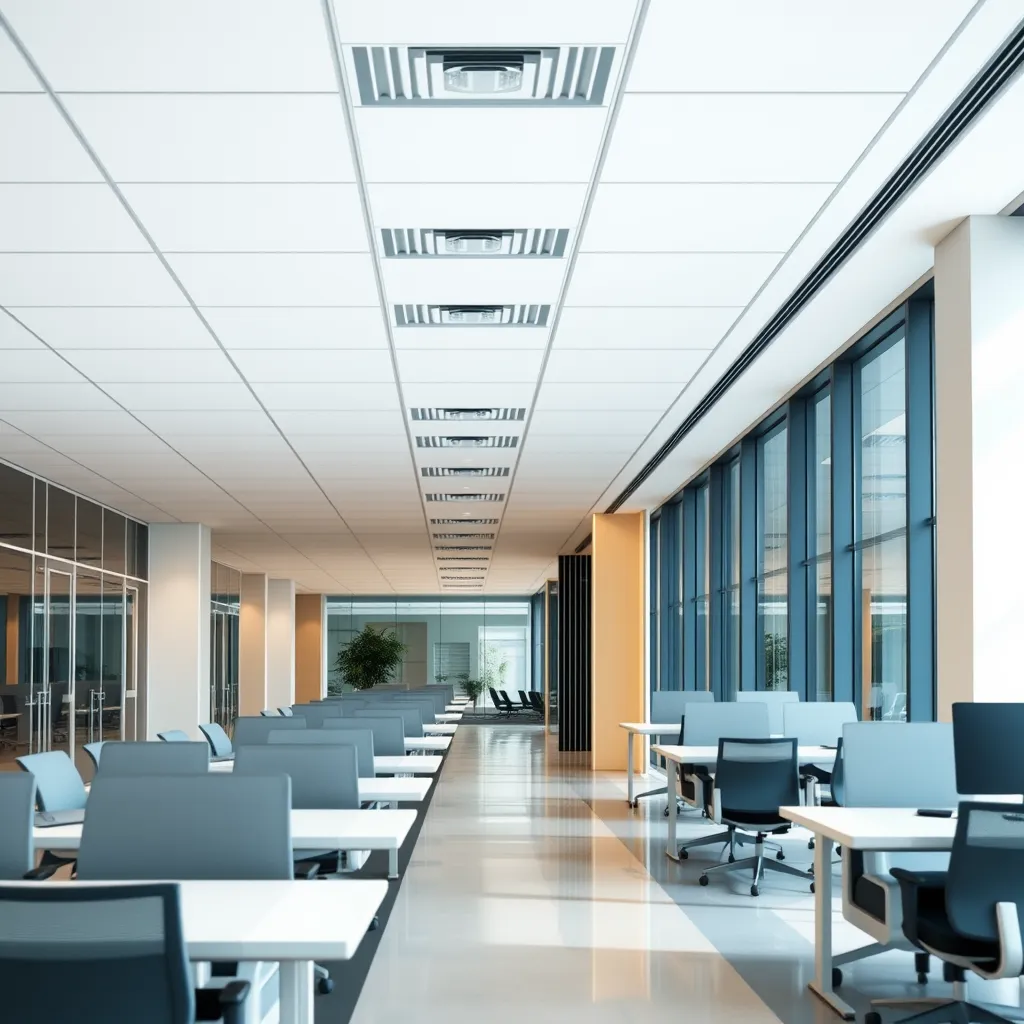
When comparing these two technologies, luminous efficacy-the measure of how much light (lumens) is produced per watt of electricity consumed-is the most critical metric. While a high-quality T8 fluorescent tube might achieve 80 to 100 lumens per watt, modern LED tubes frequently exceed 150 lumens per watt, with some industrial models reaching 200 lm/W.
Metric | LED Technology | CFL (Compact Fluorescent) | T8/T12 Linear Fluorescent |
|---|---|---|---|
Luminous Efficacy | 80-200 lm/W | 50-70 lm/W | 80-100 lm/W |
Operational Lifespan | 25,000-75,000 hours | 8,000-12,000 hours | 20,000-30,000 hours |
Color Rendering (CRI) | 80-98 (Excellent) | 80-85 (Average) | 75-85 (Fair) |
Startup Time | Instant (<0.1s) | 30s-3m (Warm-up) | 1s-5s (Flicker start) |
Mercury Content | None | 1mg-5mg | 3mg-15mg |
Beam Angle | Directional (120°-180°) | Omnidirectional (360°) | Omnidirectional (360°) |
The beam angle is a frequently overlooked advantage of LED technology. Fluorescent tubes emit light in 360 degrees. In a typical ceiling fixture, half of that light is directed upward into the fixture housing. Even with high-quality reflectors, a significant portion of that light is lost to "luminaire dirt depreciation" or internal absorption. LEDs are inherently directional, focusing their light output downward where it is needed, which increases the "delivered lumens" even if the raw lumen count appears similar to a fluorescent tube.
Energy Consumption and Real-World Costs
To understand the financial impact, consider a standard commercial office with 50 fixtures, each containing three 4-foot T8 fluorescent tubes. A typical T8 tube consumes 32 watts, but the ballast (the device that regulates current to the tubes) adds another 10% to 15% to the total draw. This brings the total fixture consumption to approximately 108 watts.
Replacing these with LED tubes (Type B direct-wire) reduces the consumption to roughly 15 watts per tube, or 45 watts per fixture. In this scenario, the office saves 63 watts per fixture. If the lights run for 10 hours a day, 250 days a year, at an average commercial rate of $0.14/kWh, the annual savings exceed $1,100. Because the LEDs last two to three times longer, the facility also saves thousands in labor costs associated with "re-lamping" and ballast replacement.
In residential settings, the savings are smaller per bulb but equally significant over time. A 13W CFL bulb replaced by an 8.5W LED saves 4.5 watts. While this sounds negligible, LEDs are immune to the "switching cycle" degradation that kills CFLs. A CFL used in a bathroom or closet where it is turned on and off frequently will often fail in less than a year, whereas an LED will maintain its lifespan regardless of how often it is toggled.
The Ballast Problem and Retrofit Strategies
One of the most complex aspects of moving away from fluorescent lighting is the ballast. Fluorescent tubes cannot connect directly to building power; they require a ballast to provide a high-voltage kick to start the arc and then limit the current. When switching to LED tubes, you have three primary options:
Type A (Plug and Play): These tubes work with your existing fluorescent ballast. They are the easiest to install but the least efficient, as the ballast continues to draw power and remains a point of failure. If the ballast dies, the LED tube will not light.
Type B (Direct Wire/Ballast Bypass): This is the preferred professional method. The ballast is removed or bypassed, and the building's line voltage is wired directly to the sockets (tombstones). This eliminates ballast maintenance and energy waste entirely.
Type C (External Driver): These use a dedicated LED driver instead of a ballast. This is the most efficient and offers the best dimming performance, but it is the most expensive and labor-intensive to install.
Common Mistake: Many users buy Type B tubes but forget to check if their existing "tombstones" (the plastic ends that hold the tube) are shunted or non-shunted. Using the wrong type can lead to a short circuit or a fixture that simply won't fire.
Light Quality, Flicker, and Health
Fluorescent lights are notorious for two things: a "cold" greenish tint and a subtle flicker. The flicker occurs because fluorescent lights on older magnetic ballasts pulse at 120 times per second (twice the 60Hz frequency of the power grid). While often invisible to the naked eye, this stroboscopic effect is a documented cause of eye strain, headaches, and fatigue in office environments.
Modern LEDs operate on Direct Current (DC). The driver converts the AC power from the wall into a steady stream of DC, effectively eliminating flicker. Furthermore, the Color Rendering Index (CRI) of LEDs is significantly higher. While standard fluorescents often have a CRI in the 70s or low 80s, making skin tones look sallow and colors look muted, high-end LEDs can reach a CRI of 95 or higher, mimicking the full spectrum of natural sunlight.
Environmental Hazards and Mercury Disposal
Every fluorescent tube and CFL contains mercury vapor. While the amount in a single bulb is small (roughly the size of a ballpoint pen tip), it is highly toxic. If a fluorescent tube breaks in a home or office, the EPA recommends immediate evacuation of the room and specific cleanup protocols to avoid inhaling mercury vapor.
LEDs contain no mercury. They are constructed primarily of plastic, aluminum, and trace amounts of electronic components. While they should still be recycled as e-waste to recover the metals, they do not pose an immediate respiratory hazard if broken. This makes them significantly safer for schools, hospitals, and homes with pets or children.
Performance in Extreme Temperatures
Fluorescent lights are chemically dependent on temperature. In cold environments like garages, walk-in freezers, or outdoor signage, the mercury vapor inside a fluorescent tube struggles to ionize. This results in "dim starts," where the light may take several minutes to reach full brightness, or it may flicker incessantly and never reach full output.
LEDs are the opposite. They are solid-state electronics, which actually prefer cold environments. Heat is the primary enemy of LED lifespan, as it degrades the semiconductor and the driver components. In a cold garage, an LED will turn on instantly at 100% brightness and likely last longer than it would in a hot attic. This makes the transition to LED a "no-brainer" for any unconditioned space.
The Global Phase-Out and Availability
If you have noticed that fluorescent tubes are getting harder to find at local hardware stores, it isn't a coincidence. Governments worldwide are aggressively phasing out fluorescent technology. The European Union banned the sale of most T5 and T8 fluorescent lamps in 2023. In the United States, several states including California and Vermont have passed similar bans, and federal Department of Energy (DOE) rules have significantly raised the efficiency floor, effectively making standard fluorescent production illegal for manufacturers.
As production scales down, the price of the remaining fluorescent stock is rising. Conversely, LED prices have plummeted. Replacing a fluorescent fixture is no longer just an environmental choice; it is a practical necessity to avoid being stranded with unmaintainable lighting systems.
Conclusion:
The comparison between fluorescent and LED lighting is no longer a close contest. LEDs outperform fluorescent technology on nearly every measurable axis: higher efficacy, longer lifespan, superior color rendering, instant startup, and flicker-free operation. They contain no mercury, thrive in cold environments, and adapt to frequent switching without degradation. With governments worldwide phasing out fluorescent lamps and prices for remaining stock climbing, the transition has shifted from an environmental preference to a practical necessity. For any fixture running more than a few hours daily, the payback period of 12 to 24 months makes upgrading to LED a clear, financially sound decision.
Frequently Asked Questions:
Q1: Can I use a dimmer switch with my fluorescent lights?
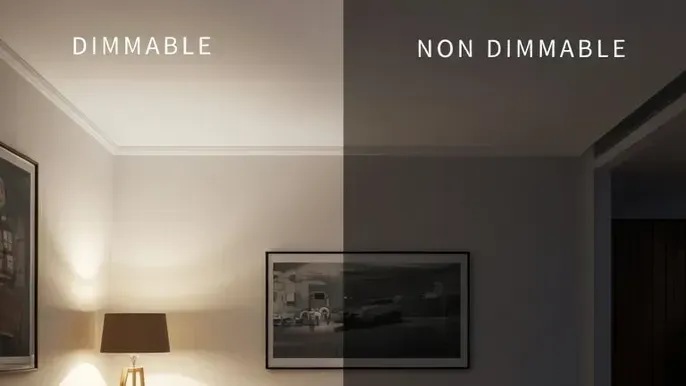
A: Standard fluorescent lights cannot be dimmed. To dim a fluorescent fixture, you must have a specific "dimming ballast" and a compatible 0-10V dimmer switch. This is a costly and complex setup. Most LED bulbs and tubes are available in dimmable versions that work with standard TRIAC or LED-rated dimmers, providing a much smoother 0-100% range without buzzing.
Q2: Do LED tubes really last 50,000 hours?
A: The LED chips themselves often last 50,000 to 100,000 hours. However, the driver (the internal power supply) is usually the first component to fail. In high-quality products, you can expect 10-15 years of use in a typical home. Cheap, no-name LED bulbs often fail prematurely due to poor heat management or low-quality capacitors in the driver.
Q3: What is the difference between "Warm White" and "Cool White" in LEDs?
A: This refers to Color Temperature, measured in Kelvin (K). Fluorescents were often "Cool White" (4100K) or "Daylight" (6500K). LEDs allow you to choose precisely:
2700K-3000K: For a cozy, yellowish glow (ideal for bedrooms).
4000K: For a neutral white (ideal for kitchens and offices).
5000K+: For a bluish daylight (ideal for garages and workshops).
Q4: Is it worth replacing a fluorescent fixture that still works?
A: If the light is used for more than 3 hours a day, the answer is usually yes. The energy savings and the avoidance of future ballast failure typically result in a "payback period" of 12 to 24 months. Additionally, the improved light quality and instant-on capability provide immediate quality-of-life benefits.