Yes, you should switch from halogen to LED in almost every situation - but it pays to do it the smart way. LEDs use 70-80% less electricity, last 15 to 25 times longer, and run cool enough to touch, all while matching the brightness of the halogens you're replacing. The catch is that a cheap, poorly chosen LED can flicker on your old dimmer or wash out colors, so the switch is only as good as the bulbs you pick. This guide gives you the honest pros and cons so you can decide what to replace, what to buy, and the handful of cases where halogen still earns its place.
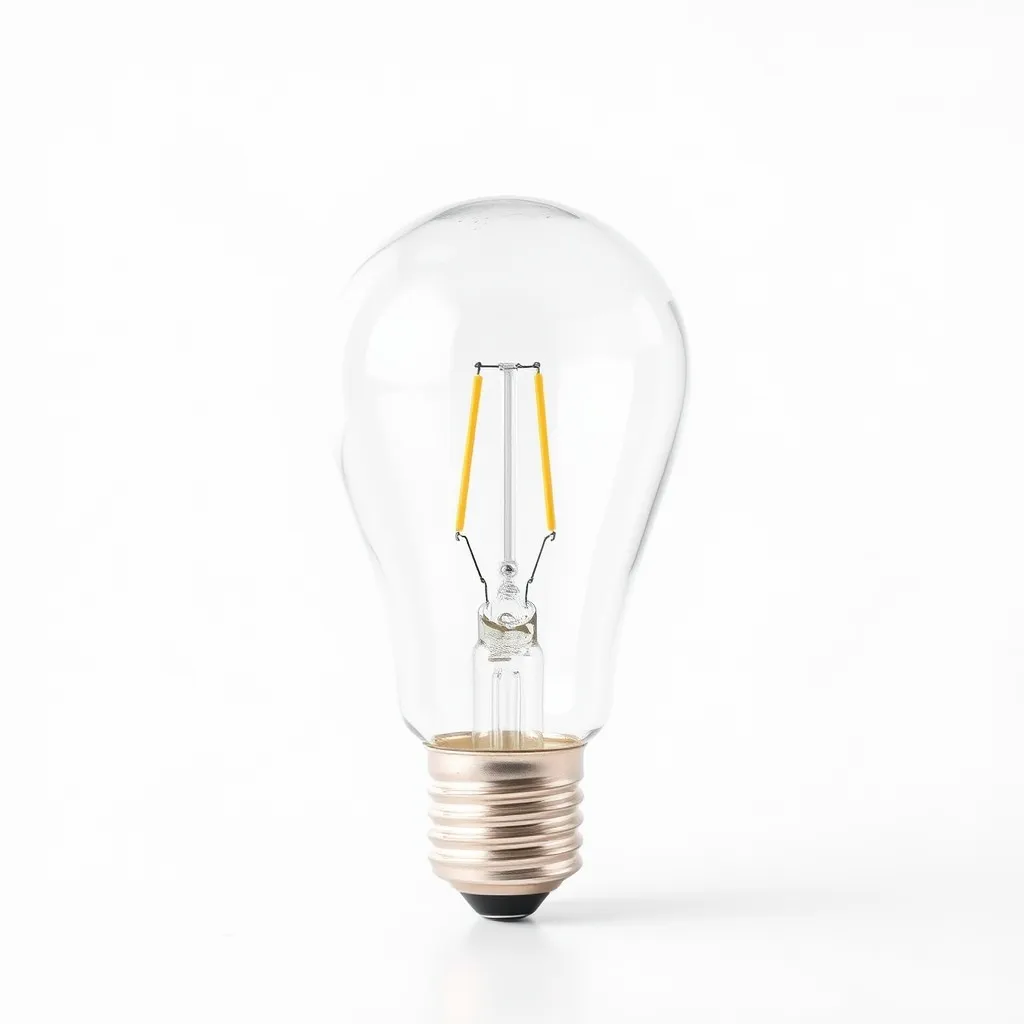
First, the one-line difference: a halogen bulb heats a tungsten filament inside a quartz capsule filled with halogen gas (it's a refined version of the old incandescent bulb), while an LED uses a semiconductor chip that turns electricity straight into light. That single difference is why LEDs are so much more efficient, cooler, and longer-lasting.
Quick Comparison
Feature | Halogen | LED |
|---|---|---|
Efficiency | 15-25 lumens/watt | 80-150 lumens/watt |
Lifespan | 2,000-4,000 hours | 15,000-50,000 hours |
Color rendering (CRI) | 100 (perfect) | 80-98 (varies by quality) |
Color temperature | 2,800-3,200K (warm only) | 2,700-6,500K (your choice) |
Surface temperature | 250-500°C | 30-60°C |
Dimmable | Yes (almost any dimmer) | Yes (compatible dimmers only) |
Replaces a 50W halogen with | 50W | 7-10W |
The Pros (Why LED Wins for Almost Everyone)
1. It slashes your electricity bill.
Halogens dump 80-85% of their energy out as heat instead of light, managing just 15-25 lumens per watt. LEDs hit 80-150 lumens per watt - roughly four to eight times more efficient. A 50W halogen downlight puts out about 700 lumens; an LED makes the same 700 lumens on just 7-10 watts. Picture a kitchen with six recessed halogen downlights running 5 hours a day: that's about $8.76 a month in electricity. The LED equivalent runs about $1.46 a month. That's $7.30 saved every month from one room, or roughly $87 a year.
2. The savings add up fast across a whole house.
A typical home has 15-25 halogen spots and downlights pulling 35-75 watts each. Swap them all for LED and you cut your lighting electricity by 70-80%. For a home loaded with halogen track lighting, recessed cans, and landscape fixtures, that can realistically mean $200-$400 a year in electricity alone - before you count what you save on replacement bulbs. (The U.S. Department of Energy estimates the switch saves the average household around $100 a year, and far more for halogen-heavy homes.)
3. You stop changing bulbs.
Halogens last 2,000-4,000 hours - about one to two years at 5 hours a day. LEDs last 15,000-50,000 hours, or 8 to 27 years at the same usage. Over a single LED's life you'd replace a halogen 6 to 12 times, spending $30-$96 on bulbs you no longer have to buy - and no more dragging a ladder out for that one awkward recessed fixture.
4. They run cool and safe.
A halogen capsule reaches 250-500°C (480-930°F) - hot enough to burn skin on contact and scorch or ignite anything nearby. Curtains brushing a halogen lamp, insulation packed against a recessed can, vinyl trim next to an outdoor fixture: all real fire risks. LEDs run at 30-60°C (85-140°F), which quietly removes those hazards.
5. They lighten your cooling load too.
Ten 50W halogen downlights pump out 500 watts of heat - basically a small space heater running in your ceiling. Replace them with 10W LEDs and that heat load drops to 100 watts. In a warm climate or through summer, that's less work for your air conditioner, which can add another 15-25% on top of the direct lighting savings (a rough estimate, but a real and often-forgotten one).
6. You finally get to choose your light.
Halogen only does warm white (2,800-3,200K). LED lets you pick anything from cozy 2,700K to daylight 6,500K, so you can match a reading nook, a kitchen, and a garage each to what actually suits them.
The Cons (Where Halogen Still Holds Up)
1. Halogen still wins on pure color accuracy.
With a CRI of 100, halogen renders color exactly as sunlight does. That's why art galleries, jewelry cases, photo studios, and high-end retail still reach for it. Good news: premium LEDs now hit CRI 93-98, which is indistinguishable from halogen for cooking, makeup, and almost everything in a home. The fix is simple - when color matters, buy LEDs rated CRI 90+. They usually cost only $1-$3 more per bulb.
2. Dimming can be fussy.
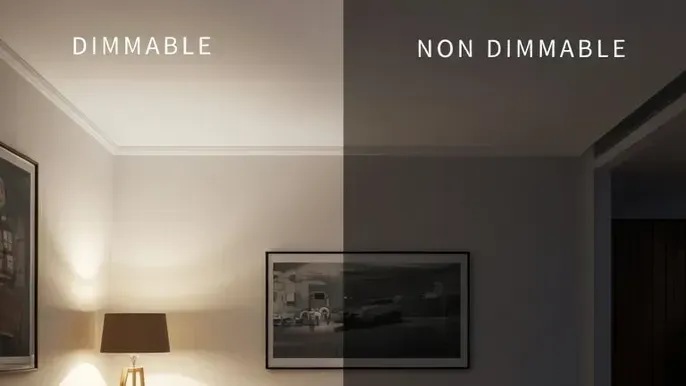
Halogen works smoothly with nearly any dimmer ever made, top to bottom, no flicker. LEDs are pickier - an old leading-edge (TRIAC) dimmer built for halogen often makes them flicker, buzz, or refuse to dim properly. The fix: either buy LEDs tested against your exact dimmer model (check the manufacturer's compatibility list) or swap in an LED-rated dimmer for $15-$30. A one-time cost the energy savings repay quickly.
3. The upfront cost is higher.
A halogen bulb is a couple of dollars; a good LED costs more. You make it back through lower bills and a decade-plus without replacements, but the first purchase does sting more.
4. Low-voltage setups can need extra work.
Line-voltage halogens (GU10, E26) are a straight bulb swap. But low-voltage types (MR16 12V, G4 12V) often run off a magnetic transformer that needs a minimum load - and an LED's tiny wattage may not meet it, causing flicker or a no-start. You may need to replace that transformer with an LED-compatible driver. Electronic transformers tend to play nicer with LED than magnetic ones.
5. That halogen "sparkle" is hard to copy.
Halogen is a tiny, intense point source, which makes glass and polished metal shimmer in a way some designers love. Premium LEDs with good beam optics get very close now, but if that specific crisp sparkle is the whole point of a fixture, halogen still has a slight edge.
6. Cheap LEDs undercut the whole deal.
Budget LEDs (CRI 80-85) render reds and warm tones noticeably flatter than halogen, and bargain bulbs are likelier to flicker or die early. The "LED is worse" complaints usually trace back to the cheapest bulbs. Spend a little more and the gap mostly vanishes.
Can You Just Swap the Bulbs?
In most cases, yes. LED replacements exist for every common halogen base - GU10, MR16, G4, G9, E26/E27, PAR30/PAR38. For line-voltage fittings (GU10, E26), it's a direct swap with nothing else to change. For low-voltage fittings (MR16, G4), check whether your existing transformer is happy driving an LED load, since many magnetic transformers aren't. And on any dimmer circuit, confirm bulb-and-dimmer compatibility before you buy a dozen of them. Your existing fixtures don't need replacing - only the bulbs.
Who Should Switch (and Who Might Wait)?
Switch now if you:
Want to cut your electricity bill and stop replacing bulbs every year or two.
Have hard-to-reach recessed or ceiling fixtures you'd rather not revisit.
Care about safety - kids' rooms, lamps near fabric, outdoor fixtures near wood or vinyl.
Want control over color temperature in different rooms.
Live somewhere warm where the extra heat from halogen fights your air conditioning.
You might hold off (or buy carefully) if you:
Run a gallery, studio, or display where CRI 100 is non-negotiable - though CRI 95+ LEDs likely meet your needs.
Have a tricky existing dimmer or low-voltage transformer and aren't ready to swap it yet.
Specifically want halogen's point-source sparkle for a feature fixture.
Conclusion
For almost everyone, switching from halogen to LED is one of the easiest money-savers in a home: lower bills, no more bulb changes, far less heat, and your pick of color. Halogen still has a narrow lane - top-tier color work and a certain sparkle - but even that gap keeps closing as premium LEDs improve. Do it right (buy CRI 90+ where color matters, check your dimmers and transformers, and skip the bargain-bin bulbs) and you'll barely notice the change in light quality while you very much notice the change in your electricity bill.
Frequently Asked Questions
Q1: Can I replace halogen bulbs with LED directly?
A: Usually, yes. LED versions exist for every common base. For line-voltage halogens (GU10, E26) it's a straight swap. For low-voltage ones (MR16, G4), you may need to replace a magnetic transformer with an LED-compatible driver, since LED's low wattage can leave a magnetic transformer below its minimum load and cause flickering.
Q2: Why do some people still prefer halogen?
A: Mainly its perfect CRI 100 color rendering, its crisp sparkling point-source beam, its no-fuss dimming, and its familiar warm glow. Lighting designers in museums, hospitality, and luxury retail sometimes still specify it. But as premium LEDs reach CRI 98 with better optics, those reasons keep shrinking.
Q3: Are halogen bulbs being phased out?
A: Yes. The EU banned most halogen bulbs on September 1, 2018, and the U.S. brought in a 45-lumens-per-watt minimum efficiency standard with full retail enforcement from August 1, 2023 - a bar most halogens can't clear. A few specialty types (certain MR16, G4, and G9 bulbs) are still around, but the direction is clear. Your existing fixtures keep working with LED replacements, so no fixture changes are needed.
Q4: Will LED save me money even though it costs more upfront?
A: Yes. A single LED outlasts 6 to 12 halogens and uses about a fifth of the power, so it pays back its higher price within months in a frequently used fixture and saves money for years afterward - the only real variable is buying a quality bulb and a compatible dimmer so it performs as intended.