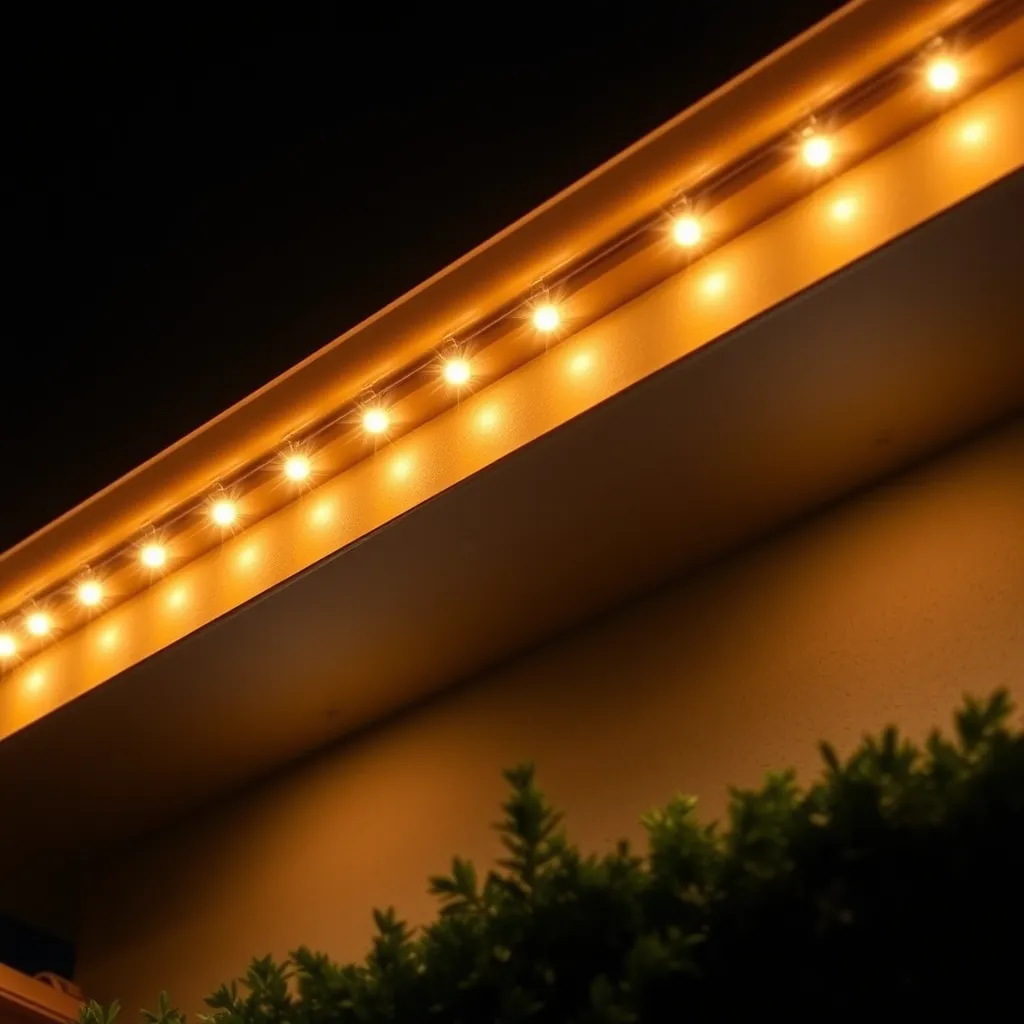
100 feet of LED lights equals approximately 30.5 meters or 1,200 inches. That length is enough to wrap a standard 7-foot Christmas tree 15-20 times, outline the entire roofline of a 2,000 sq ft single-story home, border three to four average-sized rooms with LED strip lights, or span roughly one-third of a football field. Most LED string light products are sold in 33-foot (10m), 50-foot (15m), or 100-foot (30m) rolls, so 100 feet is the longest standard commercial length available without connecting multiple strands.
What Can You Cover With 100 Feet?
Application | Coverage with 100 ft | Notes |
|---|---|---|
Christmas tree wrap | 15-20 wraps on a 7 ft tree | Professional-density look |
Roofline outline | Full roofline on most homes | Covers ~180 linear ft of roofline on 1,500-2,000 sq ft home |
Room perimeter (strip lights) | 3-4 average rooms (12×12 ft) | 48 ft perimeter per room |
Deck or patio railing | Full border on a large deck | Most decks have 30-60 ft of railing |
Outdoor string light canopy | 5-6 parallel runs across a 20 ft patio | Spaced 3-4 ft apart for coverage |
Fence line | 100 linear ft of fencing | One side of a typical backyard |
100 Feet of LED String Lights vs LED Strip Lights
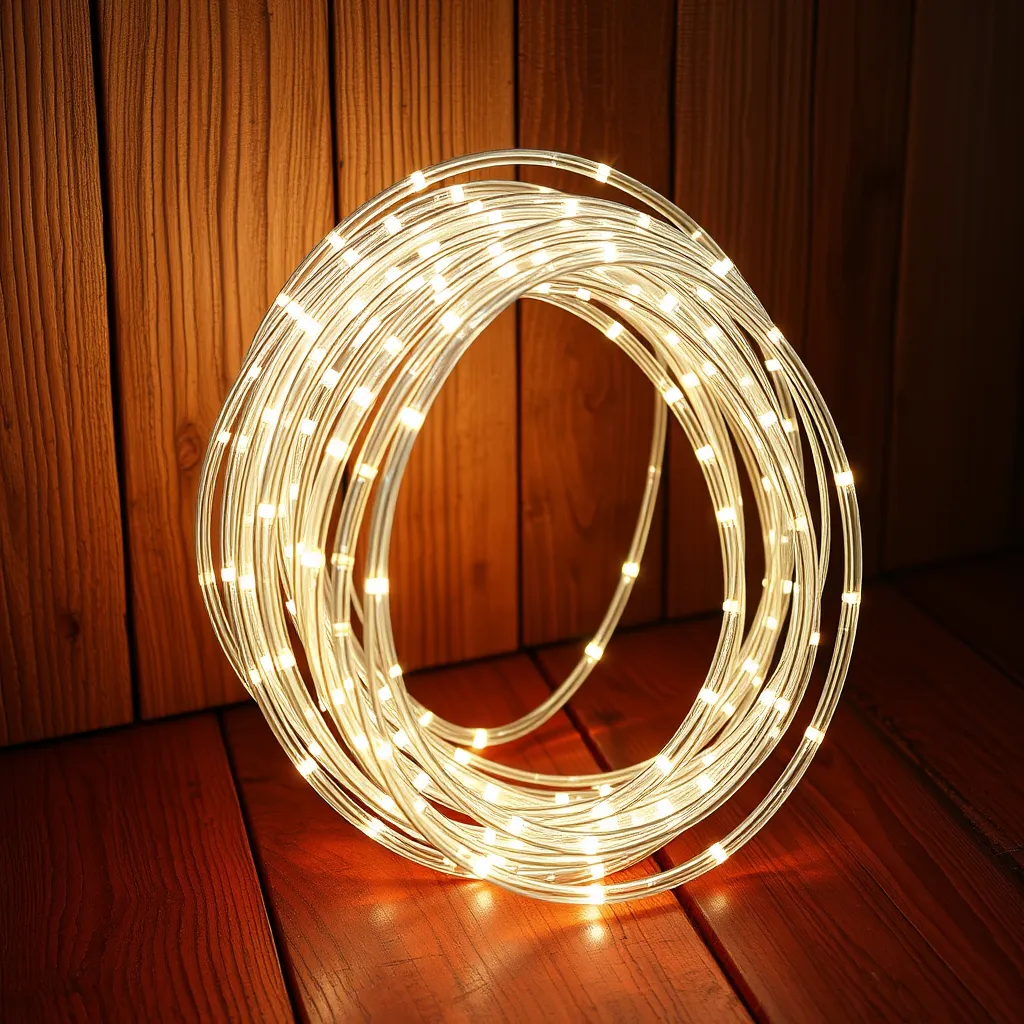
There are two main types of LED lights sold in 100-foot lengths, and they serve different purposes. LED string lights (also called fairy lights or Christmas lights) are individual bulbs spaced along a flexible wire, typically 3-6 inches apart. A 100-foot string has approximately 200-400 individual LED bulbs. These are used for decorative outdoor lighting, holiday displays, and patio ambiance.
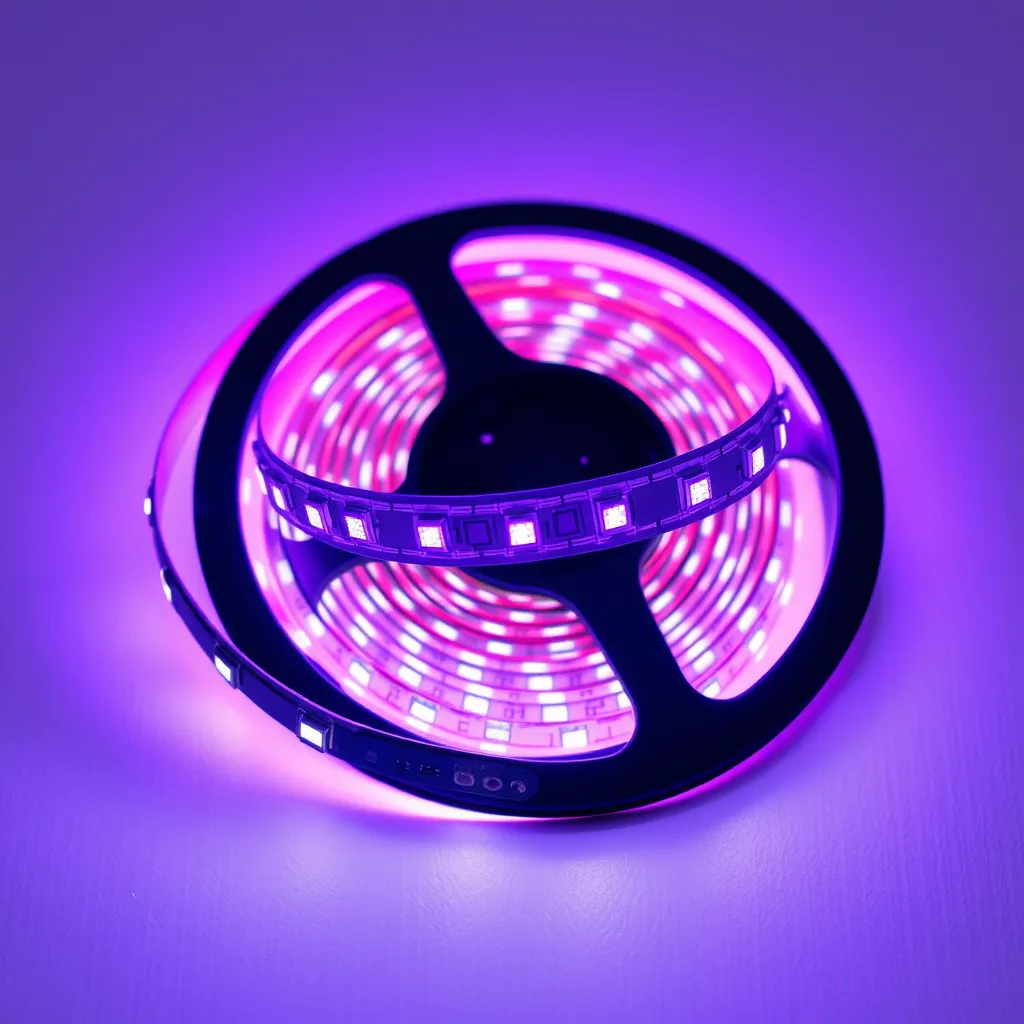
LED strip lights are flexible circuit boards with surface-mounted LEDs placed every few millimeters along the strip. A 100-foot LED strip contains thousands of individual LED chips. Strip lights are used for accent lighting, under-cabinet illumination, and architectural cove lighting. However, most LED strip lights are sold in 16.4-foot (5-meter) segments because longer continuous runs require higher current and thicker conductors. To achieve 100 feet of LED strip lighting, you typically connect six 16.4-foot segments end-to-end, each with its own power injection point.
Power Requirements for 100 Feet of LED Lights
A 100-foot LED string light strand typically draws 20-40 watts total, depending on bulb count and size. This is comparable to a single incandescent bulb and costs less than $2 per month running 8 hours daily. A 100-foot run of LED strip lights draws significantly more - typically 70-150 watts total - because the LED density is much higher. Strip runs of this length need multiple power supplies or a single high-capacity driver with power injection at regular intervals to prevent voltage drop.
Voltage drop is the main technical challenge with long LED runs. Over 100 feet, the resistance of the copper conductors causes voltage to decrease along the length, making LEDs at the far end dimmer than those near the power source. For string lights, this is rarely noticeable. For strip lights, power injection (connecting the power supply at multiple points along the run, typically every 16-32 feet) is necessary to maintain even brightness.
Connecting Multiple Strands to Reach 100 Feet
If your LED lights come in shorter lengths, you can connect them end-to-end to reach 100 feet. Most LED string lights have standardized male/female connectors that allow daisy-chaining. Check the manufacturer's maximum connection limit - typically 3-5 strands (150-250 feet) for commercial-grade outdoor lights. Exceeding this limit can overload the first strand's wiring and create a fire hazard.
For LED strip lights, use solderless clip connectors or solder joints to join segments. Each joined segment should receive its own power injection if the total length exceeds 16 feet. Never run 100 feet of LED strip from a single power feed at one end - the far end will be noticeably dim or may not light at all. Instead, run parallel power wires to injection points every 16-32 feet along the run.
Conclusion:
When planning a 100-foot installation, the most important factor is visualizing the scale before you buy. Whether you are outlining a large backyard or creating a seamless glow across several rooms, this length provides significant coverage but requires careful management of electricity. For strip lights specifically, remember that 100 feet is rarely a simple plug-and-play distance; you must account for voltage drop by using multiple power injection points to ensure the light remains consistent from start to finish.
Ultimately, 100 feet of LED lighting offers a professional-grade transformation for any home or outdoor space. By choosing the right type of light-string for ambiance or strips for architectural detail-and ensuring your electrical setup can handle the load, you can create a stunning, high-impact display. Always measure twice and test your connections on the ground before mounting your lights to ensure a smooth and safe installation process.
Frequently Asked Questions
Q1: How many LED lights do I need for a 7-foot Christmas tree?
A: The National Christmas Tree Association recommends 100 lights per vertical foot of tree height, so a 7-foot tree needs approximately 700 lights. At 3 lights per foot of wire, that requires about 233 feet of LED string lights. A 100-foot strand provides roughly 300 lights - adequate for moderate coverage but below the recommended density. For a full, professional look, use 200-300 feet (two to three 100-foot strands) on a 7-foot tree.
Q2: Can I cut 100-foot LED strips to a shorter length?
A: Yes. LED strip lights have designated cut lines - marked with scissors icons or copper pads - typically every 1-2 inches. You can cut at any marked point to shorten the strip to your exact needed length. The remaining portion can be used separately with its own power connection. Never cut between cut marks, as this can damage the circuit and leave non-functional LEDs at the cut end.
Q3: How do you store 100 feet of LED lights without tangling?
A: Wrap the lights around a piece of cardboard, a dedicated light storage reel, or a wire clothes hanger. Start from the plug end and wrap in uniform loops, securing the tail with a twist tie or clip. For strip lights, re-roll them gently onto the original reel or a cardboard tube. Avoid bending strip lights at sharp angles during storage, as this can crack the flexible circuit board and break solder connections.