Identifying the technology behind your holiday decorations is more than a matter of curiosity. It determines how many strings you can safely connect, how much your January electricity bill will be, and most importantly, the level of fire risk present in your living room. While the transition from incandescent to light-emitting diode (LED) technology has been ongoing for over a decade, many households still possess a mix of both types, often stored in the same unlabeled bins.
The fundamental difference lies in how light is produced. Incandescent bulbs rely on a tungsten filament that glows when heated by an electric current-essentially a tiny heater that happens to produce light as a byproduct. These lights convert only about 5% to 10% of their energy into visible light, with the rest wasted as heat. In contrast, an LED is a solid-state semiconductor. When electrons move through the semiconductor material, they release energy in the form of photons. This process is significantly more efficient and generates almost no heat, which is the primary clue in telling these two technologies apart.
Physical Construction and Lens Materials
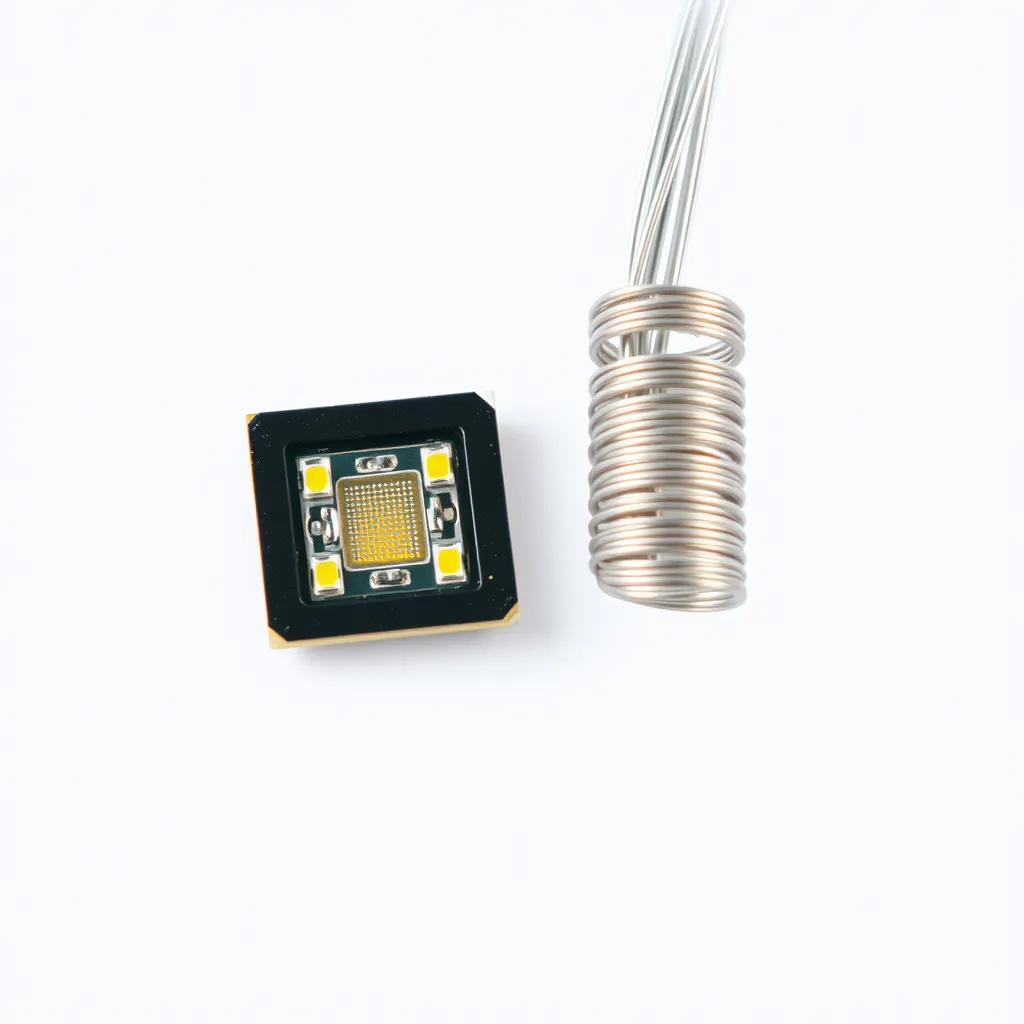
The most immediate way to distinguish between bulb types is a close visual inspection of the lens and the internal components. Because LEDs do not require a vacuum-sealed environment to protect a burning filament, their construction is fundamentally different from traditional glass bulbs.
The Presence of a Filament
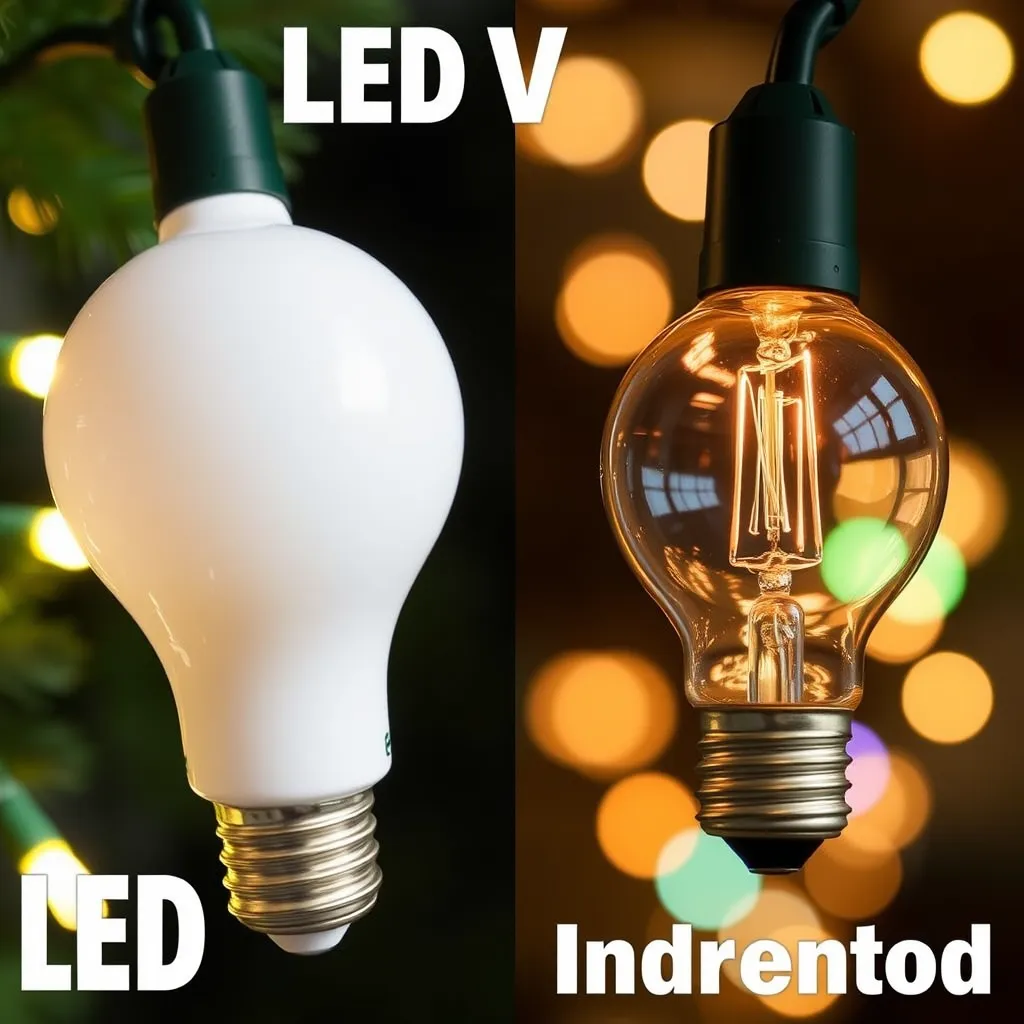
Hold a bulb up to a bright light source or look at it while it is turned off. If you see a tiny, delicate wire (the filament) supported by two thicker wires, you are looking at an incandescent bulb. If the bulb appears to have a small, flat square or a tiny plastic "tower" inside the lens without any visible wires spanning a gap, it is an LED. This "chip" is the light-emitting diode itself.
Lens Durability and Faceting
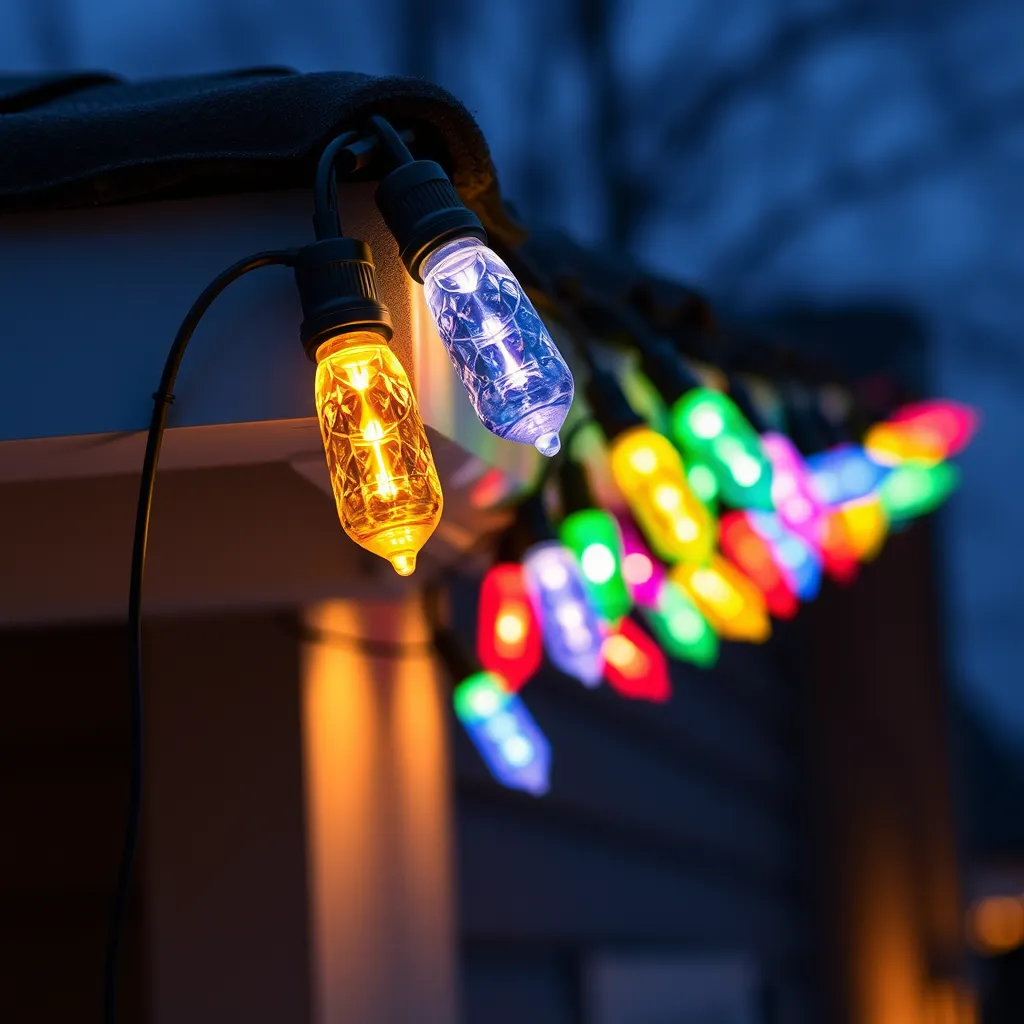
Traditional mini-lights almost always use smooth, thin glass lenses. These are fragile and often break if stepped on or dropped on a driveway. LED lenses are manufactured from heavy-duty epoxy or polycarbonate plastic. They are virtually unbreakable under normal holiday decorating conditions. Furthermore, many LED manufacturers use a "faceted" or "diamond-cut" design on the plastic. These small ridges help diffuse the directional light of the LED, creating a sparkling effect. While some modern LEDs are designed with smooth lenses to mimic the vintage look, a faceted lens is a nearly guaranteed indicator of LED technology.
Base and Socket Design
Examine the plastic base where the bulb meets the wire. LED bulbs are often permanently molded into the socket to prevent moisture from entering, a design known as "one-piece" construction. This enhances weather resistance for outdoor use. Incandescent bulbs are almost always removable, featuring two thin copper wires folded over the base of the glass husk that make contact with the internal socket terminals.
Thermal Output and Energy Efficiency
The "touch test" remains the most reliable field method for identification. Because of the physics of incandescence, those bulbs must reach high temperatures to produce light. A standard 50-light incandescent string can easily reach temperatures that make the glass uncomfortable to hold after just a few minutes of operation.
LEDs, however, are cool to the touch even after being powered on for days. This temperature difference is why LEDs are the preferred choice for real Christmas trees, which can become highly flammable as they dry out over the season. A hot incandescent bulb resting against a dry needle is a documented fire hazard; an LED bulb presents virtually no such risk.
Feature | Incandescent Lights | LED Lights |
|---|---|---|
Operating Temp | 100°F - 200°F (Hot) | 70°F - 90°F (Cool) |
Energy Use (100 lights) | 40 - 45 Watts | 4 - 7 Watts |
Lifespan | 2,000 - 3,000 Hours | 25,000 - 50,000 Hours |
Bulb Material | Glass (Fragile) | Polycarbonate (Durable) |
Max Connections | 3 - 5 Strings | 20 - 90 Strings |
Color Characteristics and Light Quality
The way the light looks to the naked eye provides another set of clues. Incandescent bulbs produce a "full-spectrum" white light that is naturally warm (yellowish), similar to a candle flame. To get colors like red, green, or blue, the glass is simply painted or tinted. This acts as a filter, blocking all other colors of light and only letting the desired color through. This is an inefficient process that results in somewhat muted colors.
LEDs produce "monochromatic" light. A blue LED actually generates blue light at the atomic level; there is no filter involved. This results in colors that appear much more saturated, vivid, and "pure."
Cool White LEDs: These often have a distinct bluish or clinical tint, usually rated around 5000K to 6000K.
Warm White LEDs: These are engineered to mimic incandescents, but they can sometimes appear slightly "greenish" or "pinkish" when placed directly next to a real glass incandescent bulb.
Saturated Colors: Red and Green LEDs will appear much "sharper" and brighter than their incandescent counterparts, which may look dull or faded by comparison.
Electrical Specifications and Wiring
If you have access to the plug or the white "UL" (Underwriters Laboratories) tag attached near the male end of the string, the electrical data will give you a definitive answer. This is the most technical way to tell if Christmas lights are LED, and it is also the most important for safety when "daisy-chaining" strings together.
Wattage Ratings
Check the tag for the wattage. A standard 100-count string of incandescent mini-lights typically draws about 40 to 45 watts. An equivalent 100-count LED string usually draws between 4 and 9 watts. If the tag says "8W" or "0.06 Amps," it is definitely LED. If it says "40W" or "0.33 Amps," it is incandescent.
End-to-End Connectivity
Because incandescents draw so much power, the thin copper wires inside the string can only handle a limited amount of current before the internal fuse blows or the wire insulation begins to melt. Most incandescent strings limit you to connecting only 3 to 5 sets. LED strings have such a low current draw that manufacturers often approve connecting 20, 50, or even 90 strings together on a single outlet. If the instructions or the tag indicate that you can connect dozens of sets, you are holding LEDs.
Flicker and Refresh Rate
Some lower-quality LED strings operate on "half-wave" rectification. This means they actually turn on and off 60 times per second (following the frequency of the AC power in your home). While many people don't notice it, if you move your eyes rapidly across the lights or wave your hand in front of them, you might see a "strobe" effect. Incandescent bulbs do not do this because the filament stays hot and continues to glow even as the current cycles. Higher-end "full-wave" LED sets include a rectifier that eliminates this flicker, making them look as steady as incandescents.
Practical Tips for Sorting Your Collection
If you are currently staring at a tangled pile of lights, follow this workflow to sort them efficiently:
Plug them in: Wait 60 seconds. Touch three random bulbs. If they are hot, put them in the "Incandescent" pile.
Check the "White" color: If the light is crisp and blue-white, it's LED. If it's soft and yellow-white, it's likely incandescent (though check for heat to be sure it isn't a "Warm White" LED).
Inspect the plug: Look for the wattage. Anything under 10 watts for a long string is an LED.
Flick the bulb: Gently tap the bulb with your fingernail. Glass (incandescent) has a higher-pitched "tink" sound, while plastic (LED) has a dull "thud."
Why Mixing Matters
You should avoid connecting an LED string directly to the end of an incandescent string. While it might work temporarily, the different electrical requirements can lead to premature failure of the LED "driver" components or cause the incandescent bulbs to burn brighter and hotter than intended. It is always safest to keep different technologies on separate extension cords or power strips.
Conclusion
Telling LED and incandescent Christmas lights apart is simple once you know the signs. Incandescents run hot, use fragile glass, and draw heavy wattage, while LEDs stay cool, use durable plastic lenses, and sip electricity. A quick touch test, a glance at the UL tag, or inspecting the bulb for a filament versus a chip gives you instant clarity. Choosing LEDs means safer trees, lower bills, and holiday displays that last for decades.
Frequently Asked Questions
Q1: Can I replace an incandescent bulb with an LED bulb in the same string?
A: Generally, no. Individual LED replacement bulbs are rarely compatible with incandescent strings because the voltage required by a single LED (usually 2-3V DC) is different from the voltage allocated to a bulb in a standard 120V AC incandescent series circuit. Furthermore, LED bulbs often require a specific polarity to function, which incandescent sockets do not provide.
Q2: Do LED Christmas lights ever burn out?
A: LEDs do not "burn out" in the traditional sense because there is no filament to break. Instead, they undergo "lumen depreciation," where they slowly get dimmer over many years. However, a string can still fail if the internal wiring corrodes, a resistor fails, or if a single bulb in a series circuit is damaged. Most LED failures are due to electrical component failure rather than the "bulb" itself.
Q3: Why are my LED lights flickering when I dim them?
A: Standard LED Christmas lights are often not compatible with traditional household dimmers. Dimmers designed for incandescents work by "chopping" the AC waveform, which can cause LEDs to flicker or not turn on at all. If you want to dim your display, you must ensure the LED strings are specifically labeled as "dimmable" and use a compatible LED-rated dimmer switch.