Wiring an LED strip is the easy part. What actually ruins installs is getting the power supply wrong or ignoring voltage drop over a long run, and both are simple to avoid once you know.
The basics: match the power supply to your strip voltage (12V or 24V), size it at least 20% above the strip's total wattage, and join positive to positive, negative to negative. A basic single-color install takes 15 to 30 minutes.
The Two Things That Actually Go Wrong:
Almost every failed strip traces to one of two mistakes: an undersized or wrong-voltage power supply, or voltage drop on a run over 5 meters. Get the power math right and wire long runs in parallel, and the rest is just connecting wires.
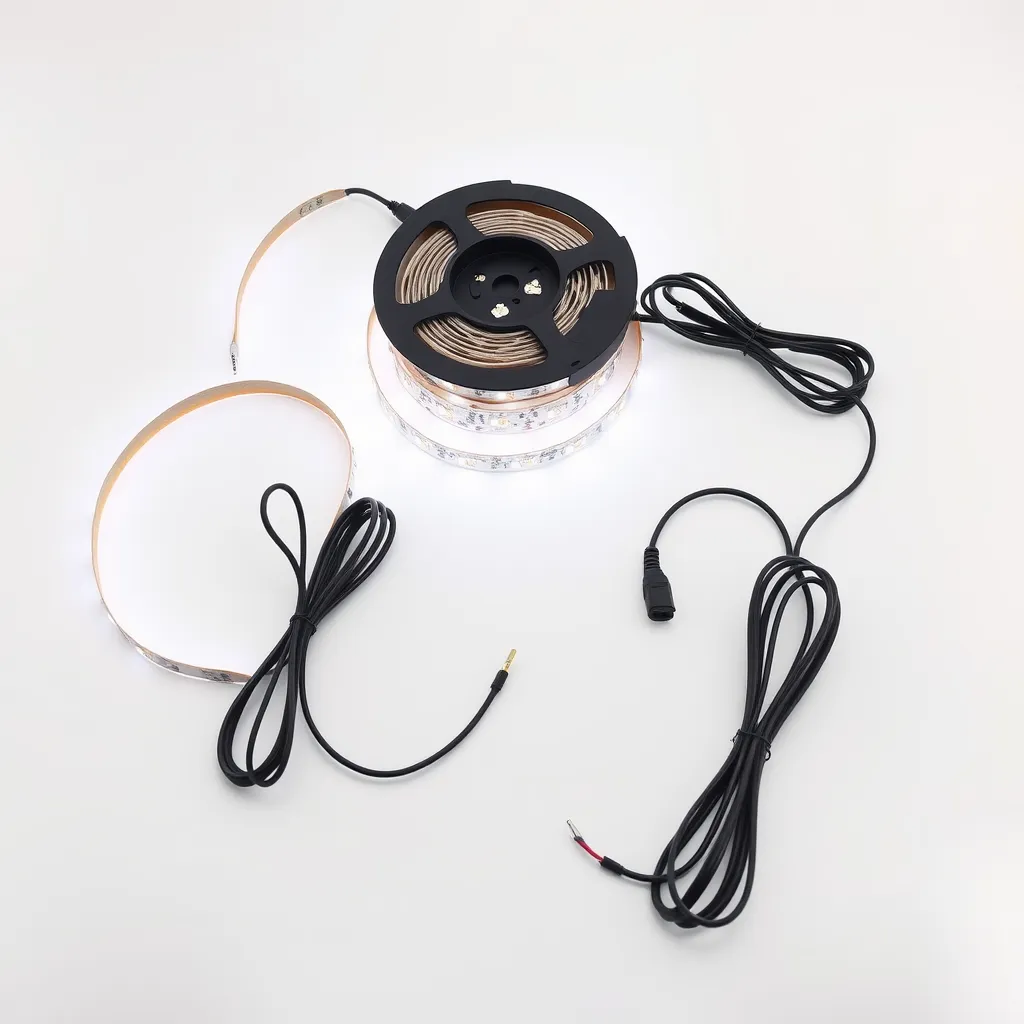
What You Need to Wire an LED Strip:
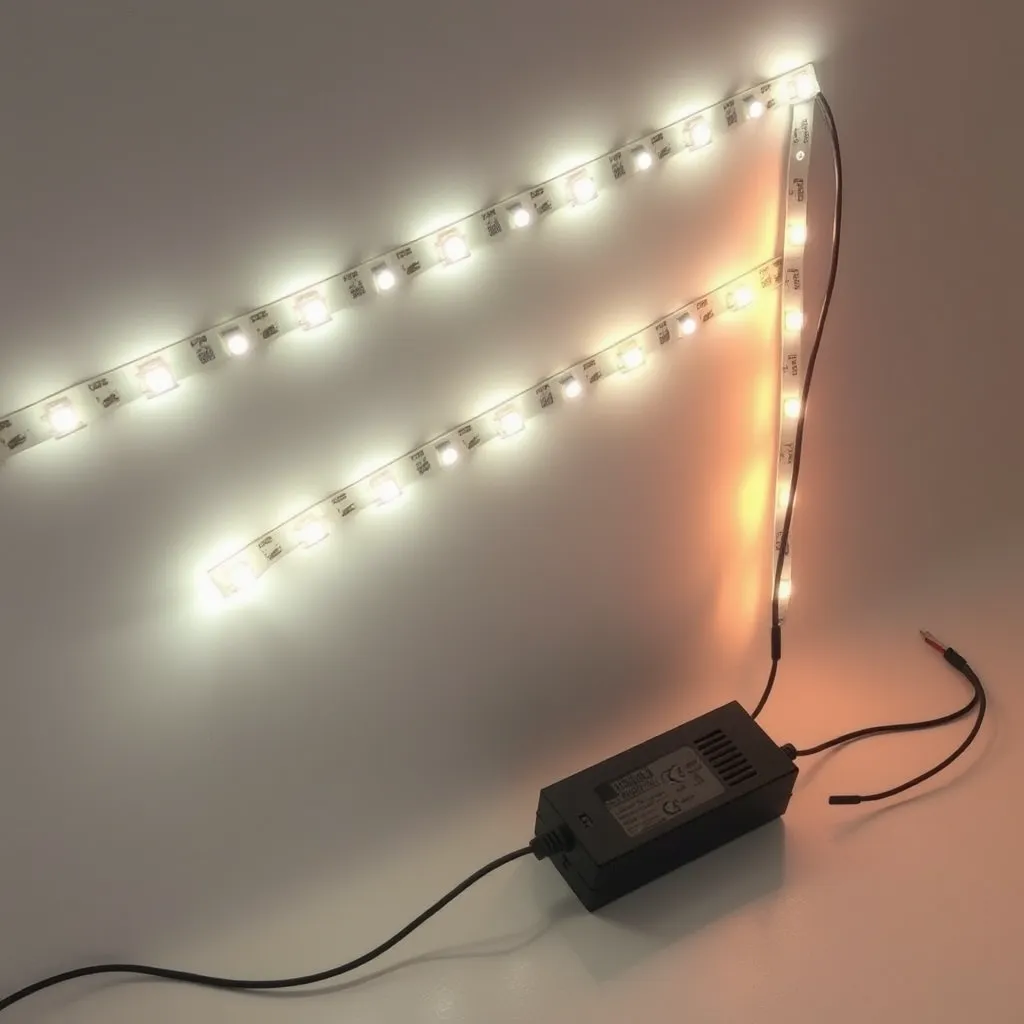
Component | Purpose | Typical Cost |
|---|---|---|
LED strip | The light source | $10 to $40 / 16ft roll |
DC power supply (12V/24V) | Converts wall AC to strip DC | $10 to $25 |
Wire (18 to 22 AWG) | Connects supply to strip | $5 to $10 |
Connectors or solder | Makes the connection | $5 to $15 |
Inline switch (optional) | On/off without unplugging | $3 to $8 |
Step 1: Get the Power Supply Right:
This is the step that makes or breaks the install. Every strip lists a wattage per meter, so multiply it by your total length.
A typical 5050 SMD strip draws about 14.4 watts per meter, so a 5-meter run needs 72 watts. Add a 20% margin and you want a supply rated at least 86 watts.
An undersized supply overheats, flickers, and fails early. Also match the voltage: too low gives dim light, too high burns the strip out instantly. The voltage is printed on the strip's PCB and the supply label.
Step 2: Connect the Strip, Solder or Solderless:
You have two ways to join the wires, and the right one depends on how permanent you want it.
Solderless connectors: strip 5mm of insulation, line the strip's copper pads up with the connector pins, and snap it shut. Quick and removable, but clips can loosen in heat over time.
Soldering: tin the copper pads and the wire ends, press them together, and touch the iron for 2 to 3 seconds until the solder flows. It is permanent and best for outdoor, vibration, or heat. Use 18 to 22 AWG stranded wire.
Step 3: Wire Long Runs in Parallel to Beat Voltage Drop:
LED strips dim toward the far end over distance. Past 5 meters (16 feet) on a 12V strip, the end LEDs look noticeably dimmer than the start.
The fix is parallel wiring: run separate power wires from the supply to each strip segment instead of daisy-chaining them end to end. Each segment then gets full voltage.
For a 10-meter job, cut it into two 5-meter sections and wire each back to the supply. For runs over 10 meters, use 24V strips, which hold voltage over longer distances. Our guide on 12V vs 24V LED strip lights covers which to pick.
Step 4: Add a Switch or Dimmer (Optional):
An inline switch between the supply and strip gives on/off control without unplugging.
For dimming, use a PWM dimmer on the DC side, between supply and strip. Never use a standard AC wall dimmer, it will not work and can damage the supply. For color strips, put an RGB controller in the same spot.
Common Wiring Mistakes to Avoid:
Reversed polarity. Positive to negative will not damage most strips, but they will not light. Check the + and - marks on both ends before powering on.
Undersized wire. For runs over 3 meters between supply and strip, use 18 AWG, not the thin 22 AWG in most kits. Thicker wire cuts voltage loss.
Series daisy-chaining. Never exceed the maker's max length in series. It overloads the strip's copper traces and causes uneven brightness and heat.
If a wired strip glows faintly when off, that is a separate issue covered in why LED strips turn blue when off.
Conclusion:
Wiring LED strips is straightforward once the power side is right. Match the voltage, size the supply 20% over, and connect + to + and - to -.
For long runs, wire in parallel to keep brightness even, and avoid the common traps like reversed polarity and undersized wire. Do that, and your strips run bright and reliable for years.
(FAQs):
Q1. Can I wire LED strip lights to a standard wall switch?
A: Yes, but the switch goes on the AC side, before the power supply, so it cuts power to the whole supply. The strip itself always runs on low-voltage DC, never on 120V.
Q2. What gauge wire should I use for LED strip lights?
A: Under 3 meters, 22 AWG is fine. For 3 to 6 meters, use 20 AWG. Over 6 meters, use 18 AWG or thicker to cut voltage drop.
Q3. Do LED strips need a special power supply?
A: Yes, a DC supply matching the strip's voltage (usually 12V or 24V), rated 20% above total wattage. USB chargers and wall outlets will not work directly.
Q4. How do I connect one strip to another?
A: Use a connector or solder pad-to-pad, matching + to + and - to -. For long chains, wire in parallel instead. See how to connect LED strip lights for the joins.