Choosing between linear lighting options often comes down to a fundamental misunderstanding of what each technology is designed to do. While both provide illumination in a flexible format, the engineering behind them serves entirely different purposes. One is a high-performance light source designed for precision and integration, while the other is a rugged, decorative solution built for durability and simple installation.
Understanding the technical nuances of LED strip lights vs rope lights ensures that a lighting project succeeds both aesthetically and functionally. This guide breaks down the structural, electrical, and performance differences to help you select the right product for your specific environment.
Defining the Technologies: Architecture and Design
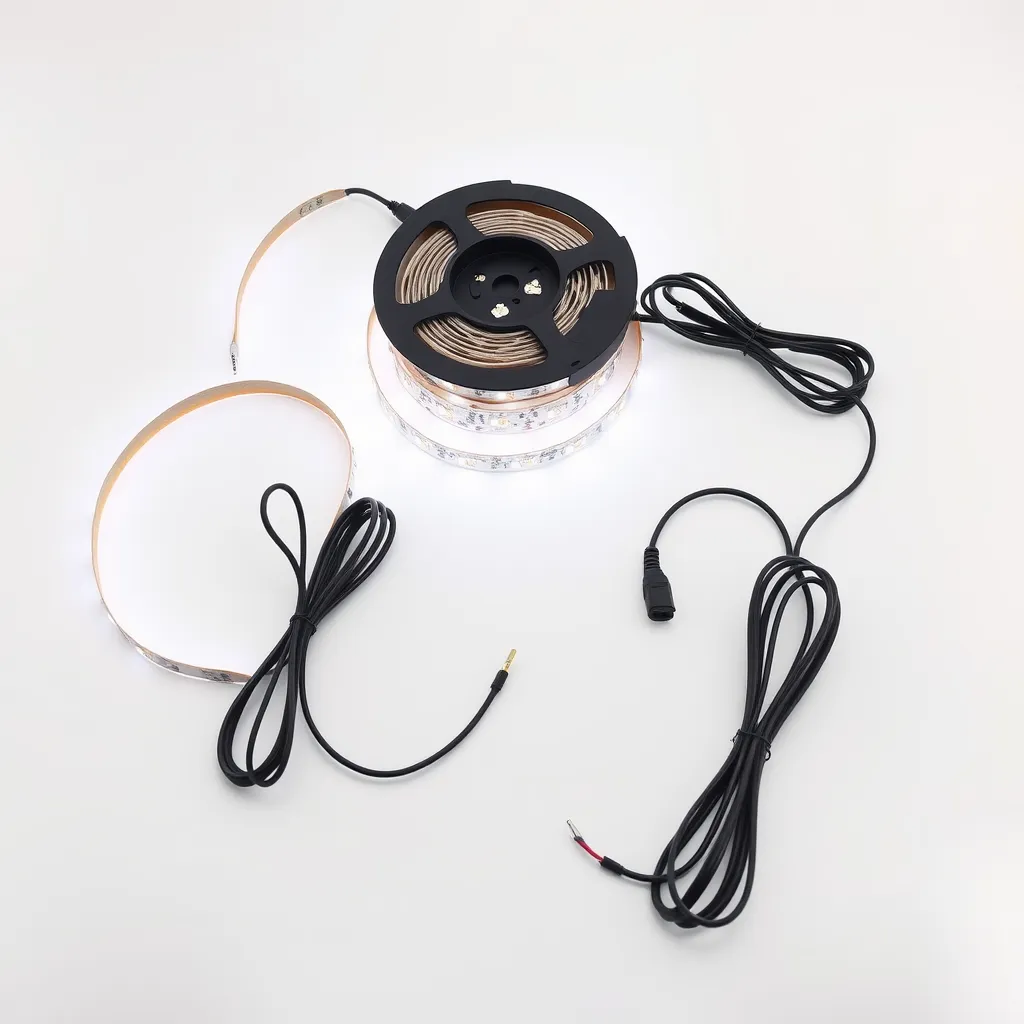
The primary difference lies in the housing and the circuit design. LED strip lights, often called tape lights, consist of surface-mounted diodes (SMDs) populated on a flexible printed circuit board (FPCB). This board is typically no more than 10mm to 12mm wide and less than 4mm thick. The back usually features a 3M adhesive tape, allowing it to be applied directly to smooth surfaces.
LED rope lights utilize a different construction method. The LEDs are wired together and encased inside a thick, transparent or frosted PVC or silicone tube. This tube is usually 10mm to 15mm in diameter. Because the LEDs are inside a protective sleeve, they are shielded from the elements, but this also means the light must travel through a thick layer of plastic before reaching the room, which impacts brightness and clarity.
Heat Dissipation and Lifespan
Heat is the primary enemy of LED longevity. Strip lights are designed to dissipate heat through the FPCB and the surface they are mounted on. When installed in an aluminum channel, the metal acts as a heat sink, significantly extending the life of the diodes. Rope lights, conversely, trap heat within their plastic tubing. While they are rated for many thousands of hours, they generally run warmer than strips, which can lead to the PVC yellowing or becoming brittle over several years of continuous use.
Technical Performance Metrics
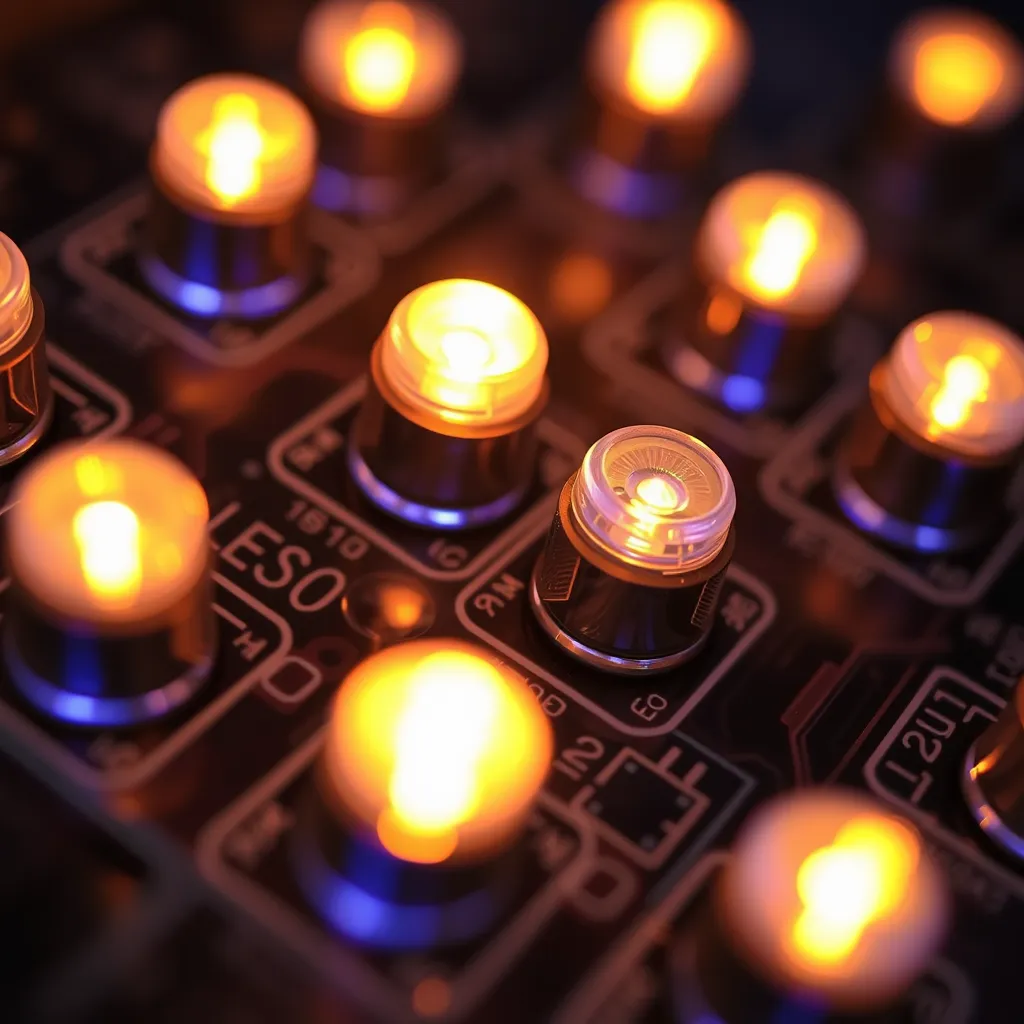
When comparing performance, the metrics favor strip lights for functional illumination and rope lights for decorative ambiance. The density of LEDs per meter is the deciding factor in light quality.
Feature | LED Strip Lights | LED Rope Lights |
|---|---|---|
Luminous Flux | 600 - 2,500+ lumens per meter | 100 - 300 lumens per meter |
LED Density | 30 - 480 LEDs per meter | 12 - 36 LEDs per meter |
Beam Angle | 120 degrees (directional) | 360 degrees (omnidirectional) |
Color Rendering (CRI) | High (80, 90, or 95+) | Low to Moderate (60 - 75) |
Voltage Options | 5V, 12V, 24V DC | 12V, 24V, 120V AC/DC |
Brightness and Utility
Strip lights are capable of producing enough light to serve as a primary light source in certain applications. For example, a high-output 24V strip can produce 2,000 lumens per meter, which is brighter than a traditional 100-watt incandescent bulb. This makes them suitable for task lighting in kitchens or workshops. Rope lights rarely exceed 300 lumens per meter, making them purely decorative. They provide a "glow" rather than "illumination."
Color Accuracy and CRI
Color Rendering Index (CRI) measures how accurately a light source reveals the true colors of objects. High-quality strips often feature a CRI of 90 or higher, which is essential for kitchen counters where food should look appetizing or in closets where clothing colors must be distinguishable. Rope lights generally use lower-grade LEDs where color accuracy is secondary to ruggedness, often resulting in a slightly "muddy" or blue-tinted light output.
Installation Mechanics and Flexibility
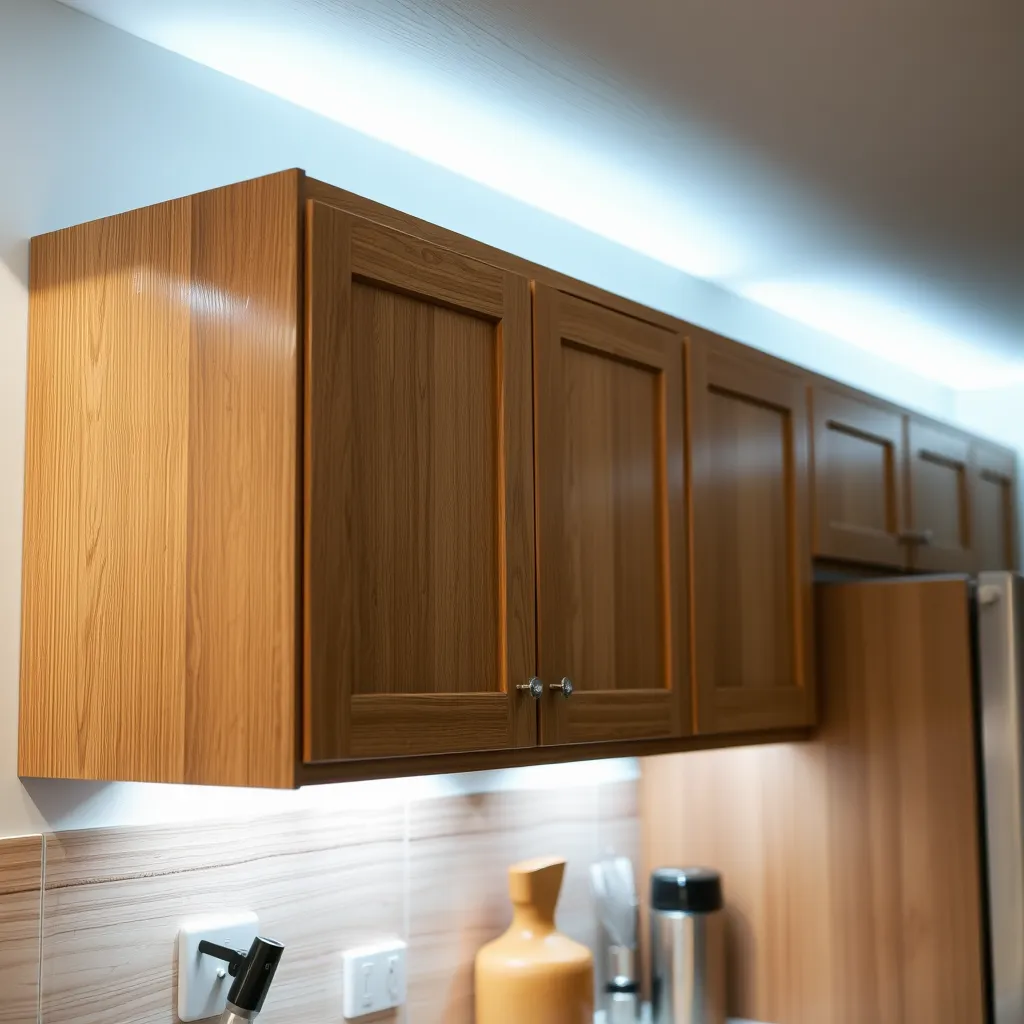
The physical constraints of your installation site will often dictate which product you can use. The way these lights bend and cut is fundamentally different.
Bending and Contouring
Strip lights are "flat" flexible. They can bend easily along the vertical axis (like a measuring tape), making them perfect for wrapping around a room's perimeter or following the curve of a bar. However, they cannot be bent sideways (horizontally) without damaging the circuit board. To turn a 90-degree corner on a flat surface, you must use a connector or solder a wire bridge.
Rope lights are omnidirectional. Because the LEDs are housed in a round tube, you can bend them in any direction. This makes them the superior choice for wrapping around pillars, tree trunks, or creating cursive lettering for signage. They are far more forgiving in three-dimensional spaces.
Cutting and Customization
Customization is a major strength of the strip light. Depending on the voltage and density, you can often cut a strip every 1 to 2 inches (2.5 to 5 cm). This allows for a precision fit in cabinets or shelving. Rope lights have much larger "cut intervals," often ranging from 18 inches to 3 feet. If you have a 4-foot space and your rope light cuts every 3 feet, you are left with either a 1-foot dark gap or 2 feet of extra light that must be hidden.
Advanced Control and Smart Integration
If your project requires smart home integration, color-changing effects, or dimming, the two products offer vastly different ecosystems.
Digital Control and RGBIC
Strip lights have benefited from rapid innovation in digital controllers. You can find strips in several configurations:
Single Color: Fixed temperature (e.g., 3000K Warm White).
Tunable White: Adjusts from warm orange to cool blue light.
RGB / RGBW: Millions of color options plus a dedicated white chip.
RGBIC (Addressable): Each LED or "pixel" can be controlled individually, allowing for moving "chase" effects and multi-color gradients on a single strand.
Rope lights are generally limited to single colors or basic RGB. While addressable rope lights exist, they are rare and significantly more expensive. Most rope lights use simple controllers that can flash or fade the entire strand at once.
Voltage and Run Lengths
Voltage drop is a critical consideration for long runs. Low-voltage strips (12V/24V) usually require a new power feed every 5 to 10 meters to prevent the end of the strip from looking dimmer than the start. Rope lights often come in 120V versions that can be plugged directly into a wall outlet and run for 100 feet or more without any noticeable loss in brightness. For large-scale outdoor projects like outlining a roofline, the high-voltage rope light is much easier to wire.
Environmental Durability
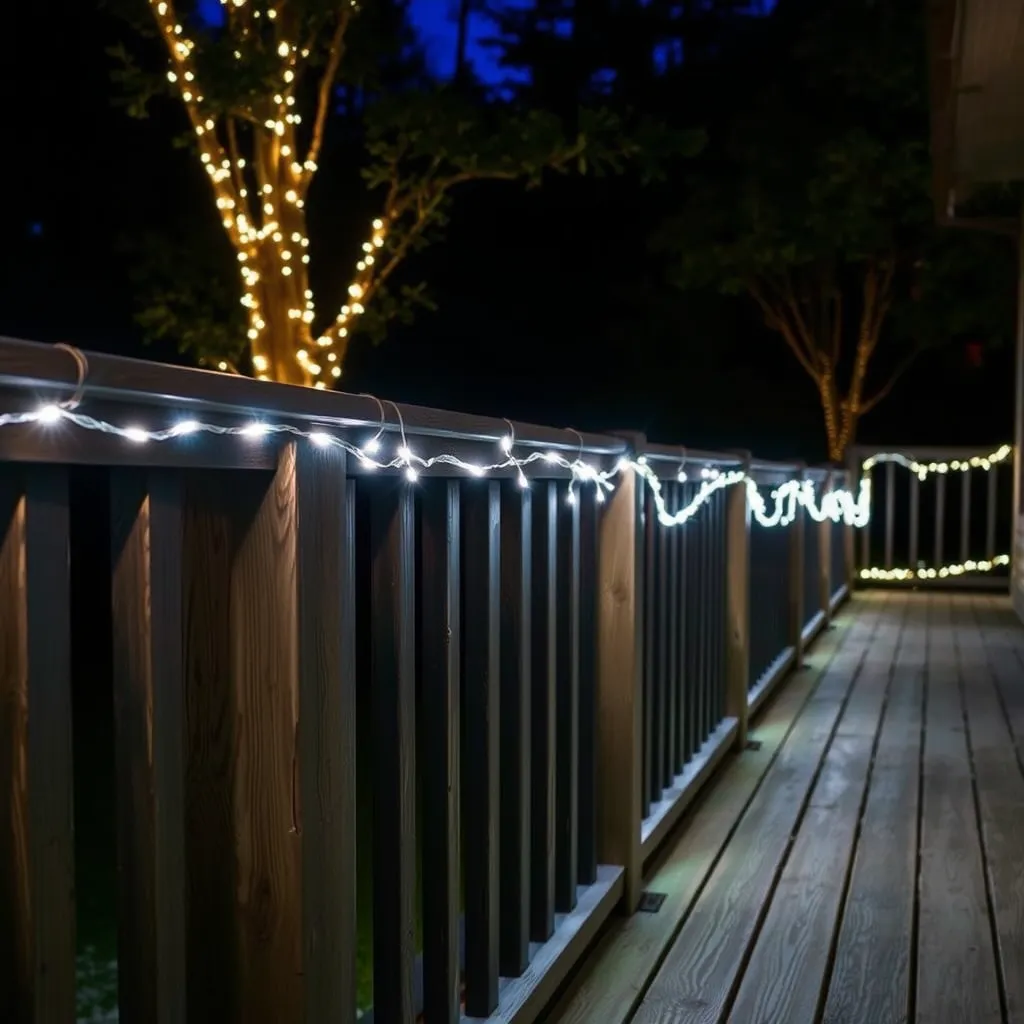
Where you intend to put the lights is just as important as how they look. The "Ingress Protection" (IP) rating tells you how well the light stands up to dust and water.
The Ruggedness of Rope
Rope lights are inherently durable. The thick PVC shell provides a high level of impact resistance. You can step on most rope lights without damaging the LEDs inside. They are almost always rated IP65 or higher, meaning they are protected against water jets and heavy rain. This makes them the default choice for:
Garden pathways and walkways.
Deck railings and stairs.
Holiday displays and parade floats.
Wrapping around outdoor trees.
Weatherproofing Strips
Standard strips are IP20 (uncoated) and should never be used near moisture. You can purchase "waterproof" strips that are coated in silicone (IP65) or encased in a silicone sleeve (IP67). While these work well outdoors, they are more delicate than rope lights. The silicone coating can crack over time if exposed to direct UV sunlight, and the adhesive backing often fails in extreme heat or cold, requiring the use of mounting clips.
Modern Alternatives: Bridging the Gap
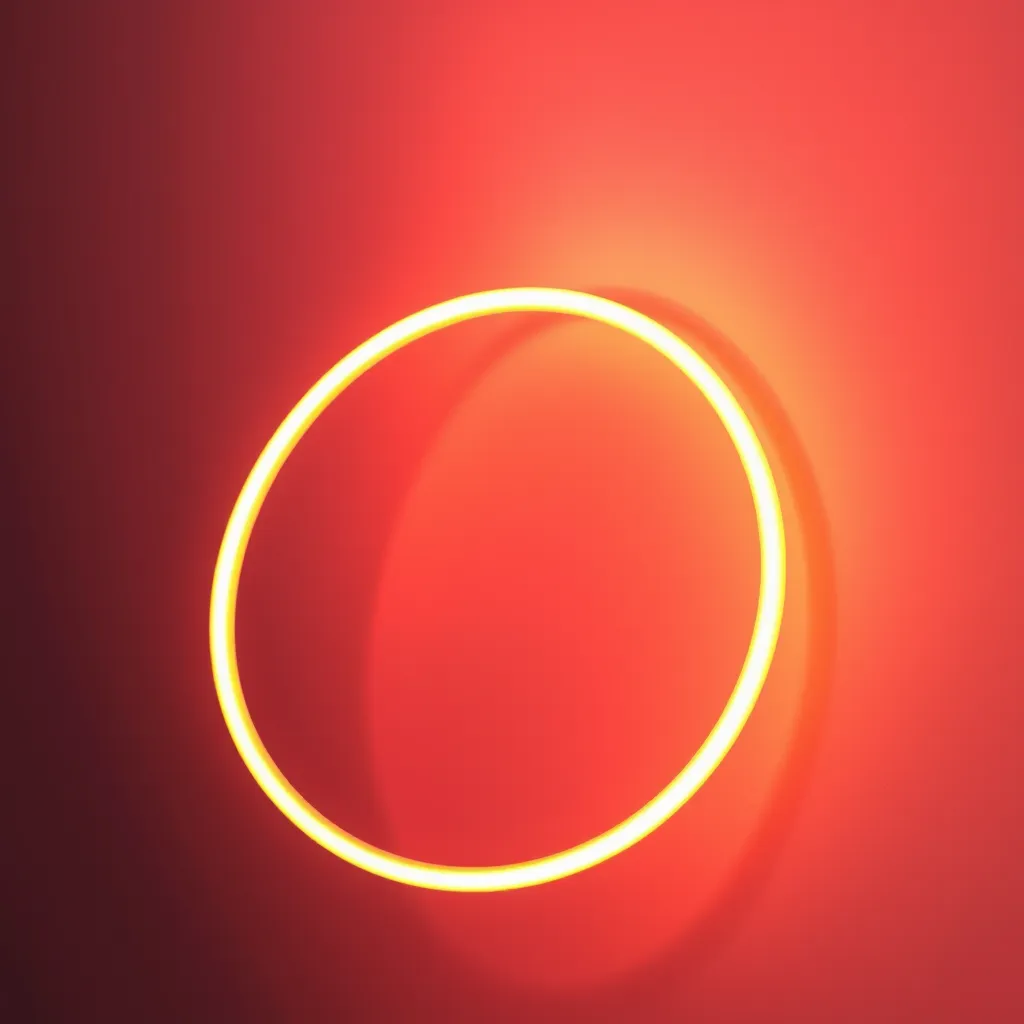
Recent advancements have created products that combine the best features of both worlds. If you find yourself stuck between the two, consider these options:
LED Neon Flex
Neon flex is essentially a high-density LED strip encased in a thick, light-diffusing silicone jacket. It provides the smooth, dot-free glow of a rope light but maintains the brightness, color-changing capabilities, and tight cutting increments of a strip light. It is the premium choice for architectural accents and custom signage.
COB (Chip on Board) Strips
If you want the seamless look of a rope light but need the flat, thin profile of a strip, COB LEDs are the answer. These use hundreds of tiny diodes per meter covered by a phosphor coating. This creates a continuous line of light with no visible "hot spots" or dots, even when not used in a channel. They are excellent for reflective surfaces like marble countertops where traditional strip reflections look messy.
Practical Application Guide
To make the final decision, match your project to the most effective tool for the job.
Use LED Strip Lights for:
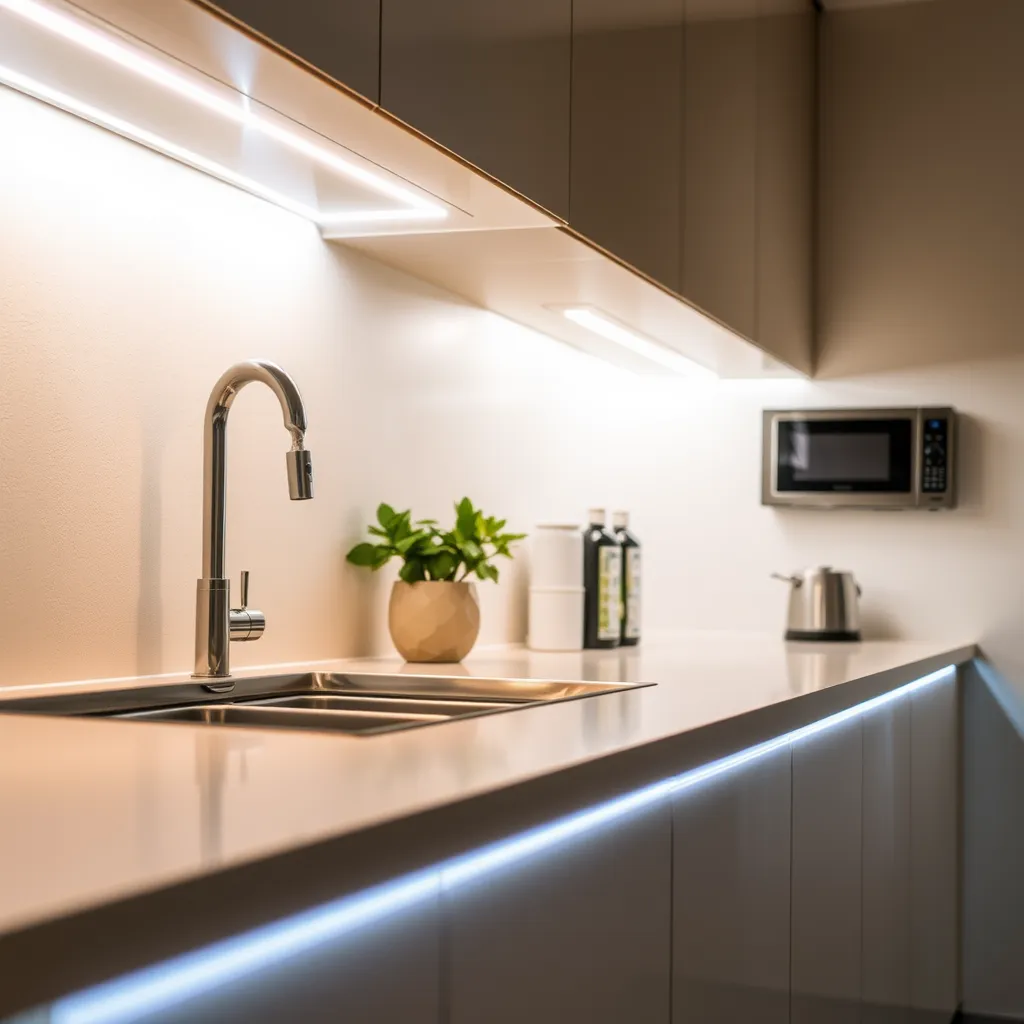
Kitchen Cabinets: High CRI and brightness are required for food prep.
TV Bias Lighting: The slim profile fits behind wall-mounted screens to reduce eye strain.
Cove Lighting: Precision lengths and high lumen output create a professional ambient glow.
Closets and Shelving: Adhesive backing makes installation simple in tight wooden or metal spaces.
Use LED Rope Lights for:
Outdoor Landscaping: Durability and long run lengths are more important than color precision.
Event Lighting: Easy to wrap around poles, tents, and railings for temporary setups.
Architectural Outlining: Perfect for highlighting the roofline of a house or commercial building.
Pathway Safety: The 360-degree light output is better for visibility on ground-level borders.
Conclusion
Choosing between LED strip lights and rope lights ultimately depends on your project's purpose. Strip lights deliver superior brightness, color accuracy, and smart control, making them ideal for task lighting, kitchens, and architectural accents. Rope lights excel in durability, weather resistance, and three-dimensional flexibility, perfect for outdoor pathways, landscaping, and decorative displays. By understanding their structural and performance differences, you can match the right technology to your specific environment, ensuring lasting results that balance functionality, aesthetics, and long-term value.
Frequently Asked Questions
Can I plug LED strip lights directly into a wall outlet?
Most LED strips are low-voltage (12V or 24V) and require a power supply (transformer) to convert the 120V/240V AC from your wall into the DC voltage the strip needs. Plugging a low-voltage strip directly into a wall outlet will instantly destroy the LEDs. However, some specialized "driverless" high-voltage strips exist that plug directly in, similar to rope lights.
Do rope lights use more electricity than strip lights?
Efficiency is similar because both use LED technology. However, because rope lights are generally less bright, they may use slightly less power per foot than a high-output task strip. On average, both will use between 2 and 5 watts per foot. Always check the specific wattage rating on the packaging to ensure your power supply can handle the total load.
How do I hide the "dots" in my LED installation?
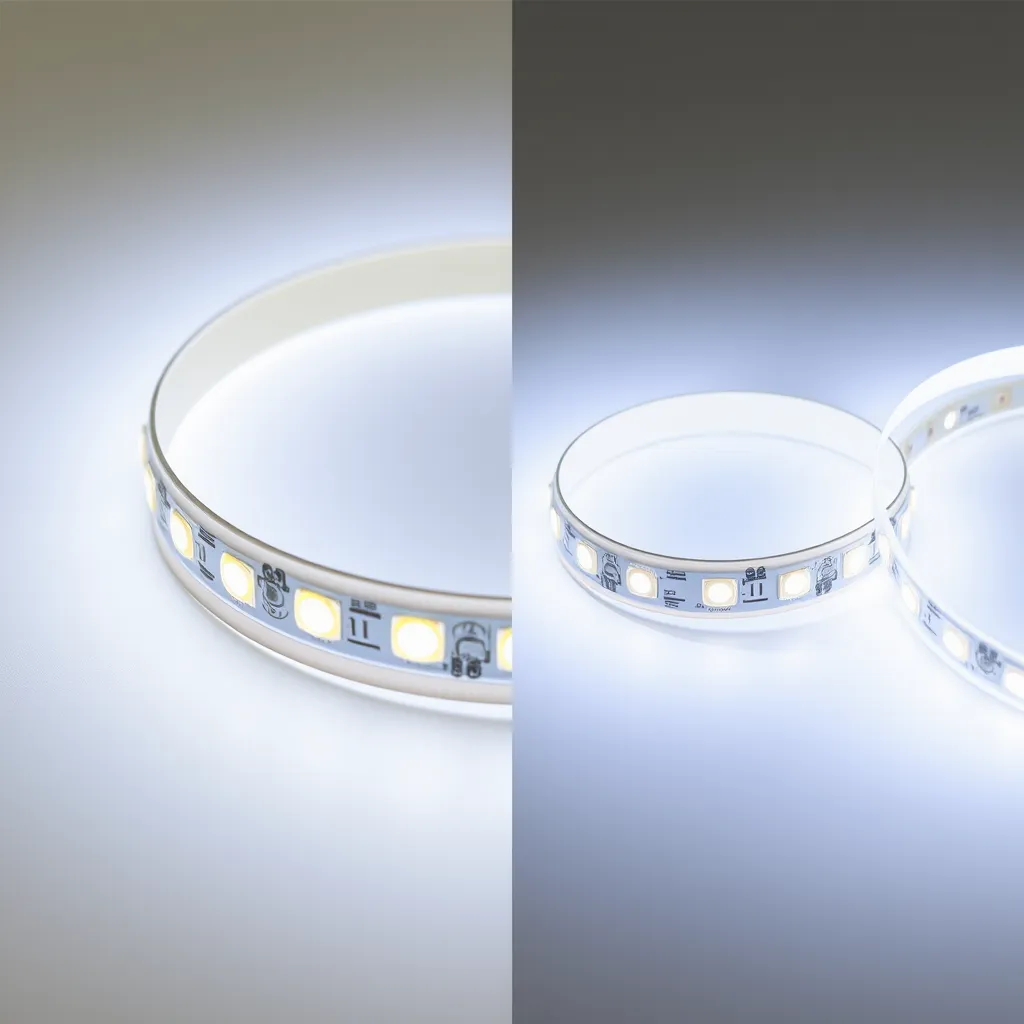
The "dotted" look is common with older or low-density strip lights. To achieve a solid line of light, you have three options: use a high-density strip (at least 120 LEDs per meter), install the strip inside an aluminum channel with a frosted diffuser lens, or switch to a COB LED strip which is inherently dot-free.
Can I shorten a rope light to any length?
No. You can only cut rope lights at specific intervals marked with a pair of scissors or a dotted line on the casing. These intervals are usually quite large (up to 3 feet). Cutting anywhere else will break the electrical circuit for that entire section, resulting in a length of "dead" light. Always plan your measurements around these cut points before purchasing.