The fundamental difference between a laser and an LED lies in how they generate and organize photons. While both are semiconductor-based technologies that have replaced traditional vacuum tubes and incandescent filaments, they serve opposite purposes in the world of optics. An LED is a broad, cooperative light source designed to fill a space, whereas a laser is a highly disciplined, concentrated beam designed for precision.
Understanding these differences requires looking past the glow and examining the physics of how electrons transition between energy states.
The Physics of Photon Emission
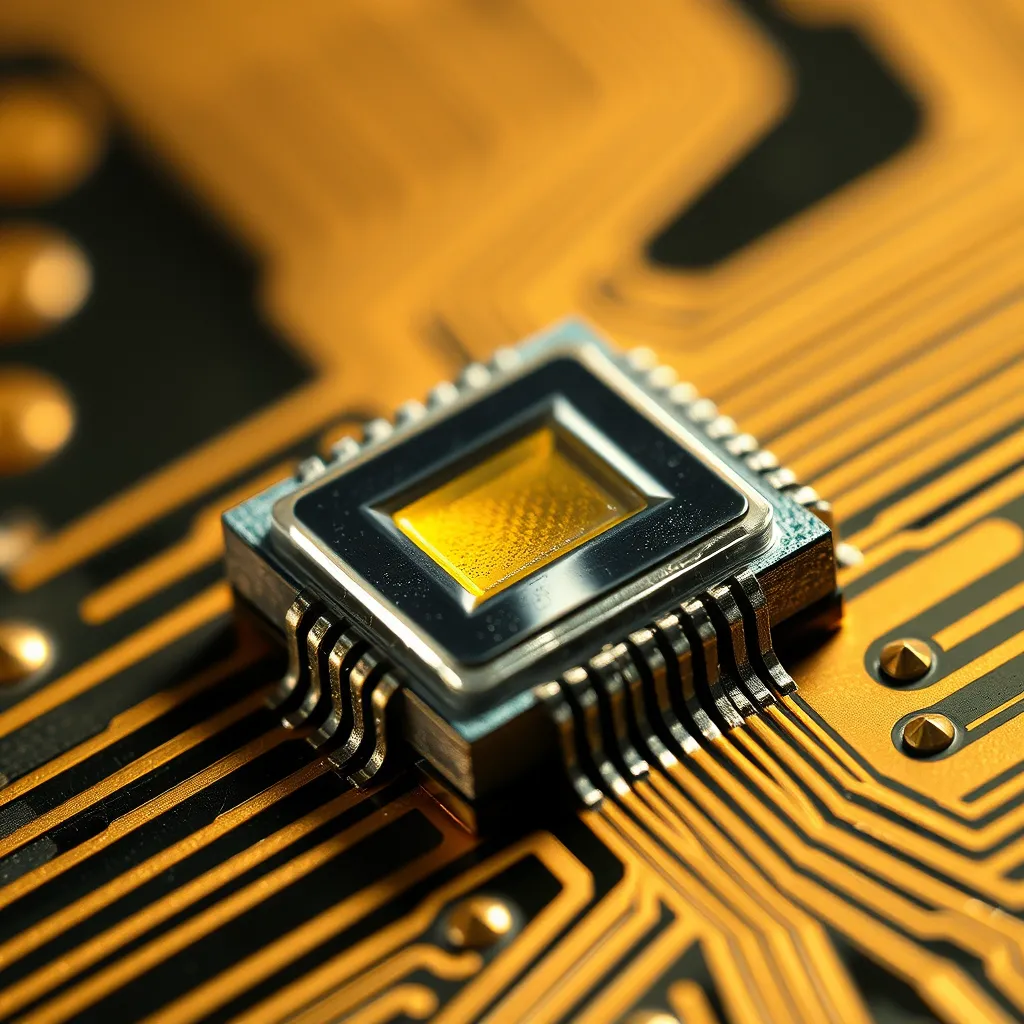
At the heart of both devices is a semiconductor p-n junction. When an electrical current passes through this junction, electrons drop from a higher energy state to a lower one, releasing energy in the form of photons. However, the method of release defines the light's characteristics.
Spontaneous Emission in LEDs
In an LED, photons are produced through spontaneous emission. When an electron meets a "hole" in the semiconductor material, it releases a photon naturally and randomly. These photons exit the device in various directions and at slightly different times. Because the process is random, the resulting light is incoherent-the peaks and troughs of the light waves do not align. This creates the soft, spreading glow we use for light bulbs and screen backlights.
Stimulated Emission in Lasers
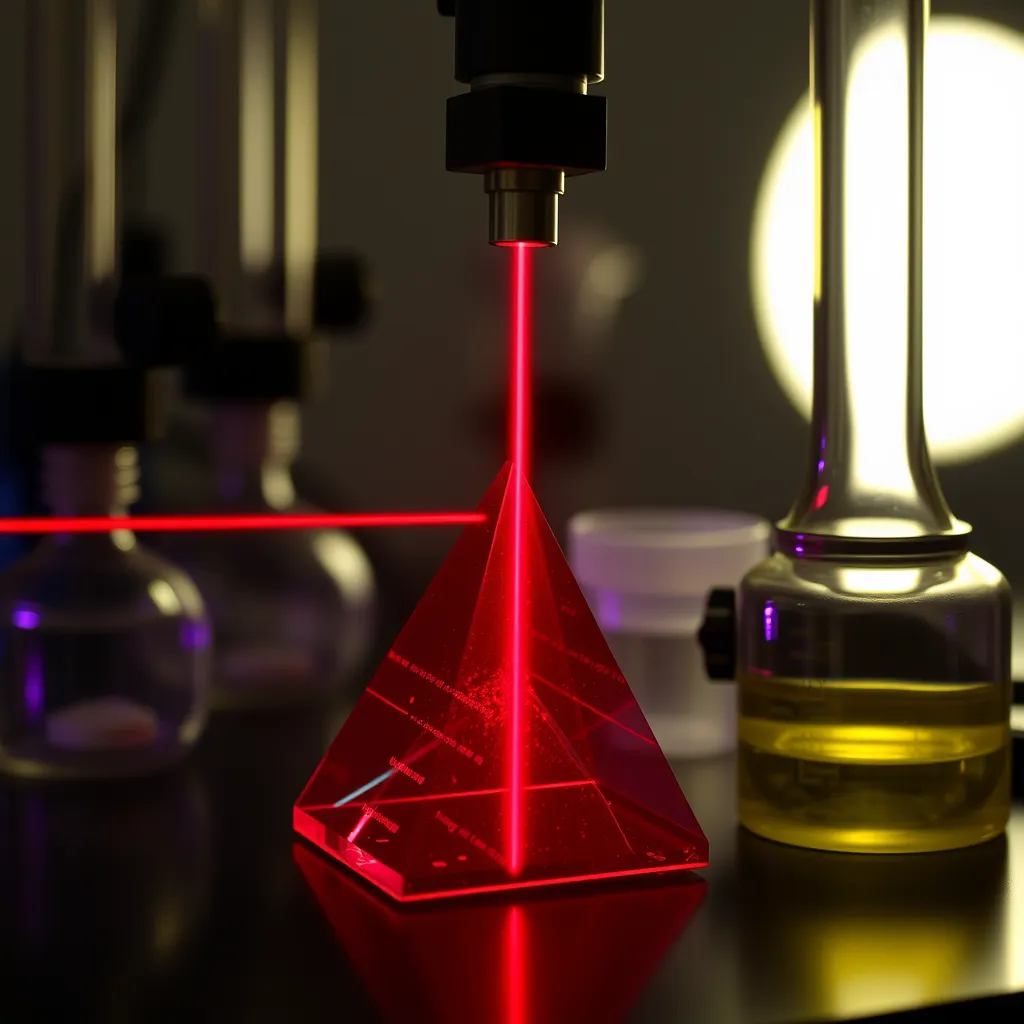
The word LASER is an acronym for Light Amplification by Stimulated Emission of Radiation. Unlike the LED, a laser uses a resonant cavity-essentially two mirrors, one of which is partially transparent. When a photon passes an excited electron, it "stimulates" that electron to release a second photon that is an exact clone of the first. These two photons have the same wavelength, direction, and phase. This process repeats billions of times, creating a coherent beam where all light waves are perfectly synchronized.
Technical Specifications and Performance Metrics
To choose between these technologies, engineers look at specific performance data. The following table breaks down the primary metrics that differentiate a standard high-brightness LED from a typical diode laser.
Metric | Light Emitting Diode (LED) | Laser Diode |
|---|---|---|
Spectral Width | Broad (30nm - 100nm) | Ultra-narrow (<1nm) |
Beam Divergence | High (120° or more) | Very Low (typically <1°) |
Optical Power Density | Low (Spread over a large area) | Extremely High (Concentrated spot) |
Switching Speed | Fast (Nanoseconds) | Ultra-fast (Picoseconds) |
Standard Lifespan | 50,000 - 100,000 hours | 10,000 - 30,000 hours |
Luminous Efficacy | 80 - 150+ lumens/watt | 30 - 80 lumens/watt (system level) |
Key Characteristics of the Light Output
The divergence and coherence mentioned above result in three practical characteristics that dictate where these lights are used.
Monochromaticity
Lasers produce light of a single, precise color. If you have a 635nm red laser, almost every photon is exactly 635nm. This makes them indispensable for applications requiring specific chemical interactions or data filtering. LEDs, even those labeled as "red," actually produce a range of wavelengths centered around red. While this makes LEDs poor for precision sensors, it makes them better for general visibility, as the broader spectrum is easier for the human eye to process comfortably.
Collimation
A laser beam is naturally collimated, meaning the rays are parallel and do not spread out much as they travel. A laser pointed at the moon would only spread to a few kilometers wide by the time it arrived. An LED, conversely, follows the inverse square law aggressively; its intensity drops off rapidly as the distance increases because the light spreads in a wide cone.
Power Density (Irradiance)
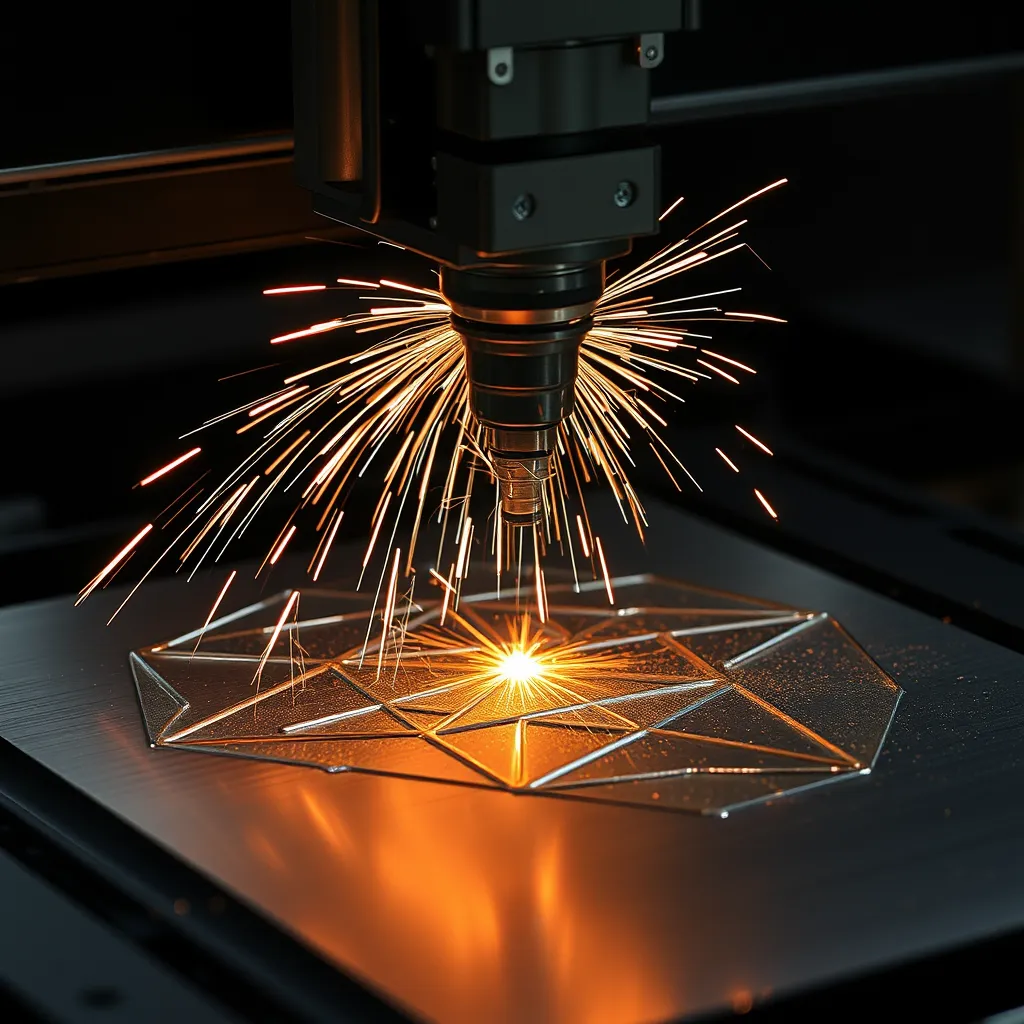
This is the most critical factor for industrial use. A 5-watt LED might be bright enough to light a small room, but it won't burn through a piece of paper because the energy is spread out. A 5-watt laser concentrates that same amount of energy into a spot smaller than a millimeter. This results in an incredibly high power density capable of melting steel or performing delicate eye surgery.
Practical Applications in Modern Technology
The choice between these two light sources usually comes down to whether you need to fill a space or hit a target.
General and Architectural Lighting
LEDs dominate this sector. They are significantly cheaper to manufacture, safer for the eyes, and can be designed to produce "warm" or "cool" white light by using blue chips coated in yellow phosphor. Lasers are inherently monochromatic, making them poorly suited for lighting a living room-the light would feel harsh, unnatural, and potentially dangerous.
Data Transmission and Telecommunications
In the world of fiber optics, lasers are the gold standard. Because laser light is coherent and can be switched on and off billions of times per second (high bandwidth), it can carry data across oceans through glass fibers with minimal signal loss. LEDs are sometimes used in very short-range, low-cost fiber applications (like TOSLINK digital audio), but they cannot match the distance or speed of laser-driven systems.
Medical and Aesthetic Treatments
The distinction is vital in dermatology:
Laser Therapy: Used for hair removal or tattoo removal. The laser targets a specific pigment (melanin or ink) with high energy, destroying the target without damaging the surrounding skin.
LED Therapy: Used for general skin rejuvenation or acne treatment. The "light baths" provide low-level energy to stimulate cellular repair across the entire face without the risk of burning the tissue.
Automotive Headlights
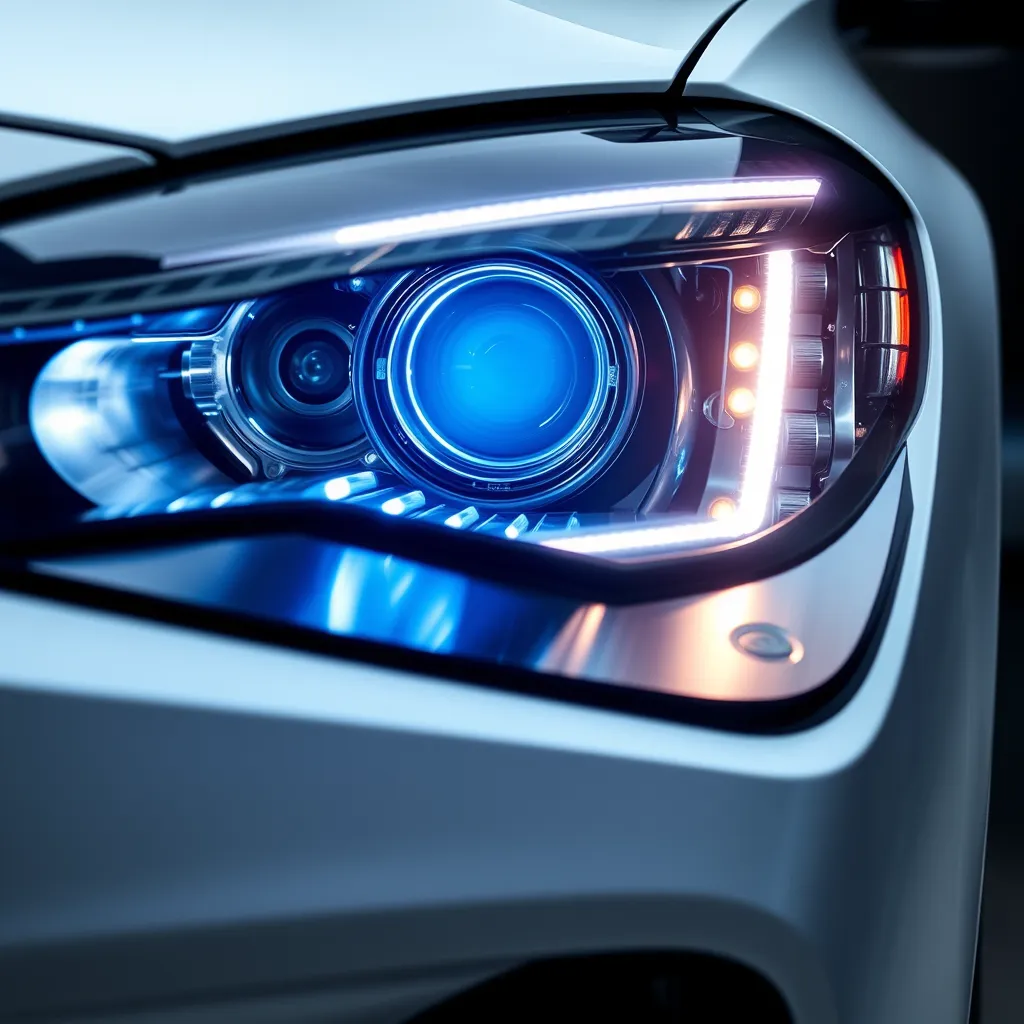
Modern high-end vehicles are beginning to bridge the gap between these technologies. Standard LED headlights are efficient and provide excellent peripheral vision. However, Laser High Beams use laser diodes to strike a phosphor element, which then glows intensely white. This allows for a beam that can reach 600 meters down the road-double the distance of standard LEDs-without increasing the physical size of the headlight assembly.
Safety Considerations and Eye Protection
Safety is the area where these two technologies diverge most sharply. Because the human eye contains a lens, it is designed to focus incoming light onto the retina.
When you look at a bright LED, the light is already diffused, and the lens spreads it across a relatively large area of the retina. While looking at a high-intensity LED can be uncomfortable and cause temporary "flash blindness," it rarely causes permanent structural damage at standard distances.
Lasers are a different story. Because the light is already collimated (parallel), the eye's lens focuses the beam down to an incredibly tiny, diffraction-limited spot. This concentrates the energy so much that it can literally cook the retinal tissue in a fraction of a second. This is why lasers are strictly categorized into classes (Class 1 through Class 4) based on their potential for injury.
Cost and Manufacturing Complexity
The manufacturing process for LEDs has been optimized over decades, leading to massive economies of scale. A simple indicator LED costs fractions of a cent. Even high-power COB (Chip on Board) LEDs used in stadium lighting are relatively inexpensive because they do not require precision optical alignment during the packaging phase.
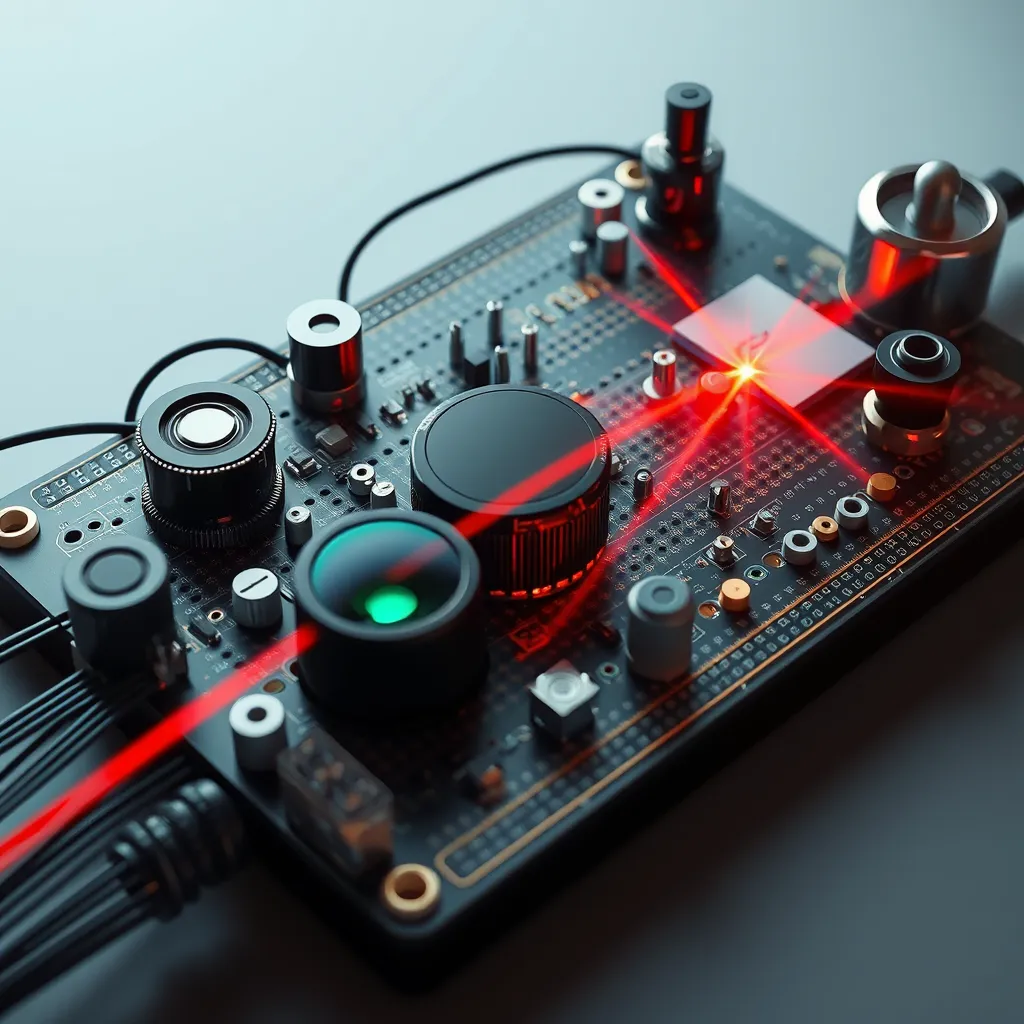
Lasers require much tighter tolerances. The mirrors in the resonant cavity must be aligned with atomic precision. Furthermore, lasers are much more sensitive to "back-reflection" and heat. If a laser diode gets too hot, its wavelength shifts, and its efficiency plummets. This necessitates sophisticated cooling systems and drive electronics, which keeps the price of laser systems significantly higher than LED alternatives.
The Future: Laser-Driven Illumination?
We are currently seeing the emergence of Laser-Pumped Phosphor (LPP) technology. This technology uses a blue laser to excite a ceramic phosphor plate, which then emits a very high-intensity white light. This is currently used in high-end cinema projectors and searchlights.
The advantage is that the light source is nearly a "point source," which allows for much smaller and more efficient lenses and reflectors. While it is unlikely that you will have laser bulbs in your bedside lamp anytime soon, the "remote-phosphor" laser approach is likely to become the standard for any application that requires throwing light over long distances with maximum control.
Conclusion:
LEDs and lasers may share the same semiconductor roots, but they exist to solve opposite problems. LEDs spread incoherent, broad-spectrum light to fill spaces efficiently, safely, and cheaply, making them ideal for general lighting, displays, and skin rejuvenation. Lasers, through stimulated emission, deliver coherent, monochromatic, collimated beams of extraordinary power density, dominating fiber optics, precision medicine, and cutting applications. The right choice depends on a simple question: do you need to fill a space or hit a target? As laser-pumped phosphor technology matures, the line between the two is blurring, promising brighter, more controllable illumination for long-range and high-performance applications ahead.
Frequently Asked Questions
Q1: Can I use an LED to cut material if I focus it enough?
A: No. Because LED light is incoherent and divergent, it cannot be focused into a small enough spot to achieve the power density required for cutting. Even with the best lenses, the "spot" would be too large and the energy too spread out to melt metal or plastic effectively.
Q2: Why are laser projectors better than LED projectors?
A: Laser projectors offer higher brightness levels (often exceeding 5,000 lumens) and a much wider color gamut. They also maintain their brightness for a longer period over their lifespan. LED projectors are quieter and cheaper but are generally limited to smaller screens and dark rooms due to lower light output.
Q3: Is "Laser Light" therapy the same as "Red Light" LED therapy?
A: No. While both may use similar wavelengths (around 660nm), laser therapy is "Cold Laser" or LLLT (Low-Level Laser Therapy), which penetrates deeper into the tissue due to its coherence. LED therapy is more superficial and is used for treating the surface of the skin rather than deep muscle or joint issues.
Q4: Does a laser use more power than an LED?
A: At the component level, a laser diode is often less efficient than an LED at converting electricity into raw light. However, because the laser puts 100% of its light exactly where it is needed, it can be more "system efficient." For example, a 5-watt laser might be more effective for a long-range pointer than a 50-watt LED that wastes most of its light spilling into the sky.