For decades, the high-pressure sodium (HPS) lamp reigned supreme in high-intensity discharge (HID) applications. Its distinct orange glow illuminated highways, parking lots, and industrial warehouses across the globe. However, the rapid advancement of solid-state lighting has fundamentally shifted the landscape. Understanding the technical and economic differences between traditional gas-discharge lamps and modern semiconductor-based fixtures is essential for facility managers, urban planners, and indoor cultivators alike.
While HPS technology is mature and familiar, it relies on an electrical arc through vaporized sodium metal. This process is inherently less efficient than the way a Light Emitting Diode (LED) converts electrons directly into photons. The transition from HPS to LED is not merely a change in bulb type; it is a move from an analog, heat-intensive process to a digital, controllable, and highly efficient system.
Operational Efficiency and Photometric Performance
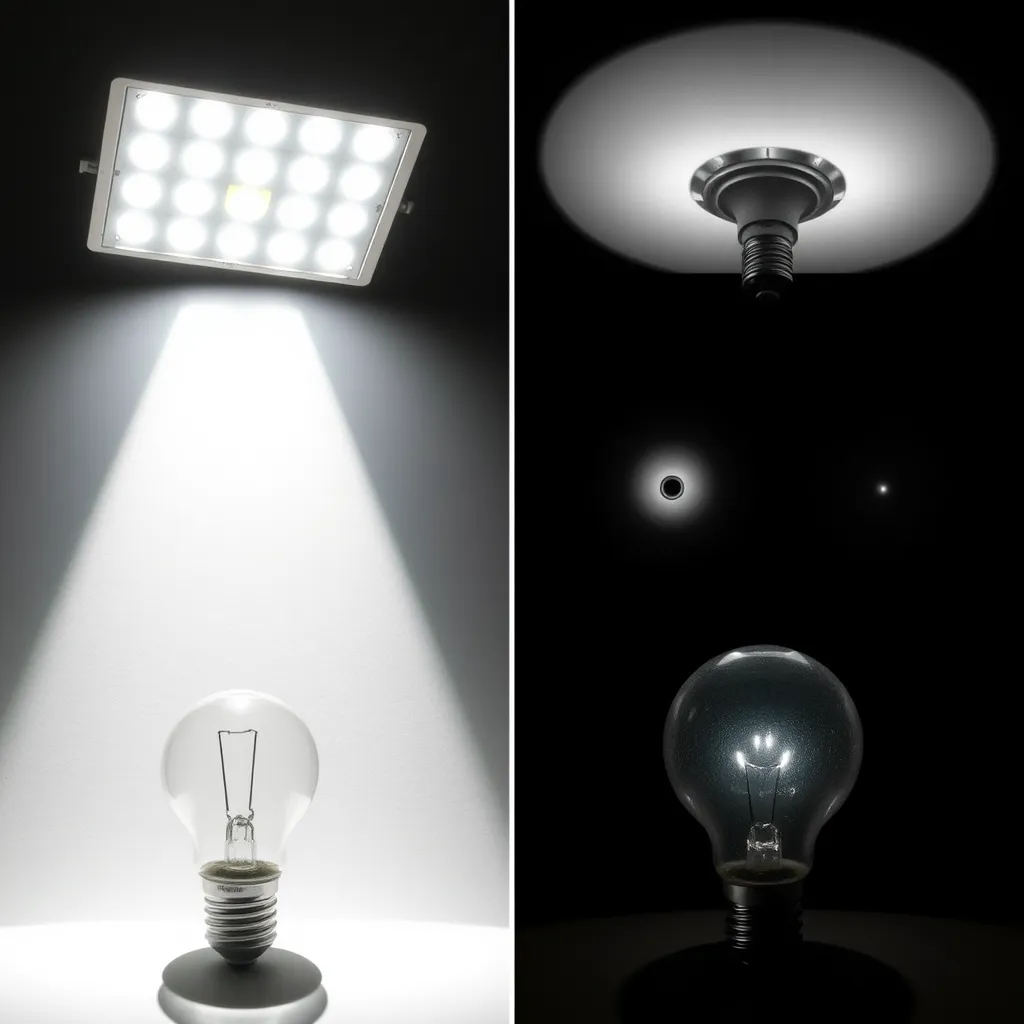
The primary metric used to compare these two technologies is luminous efficacy, measured in lumens per watt (lm/W). High-pressure sodium lamps are surprisingly efficient at producing light, often reaching 100 to 150 lm/W. On paper, this appears competitive with many LED fixtures. However, raw efficacy does not account for fixture efficiency or delivered light.
HPS bulbs are omnidirectional, meaning they emit light in a 360-degree radius. To point that light toward the ground or a crop, the fixture must use a reflector. Every time light bounces off a reflective surface, 10% to 15% of the energy is lost as heat. Furthermore, "trapped light" within the housing further degrades the output. In contrast, LEDs are inherently directional. They emit light in a specific arc (usually 120 degrees), meaning nearly 100% of the generated photons reach the target area without needing to bounce off internal reflectors.
Real-World Power Consumption
When comparing a 400W HPS system to a modern LED equivalent, the energy savings typically range from 40% to 60%. This is because a 400W HPS actually draws closer to 465 watts when you account for the ballast factor (the ballast's energy consumption). An LED fixture rated at 200W will generally replace that 400W HPS while providing better visibility and lower energy bills.
Feature | High-Pressure Sodium (HPS) | Modern LED Fixture |
|---|---|---|
System Efficacy | 80-120 lm/W (delivered) | 140-200+ lm/W (delivered) |
Beam Angle | 360° (requires reflectors) | Directional (15° to 120°) |
Energy Draw (Equivalent) | 465W (includes ballast) | 180W-220W |
Warm-up Time | 5-15 minutes | Instant-on |
Longevity and the Hidden Costs of Maintenance
The lifespan of a lighting system is often the deciding factor in its Total Cost of Ownership (TCO). HPS lamps generally last between 10,000 and 24,000 hours. While this sounds substantial, it means that in a 24/7 industrial environment, the bulbs must be replaced every 14 to 30 months. Furthermore, HPS lamps do not fail gracefully. As they age, they experience "cycling," where the lamp attempts to stay lit but the voltage requirements exceed what the ballast can provide, causing the light to turn on and off repeatedly.
LED systems are rated by their L70 lifespan-the point at which the light output has dropped to 70% of its original brightness. Most commercial-grade LEDs are rated for 50,000 to 100,000 hours. For a municipality running street lights 12 hours a day, an LED fixture can last over 20 years without a single bulb change.
Calculating the Maintenance Gap
In high-ceiling warehouses or street lighting, the cost of the bulb is negligible compared to the cost of labor. Renting a scissor lift or a bucket truck can cost $500 to $1,000 per day. If a facility has 200 HPS fixtures, the rolling cycle of replacements becomes a permanent line item in the maintenance budget. Transitioning to solid-state lighting eliminates this cycle, allowing maintenance staff to focus on more critical infrastructure tasks.
Spectral Quality and Color Rendering
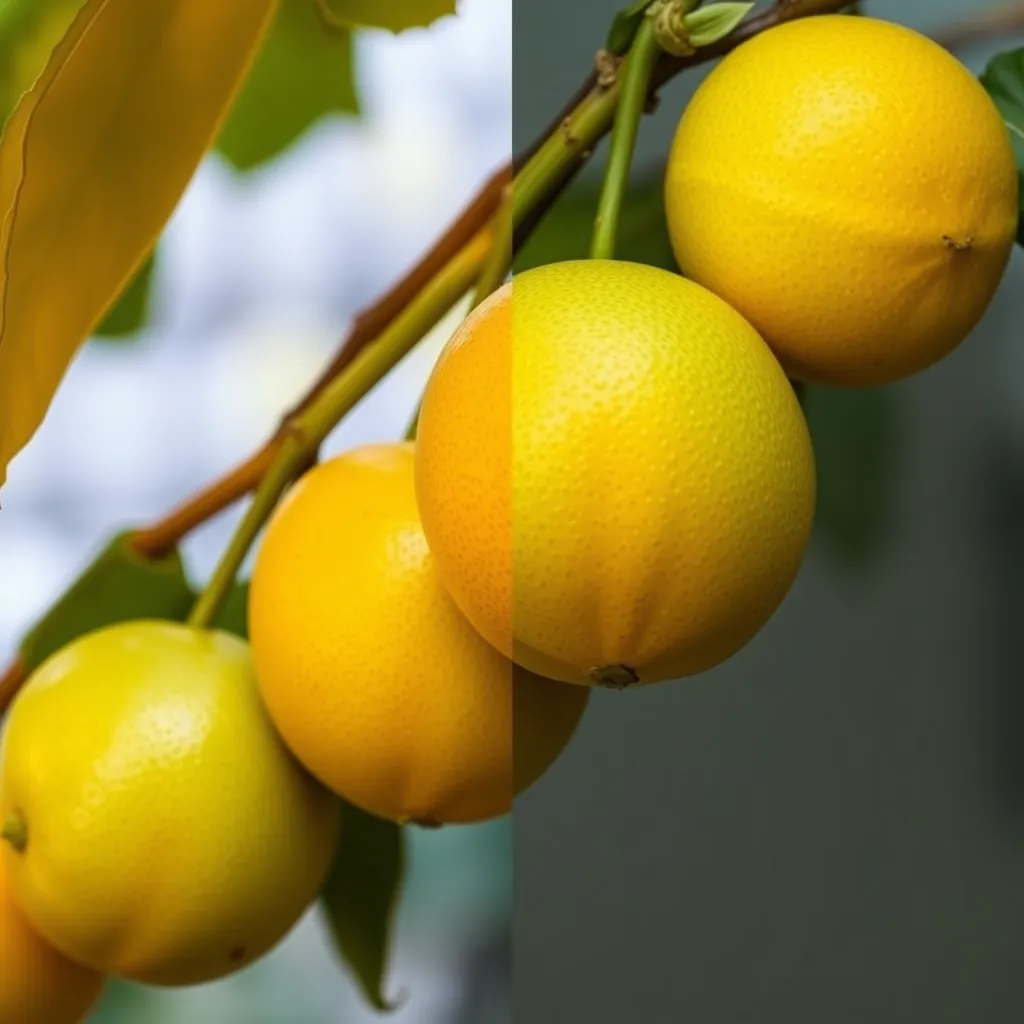
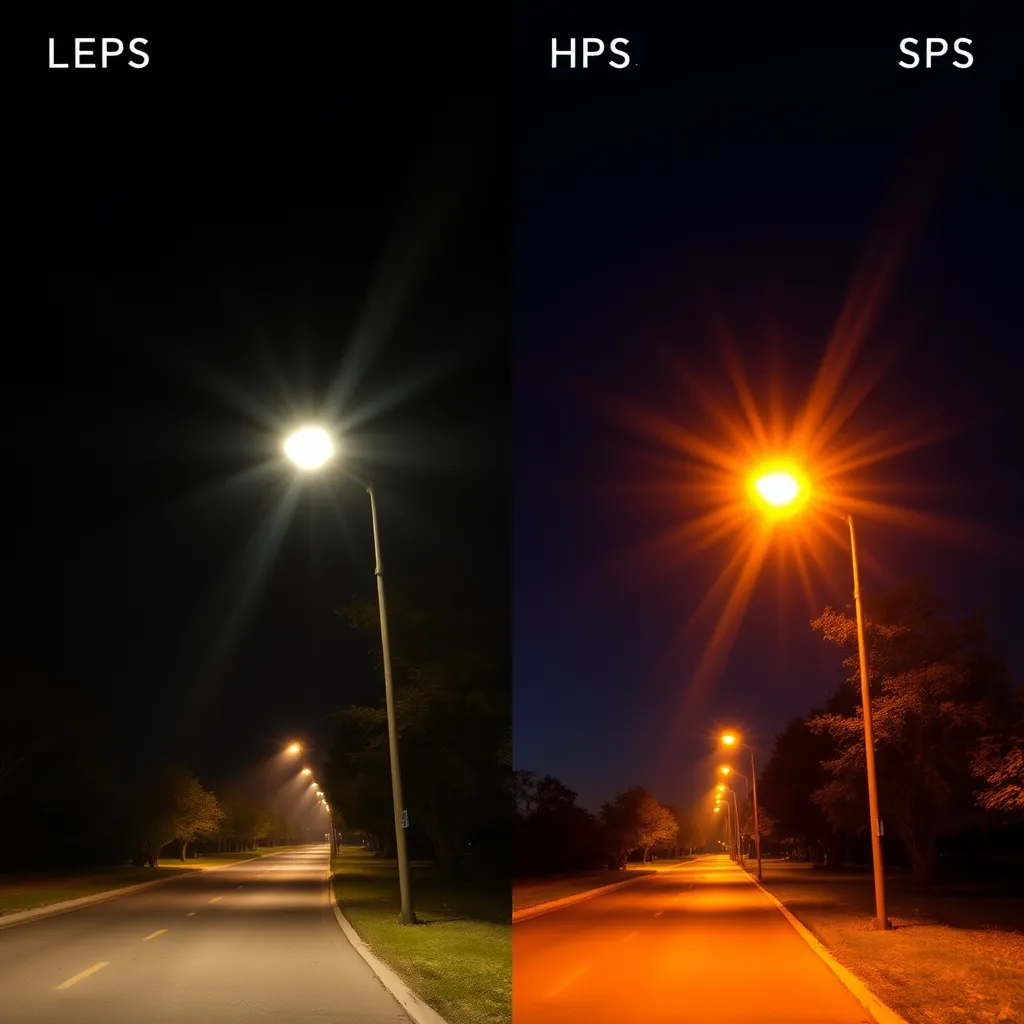
One of the most significant drawbacks of HPS is its Color Rendering Index (CRI). HPS typically scores around 20 to 25 out of 100. This low score is due to its monochromatic yellow-orange spectrum. Under HPS light, it is nearly impossible to distinguish between a blue car and a green car, or to accurately assess the health of a plant's leaves.
LEDs offer a broad spectrum with CRI values typically ranging from 70 to 95. This has profound implications for different sectors:
Public Safety: High-CRI light allows security cameras to capture accurate colors and helps pedestrians identify faces and objects more quickly.
Industrial Safety: In warehouses, workers can easily read labels and identify color-coded safety markers, reducing errors and accidents.
Horticulture: Plants require different wavelengths for various stages of growth. While HPS is rich in red light (good for flowering), it lacks the blue light necessary for sturdy vegetative growth. LEDs can be tuned to provide "full-spectrum" light that mimics the sun.
The "Pink" Shift and Lumen Depreciation
HPS lamps lose their brightness much faster than LEDs. An HPS bulb may lose 20% of its light output within the first year of use. This is often accompanied by a color shift, where the light becomes increasingly pink or deep orange. LED fixtures are significantly more stable, typically losing less than 1% of their brightness per year of operation.
Thermal Management and Environmental Impact
Energy that is not converted into light is converted into heat. Because HPS lamps are less efficient, they run extremely hot. The surface temperature of an HPS bulb can exceed 400°C (750°F). In an indoor grow room or a climate-controlled warehouse, this heat must be removed by air conditioning systems, leading to a "double-dip" in energy costs: once to power the light, and once to cool the room.
LEDs do produce heat, but it is managed differently. The heat is generated at the junction of the diode and is pulled away by a heat sink. The light beam itself contains very little infrared radiation (heat). This allows growers to place lights closer to the canopy without burning the plants and allows warehouse managers to reduce their cooling load.
Toxic Materials and Disposal
Every HPS lamp contains mercury vapor and sodium. When these bulbs break or reach the end of their life, they are classified as hazardous waste and require specific disposal protocols. LEDs contain no mercury and are constructed from standard electronic components, making them much safer for the environment and easier to recycle at the end of their multi-decade lifespan.
Advanced Control and Smart Integration
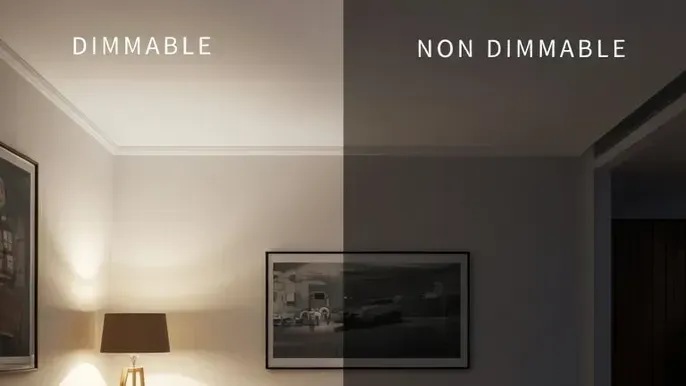
The "instant-on" capability of LEDs is a major functional advantage. HPS lamps require a warm-up period and, more importantly, a "restrike" period. If the power flickers, an HPS lamp must cool down for several minutes before it can be turned back on. This makes them incompatible with motion sensors or advanced dimming systems.
LEDs can be dimmed from 100% down to 0% instantly. They can be integrated with occupancy sensors to save even more energy in low-traffic areas. In smart city applications, LED street lights can be networked together, allowing a central operator to dim entire districts during late-night hours or brighten them during emergencies.
Financial Analysis: Upfront Cost vs. Long-Term ROI
The only remaining advantage of HPS is the initial purchase price. A 1000W HPS grow light kit might cost $150, while a high-quality LED fixture with the same output might cost $600. For a hobbyist on a strict budget, HPS is tempting. However, for any commercial operation, the "cheap" light is actually the more expensive option over time.
Consider a facility with 100 fixtures. The energy savings alone usually pay back the price difference within 12 to 24 months. When you add the avoided costs of bulb replacements and reduced cooling requirements, the Return on Investment (ROI) is undeniable. Most utility companies also offer significant rebates for switching to LED, which can cover 20% to 50% of the initial equipment cost, shortening the payback period even further.
Summary of Key Differences
Metric | High-Pressure Sodium | LED Technology |
|---|---|---|
Lifespan | Short (1.5-3 years) | Long (10-20+ years) |
Color Accuracy | Poor (CRI 20-25) | Excellent (CRI 70-95) |
Heat Output | Very High | Low to Moderate |
Dimmability | Limited/Difficult | Highly Controllable |
Hazardous Materials | Contains Mercury | None |
Conclusion:
The comparison between high-pressure sodium and LED lighting ultimately comes down to short-term savings versus long-term value. While HPS lamps remain attractive for their low upfront cost and familiar performance, they carry persistent burdens: higher energy consumption, frequent bulb replacements, poor color rendering, excessive heat output, and hazardous mercury content. LED technology addresses every one of these weaknesses, delivering directional efficiency, lifespans measured in decades, superior color accuracy, instant-on smart controls, and a far smaller environmental footprint.
For hobbyists and tight budgets, HPS may still hold momentary appeal. But for facility managers, municipalities, and commercial growers, the math is clear. Energy savings alone typically recover the price premium within 12 to 24 months, and once reduced maintenance, lower cooling loads, and utility rebates are factored in, the return on investment becomes overwhelming. As solid-state lighting continues to improve and HPS phases out of mainstream use, the transition is no longer a question of if, but when - and the sooner the switch is made, the sooner the savings begin.
Frequently Asked Questions
Q1: Does HPS penetrate deeper into plant canopies than LED?
A: This is a common misconception. Light penetration is a function of light intensity (PPFD) and beam angle, not the technology producing the light. A high-powered LED with secondary optics can penetrate a canopy just as effectively as an HPS. In fact, because LEDs stay cooler, they can often be placed closer to the plants, resulting in better light intensity at the lower nodes.
Q2: Why do some LED streetlights look "bluer" than the old orange ones?
A: Early LED conversions used "cool white" diodes (5000K-6000K) which contain more blue light. While highly efficient, this can contribute to light pollution. Modern installations now favor "warm white" LEDs (2700K-3000K), which provide the same comfortable amber tone as HPS but with much higher color clarity and efficiency.
Q3: Can I just put an LED bulb into my old HPS fixture?
A: While "LED corn bulbs" exist for retrofitting, they are often a compromise. HPS fixtures have ballasts that must be bypassed or removed for the LED to work safely. Additionally, the reflector inside an HPS fixture is designed for a single point-source bulb; putting an LED in there often results in poor light distribution. A dedicated LED fixture is almost always a better long-term investment than a screw-in retrofit.