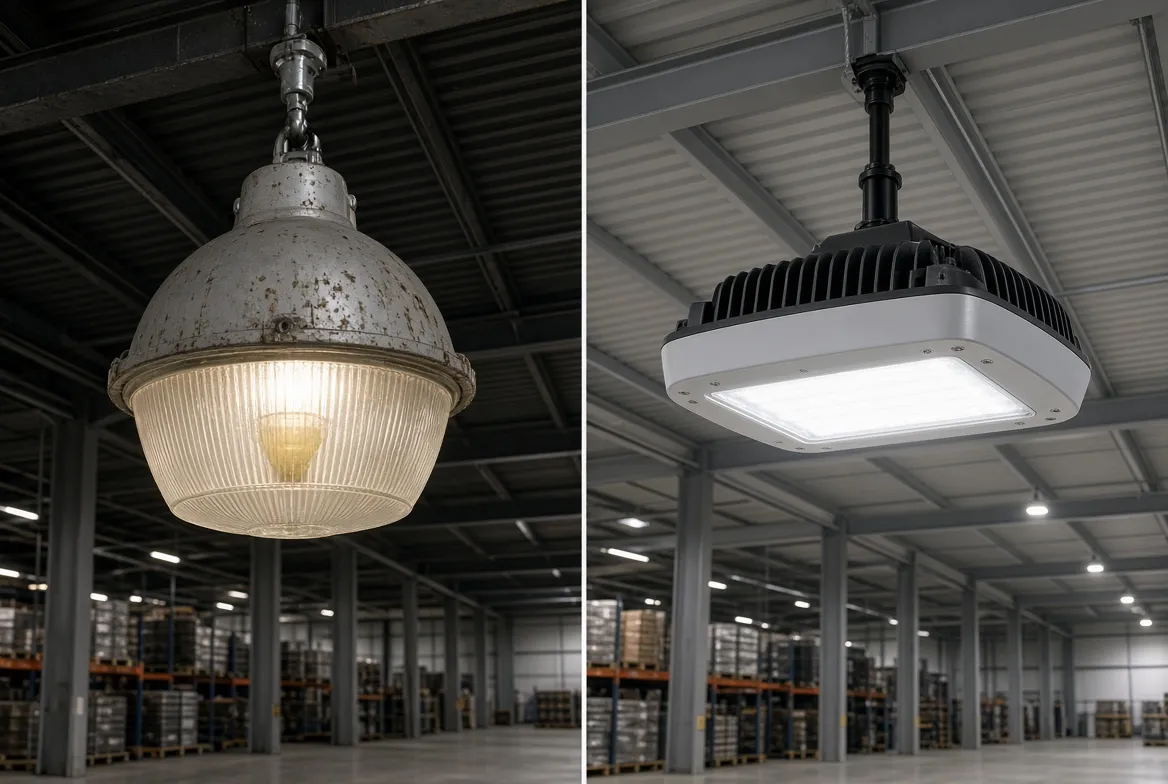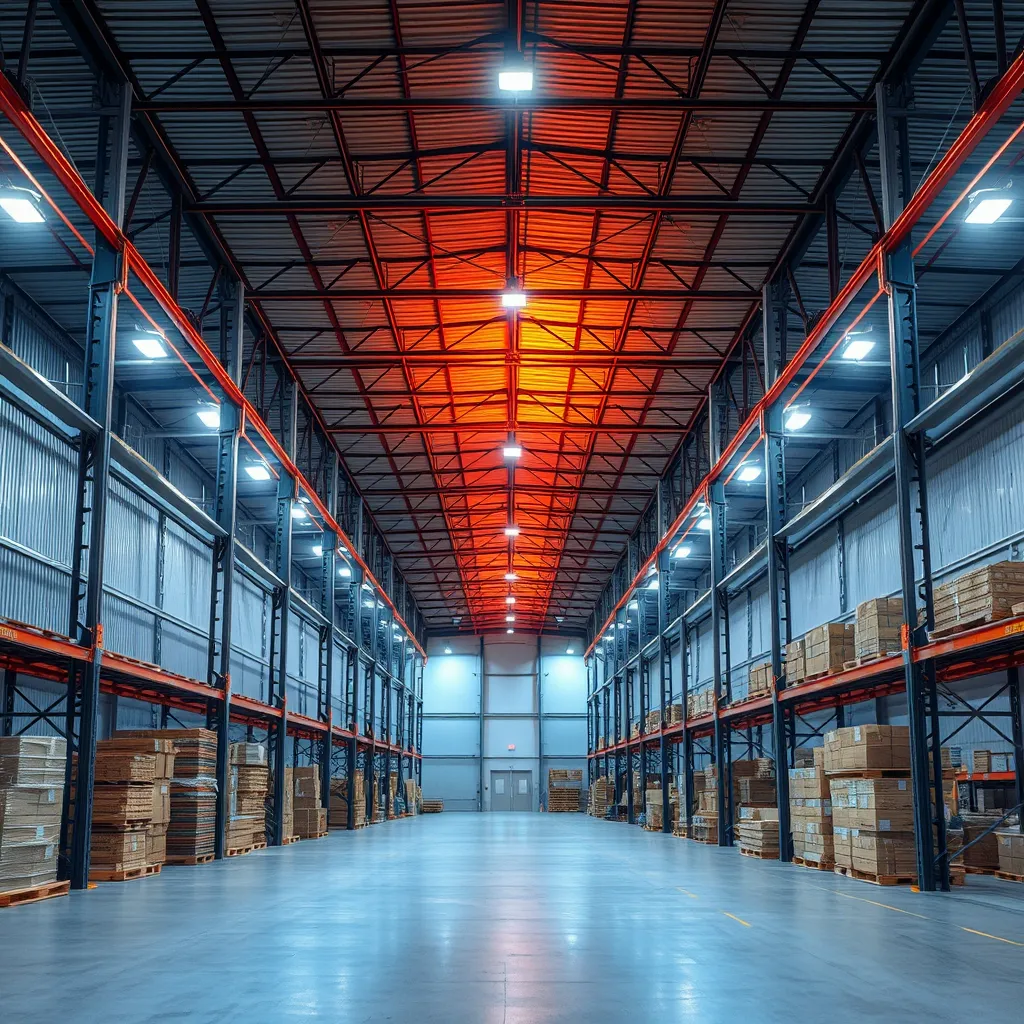
The debate between traditional High-Intensity Discharge (HID) systems and modern solid-state lighting has largely been settled by the rapid advancement of semiconductor technology. While metal halide fixtures were the standard for industrial high-bay lighting, parking lots, and stadiums for decades, they rely on a 1960s-era process: creating an electrical arc through a mixture of mercury and metal halides. In contrast, light-emitting diodes (LEDs) produce light by passing a current through a semiconductor material.
This fundamental difference in physics dictates everything from how much your monthly utility bill will be to how often a technician needs to climb a lift to replace a failing bulb. Understanding the technical nuances of these two systems is essential for any facility manager or business owner looking to optimize their operational overhead.
Core Performance Specifications
To understand the scale of the transition, we must look at the raw data. Metal halide systems are often rated by their "initial lumens," but this number is deceptive. These bulbs lose a significant portion of their light output within the first few thousand hours of operation. LEDs maintain their brightness far more effectively over a much longer period.
Technical Metric | LED Technology | Metal Halide (HID) |
|---|---|---|
System Efficacy | 120-200 Lumens per Watt (lm/W) | 75-100 Lumens per Watt (lm/W) |
Rated Lifespan (L70) | 50,000-100,000 Hours | 6,000-15,000 Hours |
Lumen Depreciation | 5-10% at 50,000 hours | 30-50% at 10,000 hours |
Color Rendering Index (CRI) | 70-90+ (Excellent) | 60-70 (Fair) |
Startup / Restrike Time | Instantaneous (<1 second) | 5-20 Minutes |
Operating Temperature | -40°F to 122°F | Extremely High (Up to 1,000°F at bulb) |
Hazardous Materials | None (RoHS Compliant) | Mercury and Lead |
Energy Consumption and System Wattage
When comparing energy use, looking at the bulb wattage alone is a common mistake. A "400-watt" metal halide fixture actually draws closer to 455 or 460 watts because the ballast-the component that regulates the current-consumes energy itself. This is known as "system wattage."
LEDs are significantly more efficient because they are directional. A metal halide bulb emits light in 360 degrees. To get that light down to the floor where it is needed, the fixture must use a reflector. Even with a high-quality polished reflector, 30% or more of the light is lost (trapped) inside the fixture before it ever leaves the housing. This is called "fixture efficacy."
Because LEDs are mounted on a flat circuit board, they emit light in a specific direction (usually a 120-degree beam). This means a 150-watt LED fixture can often replace a 400-watt metal halide fixture while providing the same, if not better, light levels on the work surface. In a facility running 24/7, this 60-70% reduction in power draw translates to thousands of dollars in annual savings.
Maintenance Cycles and Longevity
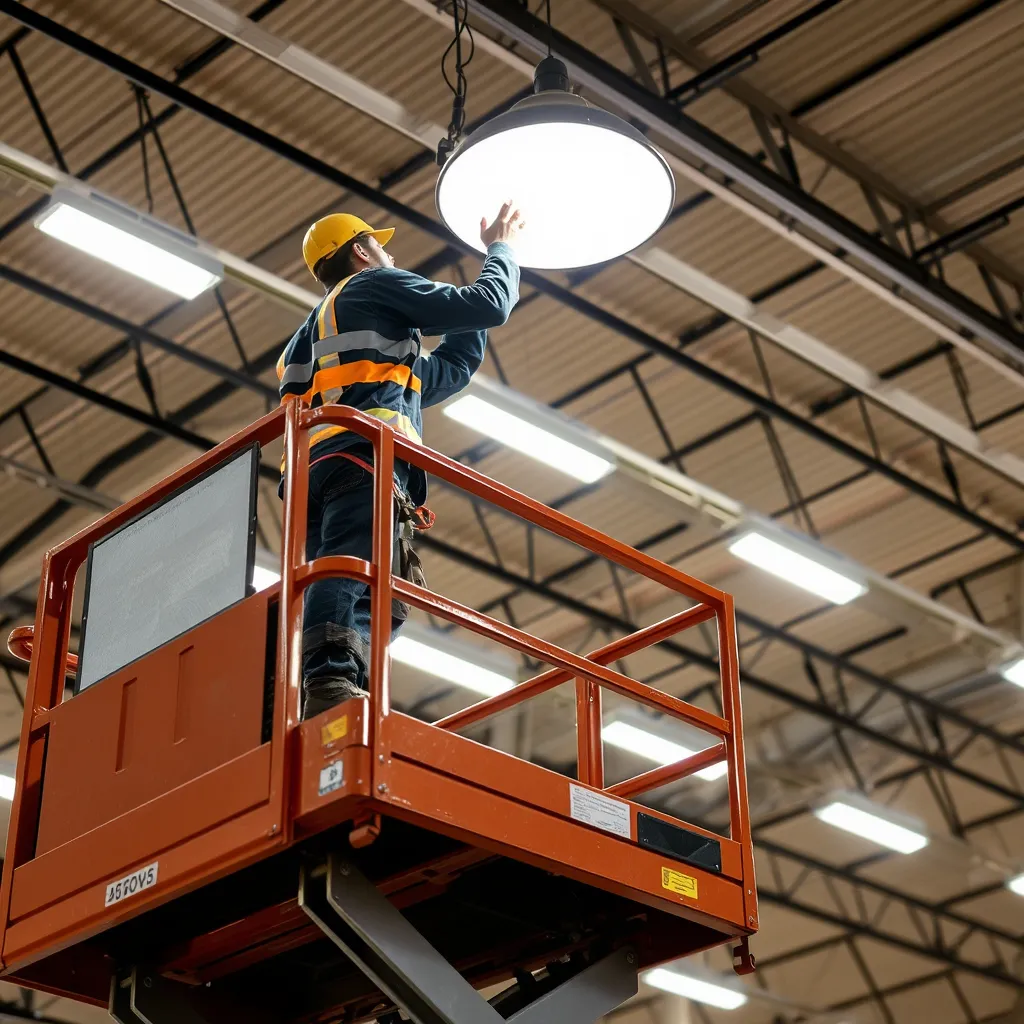
The lifespan of a metal halide bulb is relatively short, usually between 6,000 and 15,000 hours. However, the "useful life" is even shorter. Because of the rapid lumen depreciation mentioned earlier, most facilities find that the light levels become unsafe or inadequate long before the bulb actually burns out.
Furthermore, metal halide bulbs have a "non-passive" end-of-life. This is a polite way of saying they can explode. As the arc tube weakens over time, the internal pressure can cause the glass to shatter, potentially raining hot shards down on employees or equipment. To prevent this, manufacturers recommend "group re-lamping," where every bulb in a facility is replaced at 70% of its rated life, regardless of whether they are still working.
LEDs do not "burn out" in the traditional sense. Instead, they slowly dim over time. The industry standard for LED life is "L70," which is the point at which the light output has dropped to 70% of its original brightness. For a high-quality fixture, this is often 100,000 hours. In a warehouse operating 12 hours a day, that is over 22 years of maintenance-free operation. You eliminate not just the cost of the bulbs, but the cost of renting scissor lifts and the labor of the electricians required to change them.
Operational Safety: Startup and Restrike
One of the most frustrating aspects of metal halide lighting is the warm-up period. When you flip the switch, the gases inside the bulb need time to heat up and reach a state of plasma. This takes 5 to 10 minutes to reach full brightness.
The bigger issue is "restrike time." If your facility experiences a momentary power flicker-even for just half a second-the arc in the metal halide bulb is extinguished. The bulb cannot restart until it cools down. This means your entire floor could be in total darkness for 15 to 20 minutes while you wait for the lights to reset. This is a major safety hazard in environments with heavy machinery or forklifts.
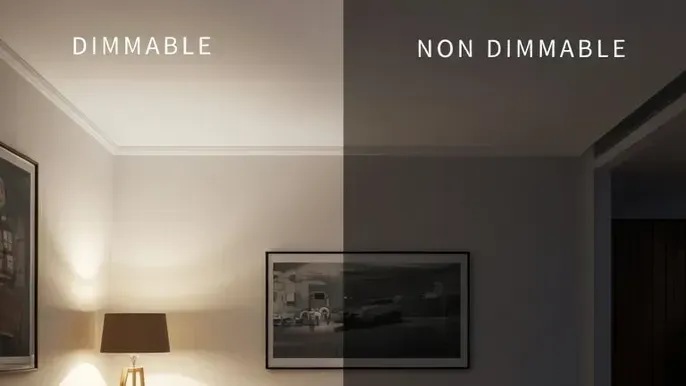
LEDs are instant-on and instant-off. They reach 100% brightness the millisecond power is applied. This also allows them to be paired with motion sensors. You can set your warehouse lights to dim to 20% when no one is in an aisle and instantly return to 100% when a worker enters. This is impossible with metal halide, which must remain at full power all day to avoid the long warm-up cycles.
Light Quality and Visual Accuracy
The Color Rendering Index (CRI) measures how accurately a light source reveals the true colors of objects. Metal halide typically sits in the 60-70 range, which often gives the environment a grainy, yellowish, or greenish tint. As these bulbs age, they undergo "color shift," where different fixtures in the same room will start to glow in different hues (some pink, some green, some blue).
LEDs typically offer a CRI of 80 or higher. In a manufacturing environment, this is critical for:
Safety: Clearly seeing the color of warning labels, electrical wires, and floor markings.
Quality Control: Detecting defects in paint, fabric, or finished goods that would be invisible under poor lighting.
Employee Well-being: Reducing eye strain and headaches associated with the flicker and poor color of HID lamps.
Thermal Management and Environmental Impact
Metal halide bulbs are incredibly hot. They operate at temperatures exceeding 1,000°F. In a climate-controlled facility, your air conditioning system has to work harder to fight the heat generated by your lighting. Switching to LEDs reduces the "heat load" of the building, providing secondary savings on your HVAC costs.
From an environmental standpoint, every metal halide bulb contains mercury, a toxic heavy metal. When these bulbs break or are disposed of, they pose a risk to the environment. Many states have strict regulations and high fees for the disposal of HID lamps. LEDs contain no mercury and are much easier to recycle at the end of their multi-decade lifespan.
Retrofit vs. Full Fixture Replacement
If you are ready to move away from metal halide, you have three primary paths:
LED Corn Bulbs: These are large LED lamps that screw into the existing mogul base. You must bypass the internal ballast so the bulb receives direct line voltage. This is the cheapest upfront option but often results in poor heat dissipation and a shorter lifespan for the LED.
Retrofit Kits: You remove the "guts" of the old fixture (bulb, ballast, and reflector) and install a new LED driver and light engine inside the old housing. This is a middle-ground option that preserves the look of the old fixtures while providing better performance than a simple bulb swap.
New LED Fixtures: You remove the entire old fixture and install a purpose-built LED high-bay or area light. This is the best long-term investment. These fixtures are designed from the ground up to pull heat away from the LEDs, ensuring they last the full 100,000 hours. They also usually come with the best warranties (typically 5 to 10 years).
The Financial Reality of the Switch
While an LED fixture costs more upfront than a replacement metal halide bulb, the "payback period" is surprisingly short.
Consider a facility with 100 fixtures:
Energy Savings: Typically 50-70% reduction in the lighting portion of the electric bill.
Maintenance Savings: Eliminating 2-3 re-lamping cycles over a decade.
Rebates: Many utility companies offer "prescriptive" or "custom" rebates for switching to DLC-qualified LED fixtures, which can cover 20-50% of the initial purchase price.
Most commercial operations see a full return on investment (ROI) within 12 to 24 months. After that point, the energy savings go straight to the bottom line as increased profit.
Conclusion:
The transition from metal halide to LED lighting is no longer a question of if, but when. LEDs outperform HID systems across every meaningful metric: they use 50-70% less energy, last up to 100,000 hours, eliminate dangerous restrike delays, and render colors far more accurately. With no mercury, reduced HVAC load, and utility rebates offsetting upfront costs, most facilities recoup their investment within 12 to 24 months. For any operation prioritizing safety, efficiency, and long-term savings, upgrading to LED is the clear choice.
Frequently Asked Questions
Q1: Is it worth replacing metal halide bulbs if they aren't burnt out yet?
A: Yes. Because metal halide bulbs lose up to 50% of their light output halfway through their life, you are essentially paying 100% of the electricity cost for 50% of the light. The energy savings alone usually justify an immediate upgrade, even if the current bulbs are still functioning.
Q2: Do LEDs work well in high-heat environments like foundries?
A: Standard LEDs can struggle in extreme heat (above 122°F), as heat is the primary enemy of semiconductor longevity. However, specialized "High-Ambient" LED fixtures are designed with advanced heat sinks and remote drivers specifically for foundries and steel mills. Always check the ambient temperature rating of the fixture before installation.
Q3: Can I use my existing dimmers with LED warehouse lights?
A: Generally, no. Metal halide dimming is rare and uses specialized ballasts. To dim LED high-bays, you typically need a 0-10V dimming circuit, which requires running two low-voltage wires from the fixture to the dimmer switch or sensor. Many modern fixtures also offer wireless control options to avoid running new wires.
Q4: What is the "flicker" difference between the two?
A: Metal halide lamps flicker at a rate of 120 times per second (twice the frequency of the AC power grid). While this is often too fast for the eye to see consciously, it can cause "stroboscopic effects" with rotating machinery and contribute to worker fatigue. High-quality LED drivers convert AC to DC, providing a constant, flicker-free light source.