For decades, the orange-hued glow of high-pressure sodium (HPS) lamps was the undisputed signature of the urban night. Developed in the mid-20th century, these lamps provided a significant leap in efficiency over the mercury vapor and incandescent bulbs that preceded them. However, the lighting landscape has shifted fundamentally. The transition from sodium lighting vs LED: full comparison is no longer a theoretical debate but a global infrastructure overhaul.
While sodium vapor technology relies on heating a gas mixture to create a discharge arc, LEDs (Light Emitting Diodes) use semiconductors to convert electricity directly into light. This difference in physics leads to radical disparities in energy consumption, maintenance requirements, and visual clarity. Understanding these differences is essential for facility managers, municipal planners, and property owners looking to optimize their outdoor environments.
The Mechanics of High-Pressure Sodium and Solid-State Lighting
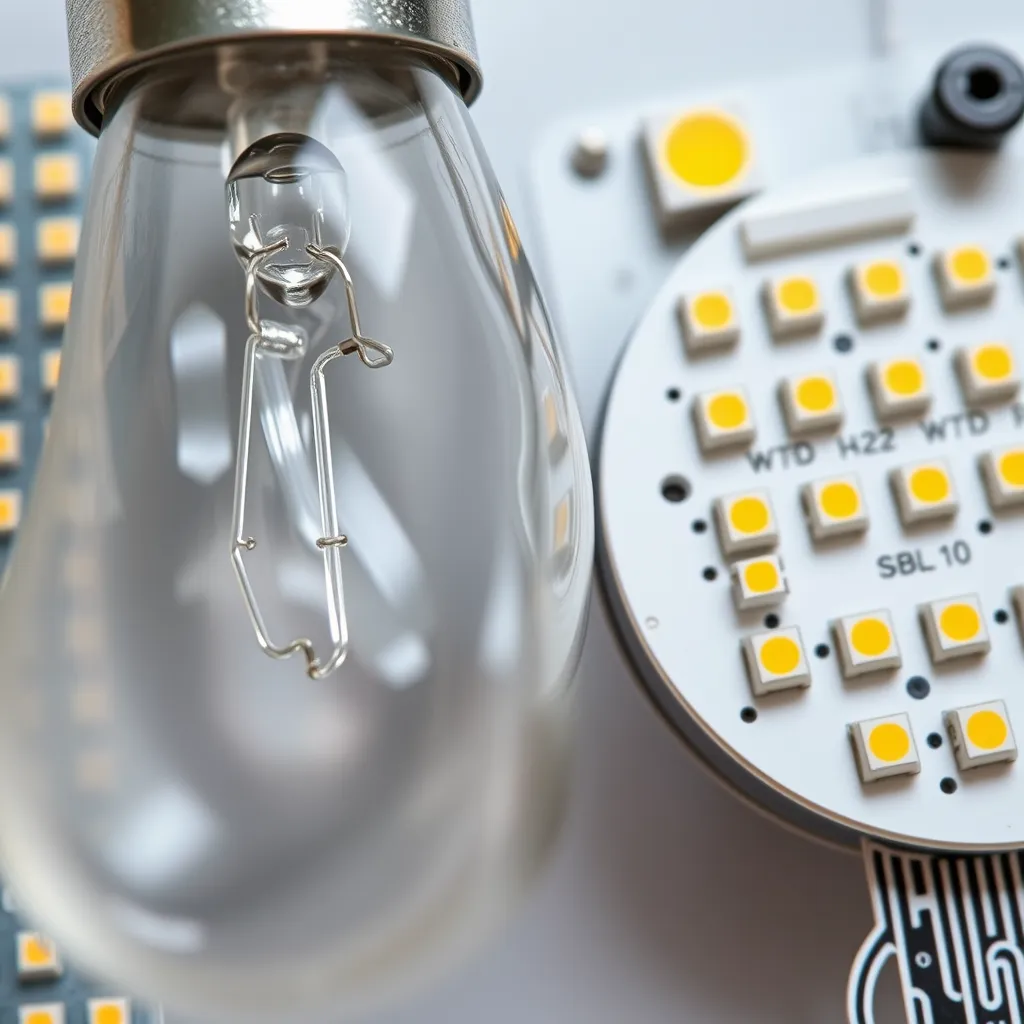
To understand why one technology is eclipsing the other, we must look at how they generate photons. A high-pressure sodium lamp is a type of high-intensity discharge (HID) light. It consists of a translucent ceramic tube containing a mixture of xenon, sodium, and mercury. When the light is powered on, an internal starter provides a high-voltage pulse to strike an arc. As the lamp warms up, the sodium vaporizes, creating the characteristic deep yellow-orange light.
In contrast, an LED is a solid-state device. Light is produced when electrons move across a semiconductor material, releasing energy in the form of photons. There is no gas to heat up, no delicate glass envelope required for operation, and no "warm-up" period. This fundamental difference allows LEDs to be far more durable and responsive than any gas-discharge lamp.
Operational Differences and Warm-Up Times
One of the most practical differences in daily use is the "strike" and "restrike" time. HPS lamps require 5 to 10 minutes to reach full brightness because the internal pressure and temperature must stabilize. If there is a brief power flicker, the lamp goes out and cannot be turned back on immediately. It must cool down for several minutes before the arc can be re-established-a period known as the restrike time.
LEDs are instant-on and instant-off. They reach 100% brightness the millisecond power is applied. This capability is not just a convenience; it is a safety feature. In the event of a power surge or momentary outage, LED-lit areas return to full visibility immediately, whereas HPS-lit areas remain in darkness for several minutes.
Technical Performance Metrics
Performance Metric | High-Pressure Sodium (HPS) | LED (Light Emitting Diode) |
|---|---|---|
Luminous Efficacy (Source) | 100-130 lm/W | 140-200+ lm/W |
System Efficiency (Delivered) | 60-90 lm/W (due to fixture loss) | 120-180 lm/W (directional) |
Rated Lifespan (L70) | 24,000 hours | 50,000-100,000+ hours |
Color Rendering Index (CRI) | 20-25 (Poor) | 70-90 (Excellent) |
Color Temperature (CCT) | ~2100K (Amber/Orange) | 2700K-5000K (Warm to Cool White) |
Light Distribution | Omnidirectional (360°) | Directional (Focused) |
Mercury Content | Yes (Hazardous waste) | No |
Luminous Efficacy and the "Lumen Trap"
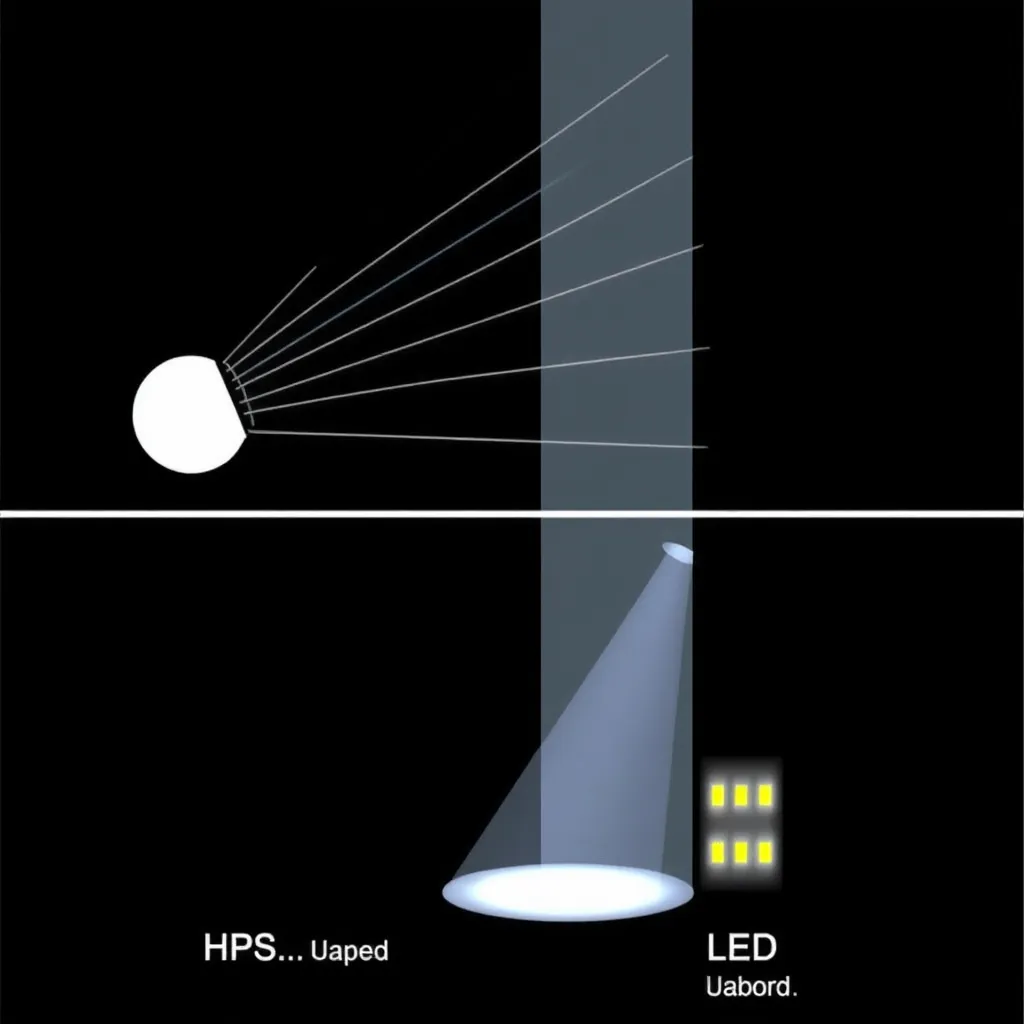
A common misconception is that HPS is almost as efficient as LED because its raw lumen output per watt is relatively high. However, this ignores the "lumen trap" inherent in HID fixtures. HPS lamps are omnidirectional; they emit light in a 360-degree sphere. To get that light down to the ground, the fixture must use reflectors.
Even the best reflectors are inefficient. Every time a photon bounces off a reflective surface, a percentage of its energy is lost as heat. Furthermore, reflectors struggle to prevent "light trespass"-light that spills into windows or up into the night sky. Typically, 30% to 40% of the light produced by an HPS bulb never reaches the intended target.
LEDs are naturally directional. They emit light in a specific direction (usually a 120-degree arc). By using secondary optics-small plastic lenses placed over each diode-engineers can shape the light beam with surgical precision. This means a 100W LED can often replace a 250W HPS because the LED wastes almost no light. The "delivered lumens" on the pavement are often higher with the lower-wattage LED.
Visual Clarity and Safety
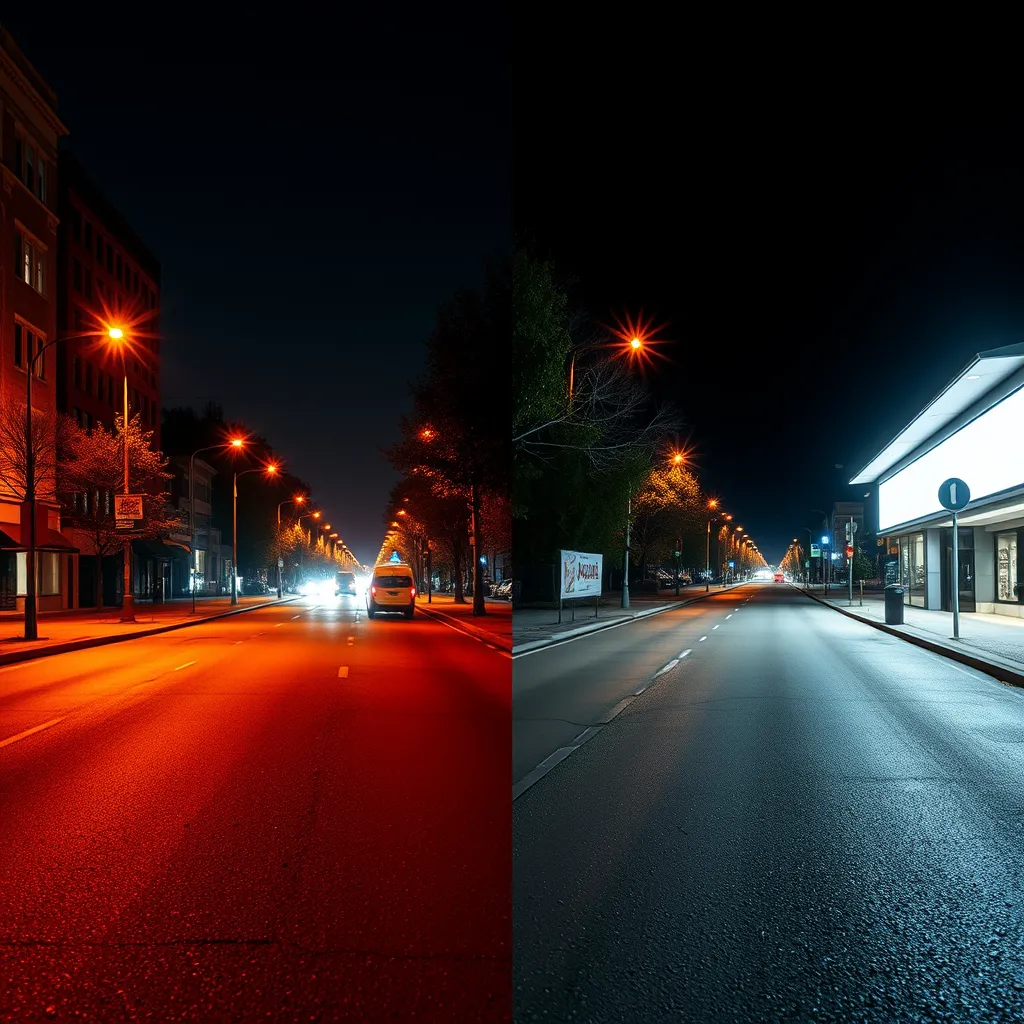
The most striking difference between these two sources is the Color Rendering Index (CRI). HPS has a CRI of approximately 20 to 25. Under this light, it is nearly impossible to distinguish between a red car and a dark blue car, or to identify the color of a person's clothing. Everything is rendered in shades of muddy yellow.
LEDs typically offer a CRI of 70 or higher. This improvement in color contrast is vital for security and safety. In a parking lot or on a city street, the ability to see true colors allows pedestrians and drivers to react faster to hazards. Security cameras also perform significantly better under white light, providing clearer footage that can be used for identification.
The Mesopic Vision Advantage
Human vision changes depending on light levels. In very bright light (photopic vision), we use the cones in our eyes. In near-total darkness (scotopic vision), we use rods. At the light levels typical of street lighting (mesopic vision), we use a combination of both.
Research has shown that the human eye is more sensitive to the "blue-rich" white light of LEDs in mesopic conditions than the "yellow-red" light of sodium lamps. This means that a street lit with white LEDs can actually appear brighter to the human eye than a street lit with HPS, even if a light meter shows the HPS street has more raw lumens. This allows municipalities to dim LEDs further without sacrificing perceived safety.
Maintenance and Long-Term Reliability
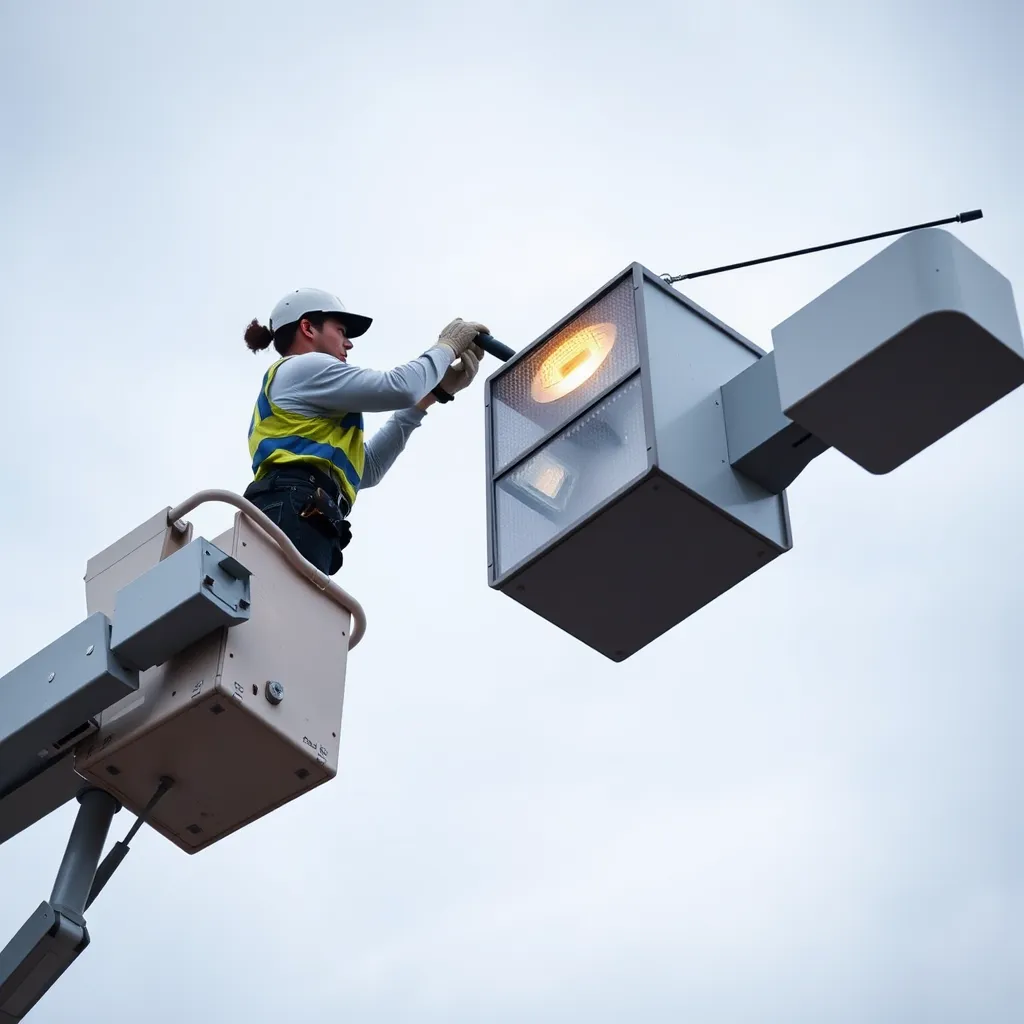
The cost of a light bulb is only a small fraction of the cost of "lighting." The real expense lies in the labor and equipment required to change it. HPS lamps generally last about 24,000 hours. In a typical street lighting application, the bulb must be replaced every six years. Furthermore, the ballast-the component that regulates the current-usually fails every 10 to 12 years.
Modern LED fixtures are rated for 50,000 to 100,000 hours. Many are designed to last 20 years or more without any maintenance. In a commercial or municipal setting, this eliminates the need for expensive bucket truck rentals and lane closures.
It is important to note that while the LED diodes themselves are incredibly durable, the "driver" (the electronic power supply) is the most likely point of failure. High-quality fixtures use drivers with robust surge protection to handle the electrical "noise" found on outdoor power grids.
The Impact of Color Temperature
When LEDs first began replacing sodium lamps, many cities installed "cool white" fixtures (5000K to 6000K). These were the most efficient LEDs available at the time, but they produced a harsh, bluish glare that many residents found unpleasant. Blue light also scatters more easily in the atmosphere, contributing to skyglow and disrupting the circadian rhythms of both humans and wildlife.
Today, the industry has shifted toward "warm white" LEDs (2700K or 3000K). These provide the same high color rendering and energy savings but with a visual tone that is much closer to traditional lighting. The American Medical Association (AMA) recommends using 3000K or lower for outdoor installations to minimize the health and environmental impacts of blue light.
Smart Controls and the Future of Urban Lighting
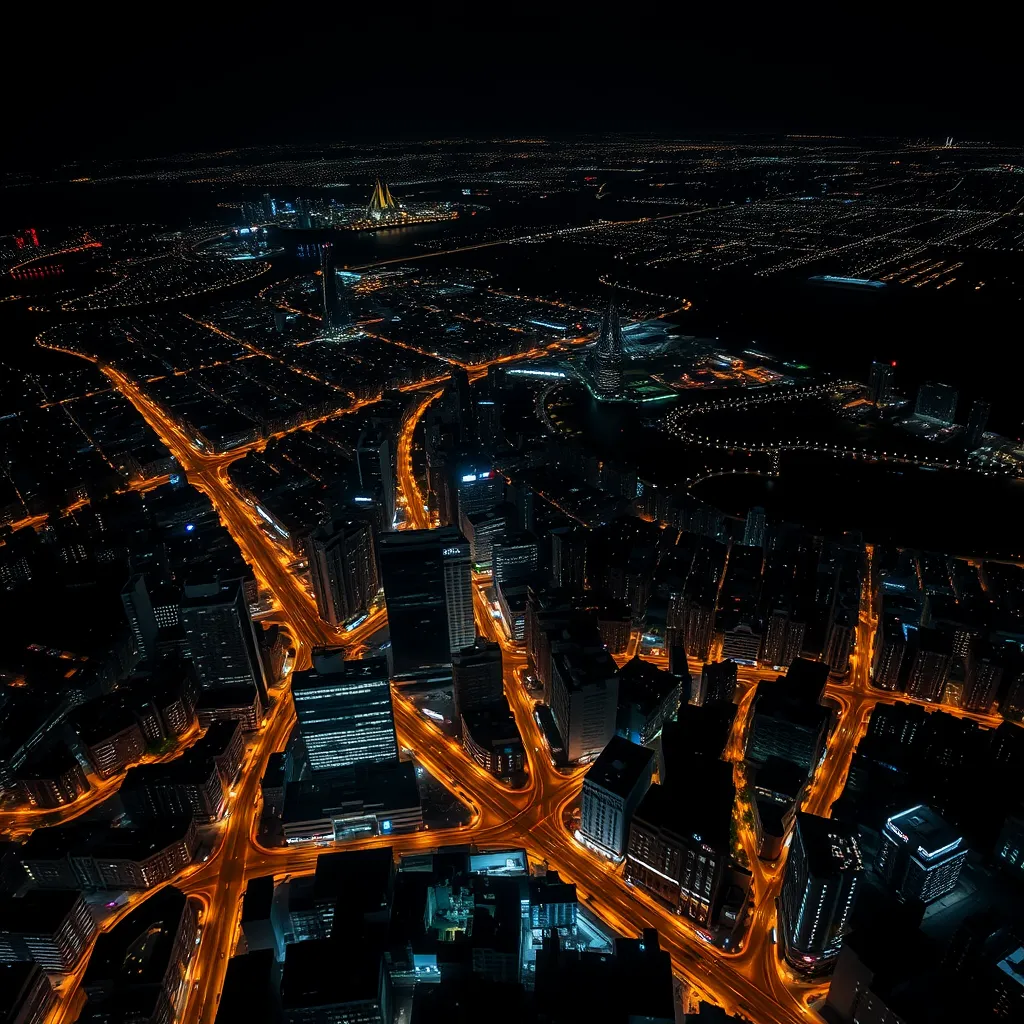
Sodium lighting is essentially "dumb" technology. While some HPS ballasts allow for basic dimming, it is technically difficult and often shortens the life of the lamp. LEDs, however, are digital. They are perfectly suited for integration with "Smart City" networks.
Many modern LED installations include:
Motion Sensing: Lights can remain dimmed to 20% power until a pedestrian or vehicle is detected, at which point they ramp up to 100%.
Adaptive Dimming: Schedules can be set to reduce light levels during the quietest hours of the night, saving an additional 30% on energy costs.
Remote Monitoring: The fixtures can "call home" to a central dashboard if they fail, allowing maintenance crews to know exactly which part is broken before they leave the shop.
Financial Considerations and ROI
The primary barrier to switching from sodium lighting vs LED: full comparison is the upfront cost. An LED fixture can cost two to three times more than an HPS equivalent. However, the return on investment (ROI) is usually achieved within 3 to 5 years through energy savings alone.
Consider a single 250W HPS fixture. Including ballast draw, it consumes about 285 watts. Replacing it with a 100W LED reduces energy consumption by 65%. If electricity costs $0.12 per kWh and the light runs for 12 hours a night, the LED saves roughly $97 per year in electricity. When you add the avoided cost of two HPS bulb changes over a decade, the LED pays for itself several times over its lifespan.
Conclusion
The comparison between high-pressure sodium and LED lighting is no longer a close contest. While HPS technology served cities well for decades, LEDs surpass it in nearly every measurable category: energy efficiency, lifespan, color rendering, directional control, and smart-control compatibility. Although the upfront investment is higher, the rapid 3-to-5-year ROI, drastically reduced maintenance, and improved safety through superior visibility make LEDs the clear choice for modern outdoor lighting. As municipalities and property owners continue upgrading their infrastructure, the warm amber glow of sodium lamps is steadily giving way to the cleaner, smarter, and more sustainable illumination of solid-state lighting.
Frequently Asked Questions
Q1: Can I just put an LED bulb into my old sodium fixture?
A: While "corn cob" LED retrofit bulbs exist, they are often a compromise. The original HPS fixture was designed around a single point of light and uses a reflector. Placing a multi-diode LED bulb inside that housing often results in poor light distribution and potential overheating, as the fixture wasn't designed to dissipate heat from an LED driver. A full fixture replacement is generally the more reliable long-term solution.
Q2: Why do sodium lights turn pink or purple before they die?
A: This is known as "cycling." As an HPS lamp ages, the chemical composition inside the arc tube changes, requiring a higher voltage to maintain the arc. Eventually, the voltage required exceeds what the ballast can provide. The lamp strikes, warms up, gets too hot for the ballast to sustain, shuts off, cools down, and repeats the process. The color shift to pink or purple is a sign that the sodium and mercury are no longer vaporizing at the correct ratios.
Q3: Are LED lights bad for the eyes compared to sodium?
A: Not inherently. The concern usually stems from "glare" and "blue light." Because LEDs are very small, concentrated light sources, they can be "pinpoints" of intense brightness. High-quality modern fixtures use diffusers and specialized optics to spread this light out, making them as comfortable as-or more comfortable than-old HPS lamps. Choosing a warmer color temperature (3000K) also mitigates most concerns regarding blue light exposure.