The comparison between "UL lights" and "LED" is rooted in a common misunderstanding of how lighting products are categorized. This is not a choice between two competing technologies. Instead, it is a distinction between a safety certification (UL) and a lighting technology (LED). An LED product can be UL-listed, and for any permanent installation, it absolutely should be. Understanding the intersection of these two concepts is the difference between a lighting setup that lasts a decade and one that poses a genuine fire hazard to your property.
Light Emitting Diode (LED) technology has fundamentally changed how we illuminate spaces, offering high efficiency and long lifespans. However, the market is flooded with low-cost components that bypass rigorous safety testing. Underwriters Laboratories (UL) serves as the gatekeeper, ensuring that the complex electronics inside an LED fixture-specifically the driver and the thermal management system-operate within safe parameters under both normal and "abnormal" conditions.
The Role of Underwriters Laboratories in Modern Lighting
Founded in 1894, Underwriters Laboratories is a global safety science company. In the context of the North American market, UL is the most prominent Nationally Recognized Testing Laboratory (NRTL). The NRTL program is overseen by OSHA (Occupational Safety and Health Administration) to ensure that electrical equipment is safe for use in the workplace and the home.
When a product carries a UL mark, it signifies that the manufacturer has submitted samples to UL for a battery of tests. These tests are designed to simulate years of wear and tear, as well as catastrophic failures. For lighting, this involves checking for electrical shock hazards, fire risks, and mechanical stability. A fixture isn't just tested once; UL representatives conduct unannounced visits to manufacturing facilities to ensure the products coming off the assembly line match the original tested samples.
In the United States, the National Electrical Code (NEC) requires that most electrical products used in building construction be "listed" by an NRTL. While UL is the most famous, it is not the only one. Other organizations like ETL (Intertek) and CSA (Canadian Standards Association) test to the exact same safety standards. If a product lacks one of these marks, it is technically a violation of building codes to install it in a permanent capacity.
Decoding Safety Marks and Certifications
Not all UL marks are identical. When shopping for strips, bulbs, or high-bay fixtures, you will encounter different variations of the logo. Each carries a specific meaning regarding how the product can be used.
Certification Type | Visual Identification | Practical Application | Safety Implication |
|---|---|---|---|
UL Listed | UL in a circle | Complete, standalone products (bulbs, desk lamps, integrated fixtures). | The entire system is verified safe for consumer use out of the box. |
UL Recognized | Backward "RU" symbol | Internal components (LED chips, power supplies, circuit boards). | Safe only when housed inside another UL Listed enclosure; not for standalone use. |
UL Classified | "Classified" text near UL mark | Retrofit kits (LED tubes replacing fluorescent). | Tested for specific hazards when installed in existing, older fixtures. |
UL Verified | "Verified" in a box | Marketing and performance claims (lumen output, color rendering). | Confirms that the brightness and efficiency claims on the box are truthful. |
The Engineering Behind LED Safety Risks
To understand why a certification is necessary, one must understand the internal architecture of an LED. Unlike an incandescent bulb, which is a simple resistive filament, an LED is a sophisticated electronic device. It requires a driver to convert high-voltage alternating current (120V or 240V AC) into low-voltage direct current (12V, 24V, or constant current DC).
Galvanic Isolation and Shock Prevention
The primary job of a high-quality driver is isolation. It uses a transformer to create a physical and electrical barrier between the dangerous "line voltage" from your wall and the "low voltage" side where the LEDs are. In cheap, non-certified products, manufacturers often use "non-isolated" buck converters to save $0.50 per unit. If a single component fails in a non-isolated driver, the entire LED strip or fixture can become energized with 120V AC. If you touch that strip while grounded, the result is a lethal electric shock.
Thermal Management and Fire Hazards
LEDs are often marketed as "cool to the touch," but this is a half-truth. While the light beam doesn't project heat like a halogen bulb, the back of the LED chip (the junction) and the driver components generate significant heat. UL 8750-the standard for LED equipment-requires products to undergo "abnormal" testing. This includes:
Operating the light at 110% of its rated voltage.
Simulating a component failure (such as shorting a capacitor).
Wrapping the fixture in insulation to see if it ignites.
A certified fixture is engineered to shut down safely or contain a localized fire within its housing. An uncertified product may continue to draw power until the plastic housing melts and ignites surrounding building materials.
Standards for Different Lighting Categories
The testing process varies depending on how the light is intended to be used. UL uses different "Standards for Safety" to evaluate different types of LED products.
UL 1598: Fixed Luminaires
This is the primary standard for permanent fixtures like recessed "can" lights, chandeliers, and outdoor wall packs. It focuses heavily on the mechanical strength of the housing, the thickness of the metal or plastic, and the protection of the internal wiring from sharp edges. For outdoor lights, it includes "Rain Tests" to ensure water cannot reach live electrical parts.
UL 1993: Self-Ballasted Lamps
This standard applies to standard LED bulbs that screw into existing sockets (E26/E27 bases). Since these are handled by consumers, the testing focuses on the strength of the glass or plastic bulb and the security of the screw base. It also ensures the bulb doesn't weigh so much that it causes a desk lamp to tip over or a socket to break.
UL 2108: Low Voltage Lighting Systems
This is the most relevant standard for LED strip lights and under-cabinet systems. It covers the entire system, including the external power supply, the connectors, and the flexible tape itself. Many people mistakenly believe that because a strip is 12V, it is "inherently safe." While 12V won't shock you, it can still draw high amperage. A short circuit on a 12V strip can easily reach temperatures high enough to start a fire if the power supply isn't UL-listed to shut down upon detecting a fault.
The Financial and Legal Reality of Uncertified Lights
Choosing uncertified LEDs over UL-listed options is often a decision based on price. A non-listed LED strip might cost $15, while a UL-listed version costs $40. However, the hidden costs are substantial.
Insurance Liability: If a fire is traced back to an electrical device that was not listed by an NRTL, your homeowner's insurance provider may have grounds to deny the claim. Most policies contain clauses requiring that electrical work and components meet local building codes.
Building Inspections: If you are renovating or building a new home, a municipal inspector will look for the UL or ETL mark on your fixtures. If they find unlisted lights, they can refuse to issue a Certificate of Occupancy until every fixture is replaced, resulting in expensive labor costs.
EMI and Interference: UL testing often coincides with FCC Part 15 testing. Cheap LED drivers often emit electromagnetic interference (EMI), which can cause buzzing on audio equipment, flickering on monitors, or loss of Wi-Fi signal.
How to Verify a UL Certification
Counterfeiting is a significant issue in the lighting industry. Some manufacturers will print a UL logo on the box or the product without ever having submitted it for testing. To protect yourself, follow these steps:
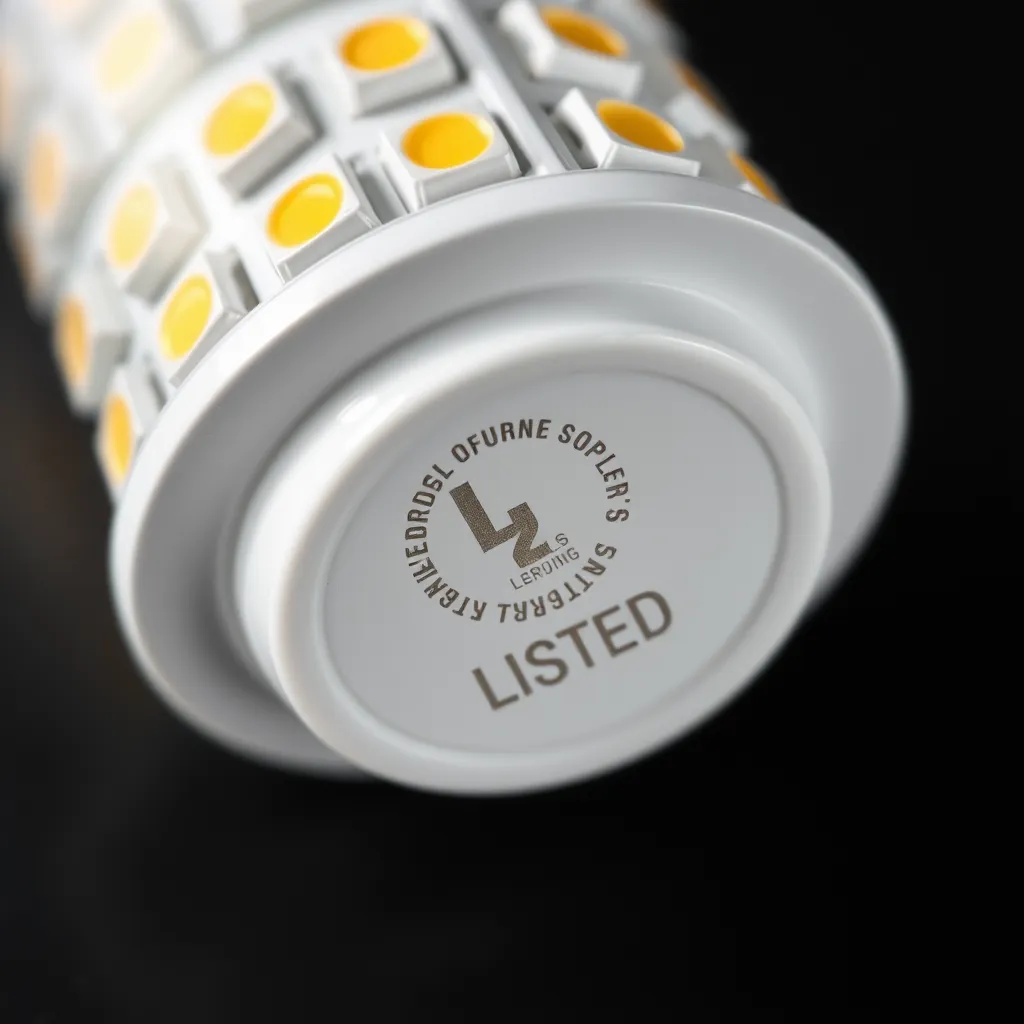
Check the Product, Not the Box: The UL mark should be permanently stamped, etched, or printed on the product itself. If it's only on the packaging, be skeptical.
Look for the File Number: A genuine UL mark usually includes a file number starting with the letter 'E' followed by several digits (e.g., E123456).
Use the UL Product iQ Database: You can create a free account on the UL Product iQ website. Enter the file number or the manufacturer's name to verify the listing.
Buy from Reputable Channels: Marketplace sites like Temu, Wish, or third-party sellers on Amazon are high-risk areas. Stick to dedicated lighting retailers or established "Big Box" stores with strict supply chain vetting.
The Verdict: Do You Need UL-Listed LEDs?
When weighing UL lights vs LED, the answer is that you should always seek out the UL mark (or an equivalent like ETL) for any LED product that connects to your home's electrical system. For battery-powered decorative items or low-stakes portable electronics, the risk is lower. But for anything that stays plugged in or is hardwired into your walls, the safety certification is not optional-it is a fundamental requirement for a safe home.
The slight premium paid for a certified product covers the cost of rigorous engineering, high-quality flame-retardant materials, and independent oversight. In the long run, a certified LED is the only choice that provides peace of mind alongside energy savings.
Conclusion:
The debate over "UL lights vs LED" dissolves once you understand it isn't a debate at all. LED is the technology that produces the light; UL is the certification that proves the product won't shock you or burn your house down. The two work together, not against each other. For any LED product that plugs into an outlet or gets hardwired into your walls, the UL mark (or an equivalent like ETL or CSA) should be non-negotiable. It signals that the driver provides proper galvanic isolation, that the thermal design has survived abnormal-condition testing, and that the materials are flame-retardant. The modest price premium buys real engineering, independent oversight, and protection for your insurance claim and your safety. Skipping certification to save a few dollars trades a small upfront saving for genuine fire and shock risk. When in doubt, look for the mark, verify the file number, and buy from reputable channels.
Frequently Asked Questions
Q1: Is ETL listing as good as UL listing?
A: Yes. ETL (Intertek) is an NRTL just like UL. They test to the exact same ANSI/UL standards. An ETL-listed LED fixture is legally and technically equivalent to a UL-listed one in the eyes of building inspectors and insurance companies.
Q2: Can I use non-UL lights for temporary holiday displays?
A: While many people do, it is not recommended for anything that plugs into an outlet. For temporary displays, look for the "UL" mark specifically for "Seasonal Lighting." Never leave unlisted lights on while you are sleeping or away from home.
Q3: Why are some LED strips not UL-listed?
A: The certification process is expensive, often costing tens of thousands of dollars per product line. Small manufacturers skip this process to keep prices at the absolute minimum. Additionally, many cheap strips cannot pass the flammability or thermal tests required for certification due to thin copper traces and non-rated adhesives.