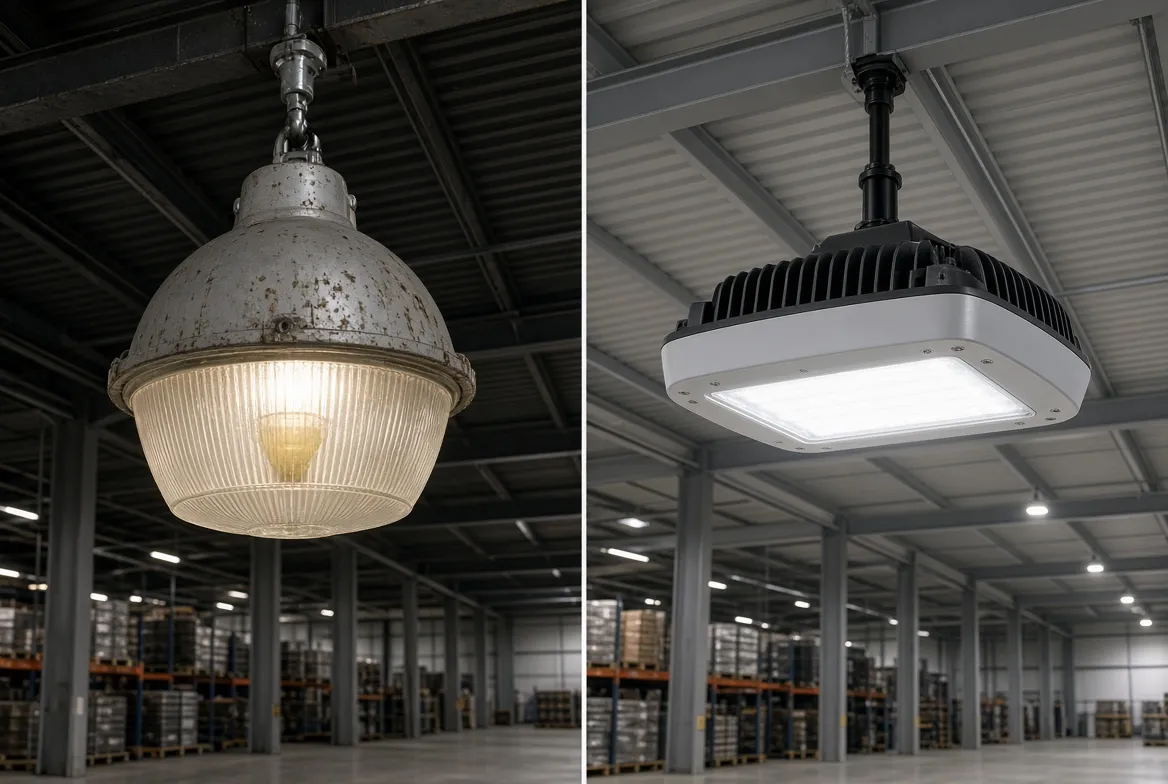
Both strands look almost the same wound around the tree, but one of them is quietly heating up the drying needles it sits against. That is the real story behind the LED versus traditional choice, and it matters more than the electric bill everyone talks about.
Here is the short answer: LED Christmas lights use 80 to 90% less power, last around 10 times longer, and run cool to the touch. Traditional incandescent lights cost less upfront ($3 to $5 vs $8 to $15 a strand) and give that nostalgic amber glow, but they run hot and burn out fast. Modern warm-white LEDs (2700K) now match the classic look without the heat.
What Really Decides It for Most Trees
Efficiency is nice, but the deciding factor is usually safety and convenience: LEDs stay cool on a natural tree, and you can chain far more strands on one plug. The old warm-glow objection is mostly solved. Here is the full picture.
LED vs Traditional Christmas Lights: Every Difference Compared
Feature | LED | Traditional |
|---|---|---|
Power (100-count) | ~2 to 5 watts | ~40 to 50 watts |
Lifespan | 25,000+ hrs (10+ seasons) | 1,000 to 2,000 hrs (1 to 3) |
Heat | Cool to the touch | Hot, can dry needles |
Durability | Plastic, shatter-resistant | Glass, fragile |
Strands per plug | 20 to 50 | 3 to 5 |
Cost per strand | $8 to $15 | $3 to $5 |
Color | Full spectrum, warm-white too | Warm amber only |
The Safety Gap That Actually Matters on a Real Tree:
This is the difference worth caring about most. Incandescent bulbs run hot: minis hit 100 to 150°F and larger C7/C9 bulbs top 200°F. On a natural tree that dries out through December, that heat sits right against increasingly flammable needles.
The National Fire Protection Association ties Christmas tree fires to about $12.2 million in property damage a year, with light heat a leading cause. LEDs stay under 100°F even after hours, so for anyone with a real tree, kids, or pets, they are the clearly safer pick.
Where LEDs Save You Real Money:
Run a 1,000-bulb display for a month. Incandescent bulbs draw 400 watts and cost about $11.52 at $0.16/kWh. The same 1,000 LEDs draw just 40 watts, about $1.15 a month, a 90% saving. Scale to 5,000 bulbs and it is roughly $57.60 vs $5.76 a month, so the LEDs pay back their higher price in a few seasons.
Can LEDs Really Match That Nostalgic Glow?
This was the old objection, and it is mostly gone. Early LEDs threw a cold, blue-white light that missed the cozy amber charm, but warm-white LEDs (2700K) now replicate the classic look closely. For the nearest match, look for strands labeled warm white or soft white at 2700K or below. Our guide on warm vs cool LED lights explains what that number means.
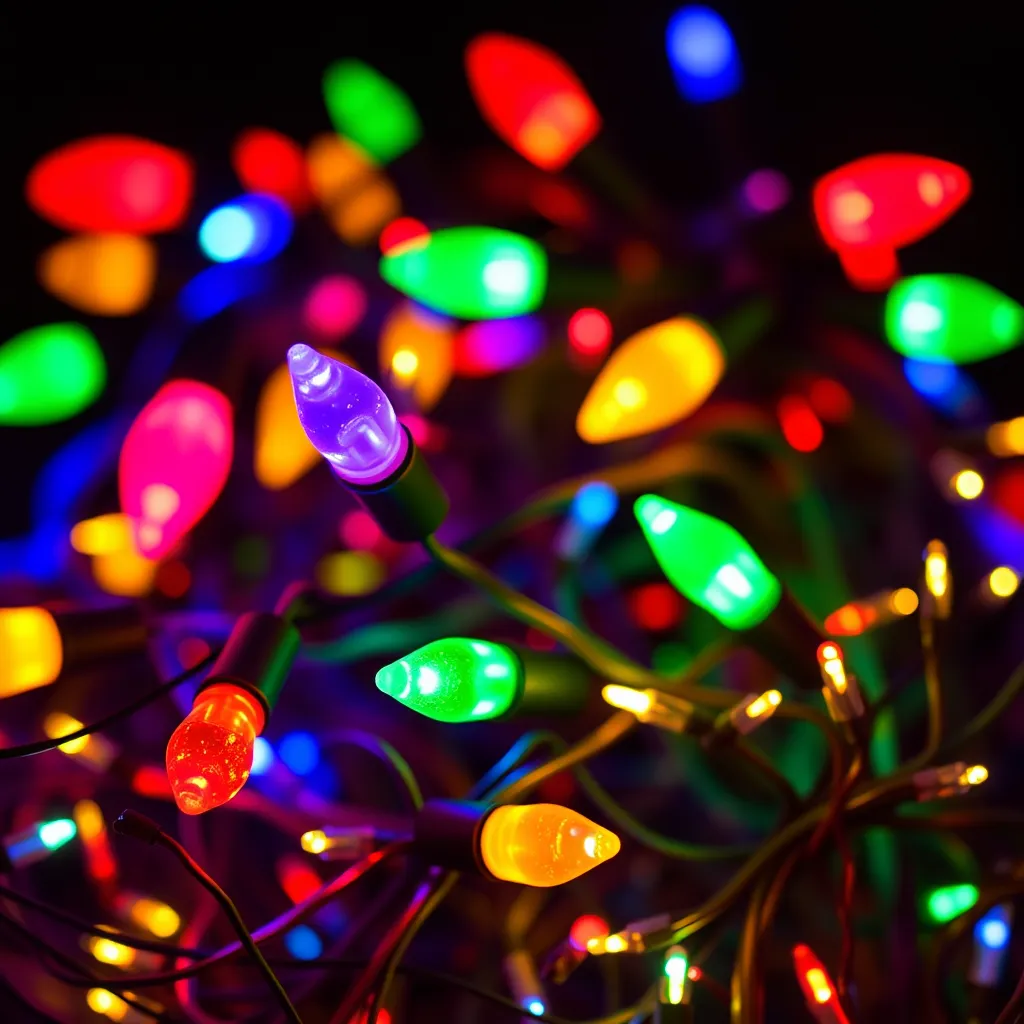
For multi-color displays LEDs win on looks. Each LED makes pure, saturated color at its own wavelength, while incandescent multicolor comes from painted glass that filters and dims the light, so a red LED looks brighter and more vivid than a red incandescent bulb.
Why Some LED Strands Still Look Cheap:
If LED Christmas lights ever looked fake to you, it was usually quality, not the technology. Three things give budget strands away, and knowing them helps you buy well.
What to check: Avoid cool-white (5000K+) strands for a tree, they look stark. Look for warm-white phosphors, a wide beam angle, and faceted lens caps that scatter light softly instead of glaring as harsh points.
Which Should You Choose?
Choose LED lights if you have a natural tree that dries out, kids or pets around the display, a large or outdoor setup that runs for hours, or you want to chain many strands on one plug and forget about the power bill. For most homes, this is the safer, cheaper-to-run pick that lasts for years.
Choose traditional lights if you want the lowest upfront cost, love the exact nostalgic amber glow of old-fashioned bulbs, or only need a small strand or two for an artificial tree indoors where heat and running cost barely matter. For a short, occasional display, the cheaper bulbs can make sense.
Conclusion:
For most trees, LED wins where it counts: far less heat on drying needles, 80 to 90% lower running cost, and 10+ seasons of life. Incandescent still edges it on upfront price and pure nostalgia, but warm-white 2700K LEDs close the glow gap. If you want the safe, cheap-to-run choice, go LED, and check how long they hold up in our guide on how long LED Christmas tree lights last.
(FAQs):
Q1. Can I mix LED and incandescent Christmas lights on my tree?
A: Yes. They run as electrically independent strands, so both work on the same tree and even the same extension cord with no compatibility issue. Some decorators use warm-white LEDs for coverage and a few incandescent C7/C9 bulbs as accents.
Q2. Why do some LED Christmas lights look cheap or fake?
A: Usually low quality, not the tech. Cool-white (5000K+) emitters, weak phosphors, or narrow beam angles create harsh point-like light. Choose warm-white strands with wide beams and faceted caps for a natural, full look.
Q3. Do LED Christmas lights last forever?
A: No, but close for holiday use. Rated at 25,000 to 50,000 hours, that is 10 to 20+ seasons at 180 hours a year. In practice, handling, storage, and corrosion bring it to a real 5 to 15 seasons. When they act up, see our guide on how to fix LED Christmas lights.
Q4. Are LED Christmas lights worth the higher price?
A: For most people, yes. The 90% energy saving, longer life, and lower fire risk outweigh the $8 to $15 strand cost within a few seasons, especially on large or outdoor displays that run for hours.