A bedroom needs roughly 10-20 lumens per square foot for comfortable, relaxing ambient light. For an average bedroom (about 100-150 sq ft), that works out to 1,000 to 3,000 lumens total. Reading or task areas need more - around 30-40 lumens per square foot in that specific spot.
Bedrooms are different from kitchens and bathrooms: you want enough light to see clearly, but not so much that the room feels like an office. Below is the exact math, a chart by room size, and the color temperature that actually helps you sleep.
The Simple Formula for Bedroom Lumens
Lighting brightness for a room is based on foot-candles - and one foot-candle is simply one lumen falling on one square foot. So the math is easy:
Total lumens needed = Room area (sq ft) × Foot-candles recommended
Different rooms call for different foot-candle levels. A bedroom is meant to be calm, so it sits at the lower end of the scale:
Area | Recommended Foot-Candles | Lumens per sq ft |
|---|---|---|
Bedroom - general / ambient | 10-20 fc | 10-20 lm/sq ft |
Bedroom - reading or task zone | 30-40 fc | 30-40 lm/sq ft |
Bathroom (for comparison) | 70-80 fc | 70-80 lm/sq ft |
Kitchen (for comparison) | 30-40 fc | 30-40 lm/sq ft |
Worked example: A 12 ft × 12 ft bedroom is 144 sq ft.
144 sq ft × 10 fc = 1,440 lumens (soft, relaxing)
144 sq ft × 20 fc = 2,880 lumens (bright and even)
So that room wants somewhere between 1,400 and 2,900 lumens of general lighting, depending on how bright you like it. A dimmer lets you cover the whole range from one fixture.
Bedroom Lumens Chart by Room Size
Use this as your at-a-glance reference. The range reflects 10 fc (cozy) up to 20 fc (bright).
Bedroom Size | Approx. Dimensions | Ambient Lumens Needed |
|---|---|---|
Small | 10 × 10 ft (100 sq ft) | 1,000 - 2,000 lm |
Average | 12 × 12 ft (144 sq ft) | 1,440 - 2,880 lm |
Large | 14 × 14 ft (196 sq ft) | 1,960 - 3,920 lm |
Master | ~15 × 20 ft (300 sq ft) | 3,000 - 6,000 lm |
A few things that change the number:
Ceiling height: Rooms with ceilings above 8 ft need a bit more, since light spreads over more distance. Add roughly 10-20% for high or vaulted ceilings.
Wall and floor color: Dark paint, dark furniture, and dark flooring absorb light. Aim for the higher end of the range. Light, reflective rooms can use the lower end.
Purpose of the room: A bedroom you only sleep in can stay low. A bedroom that doubles as a study, nursery, or dressing area needs brighter task lighting in those zones.
How Many Bulbs Is That?
Most standard LED bulbs are sold by their lumen output. A common "60W-equivalent" LED bulb produces about 800 lumens, and a "75W-equivalent" produces about 1,100 lumens.
So for an average 144 sq ft bedroom needing ~1,500-2,500 lumens:
One bright ceiling fixture rated at 1,500-2,500 lm, or
Two to three 800-lumen bulbs spread across a fixture and lamps, or
One main light (~1,500 lm) plus a bedside lamp (~450 lm) for reading
Spreading light across two or three sources almost always looks and feels better than one very bright bulb overhead.
Color Temperature Matters as Much as Brightness
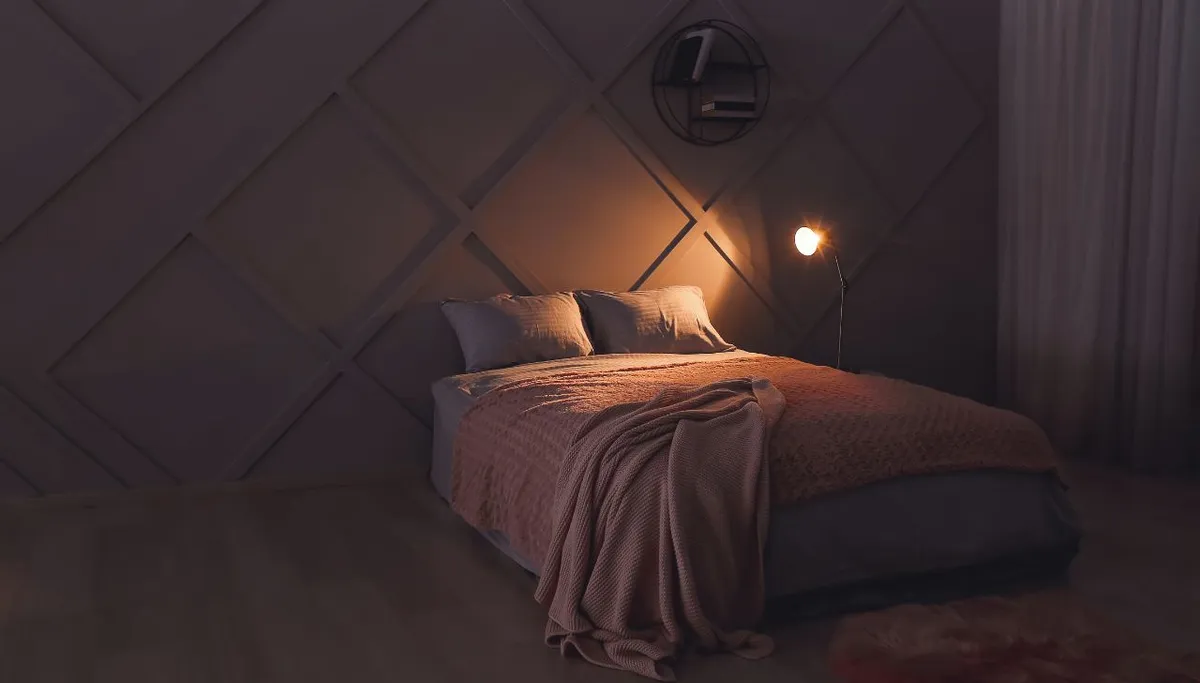
Getting the lumens right is only half the job. Color temperature - measured in Kelvin (K) - decides whether the room feels relaxing or clinical, and it directly affects your sleep.
Color Temperature | Appearance | Best For |
|---|---|---|
2700K - 3000K (Warm White) | Soft, cozy, yellow-ish | Bedrooms - this is the sweet spot |
3500K - 4000K (Neutral) | Clean white | Closets, dressing, makeup areas |
5000K+ (Daylight / Cool) | Bright, blue-ish | Garages, task work - avoid in bedrooms at night |
Stick to 2700K-3000K for the main bedroom light. Cool, blue-rich light in the evening suppresses melatonin, the hormone that helps you fall asleep, so daylight bulbs work against you here.
The best of both worlds is a tunable smart bulb that runs warm and dim at night and brighter, cooler white in the morning to help you wake up. (See our guide to the best LED lights for the bedroom for tested picks.)
Don't Light a Bedroom With One Fixture
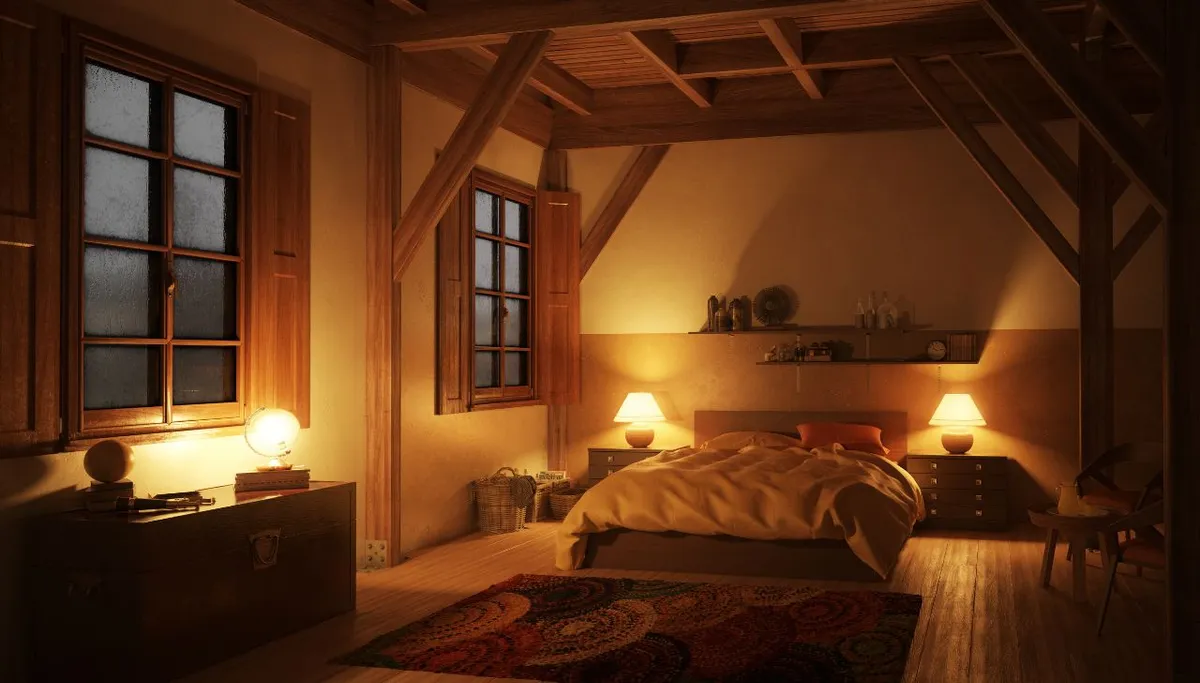
The most comfortable bedrooms use layered lighting instead of a single overhead light:
Ambient - your main ceiling light, providing the overall lumen total above.
Task - a bedside lamp or wall sconce (around 400-500 lumens at the reading spot) so you can read without lighting the whole room.
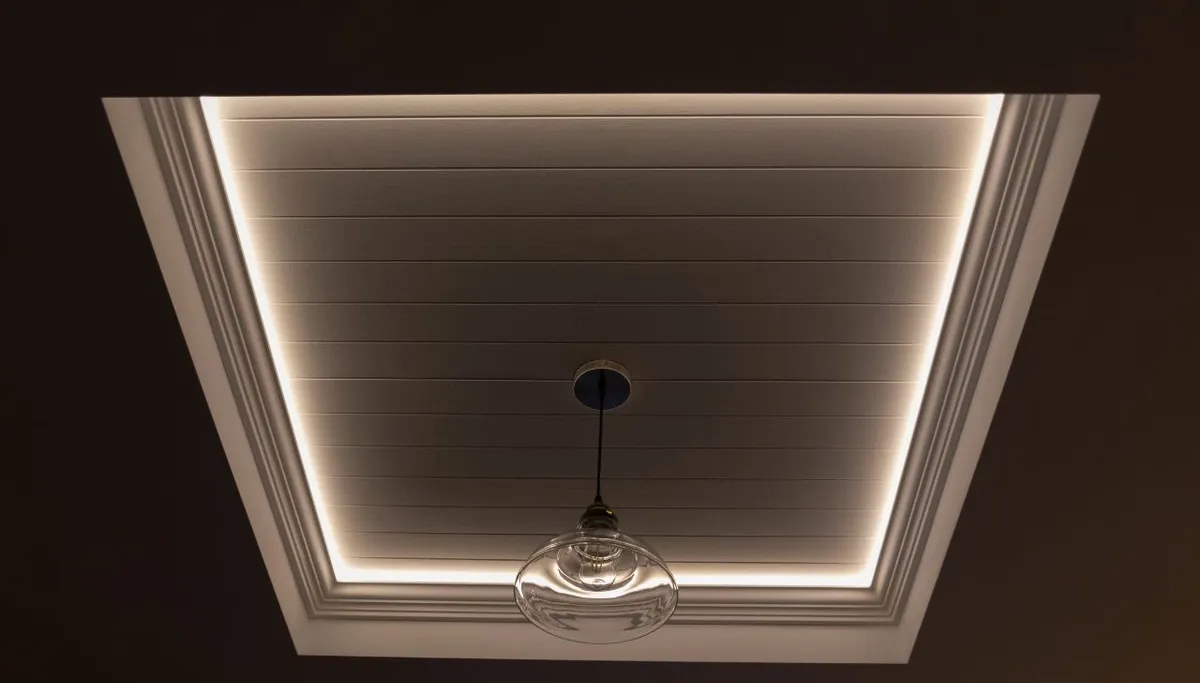
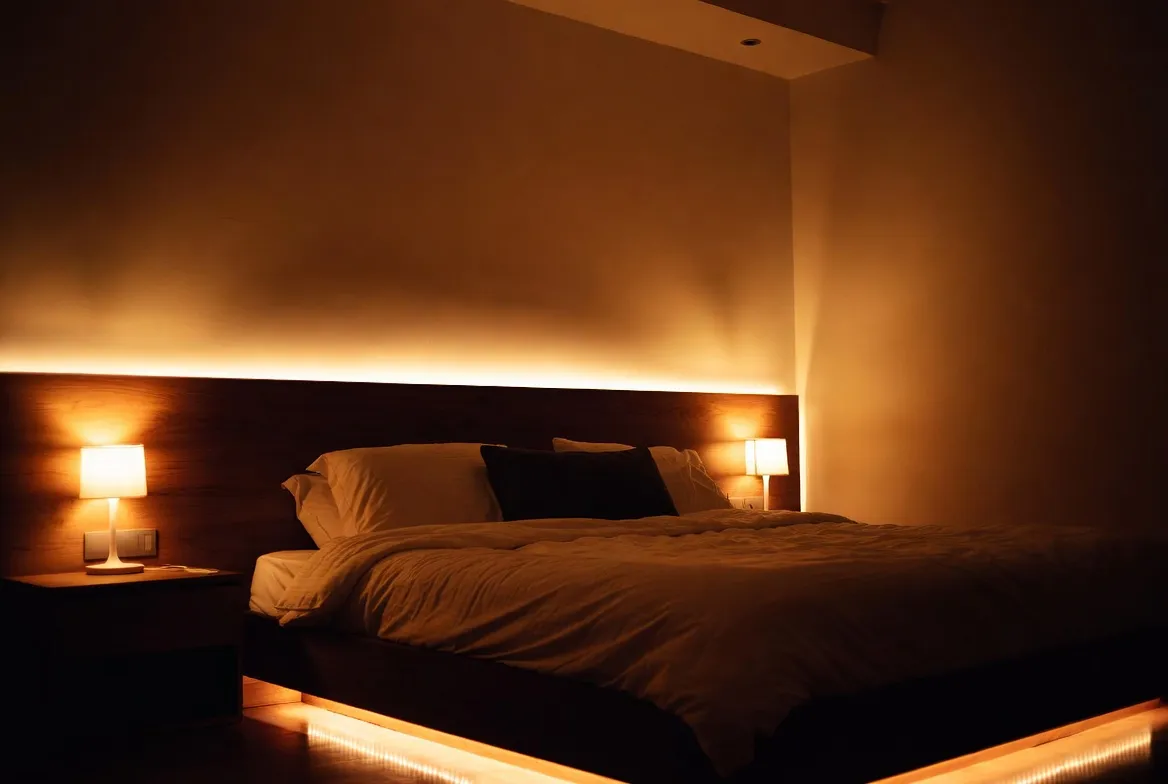
Accent - optional LED strips behind the headboard, under the bed, or along a shelf for low, mood-setting light.
The single most useful upgrade is a dimmer (or dimmable smart bulbs). It lets one fixture serve as bright morning light and a low, warm glow before sleep - covering your entire lumen range on demand.
Lumens vs Watts vs Lux (Quick Explainer)
These three get mixed up constantly:
Lumens = how much light a bulb actually produces (brightness). This is what you shop for.
Watts = how much energy it uses. With LEDs you get roughly 75-100 lumens per watt, so a 1,500-lumen bedroom needs only about 15-20W of LED - a fraction of old incandescent bulbs. (More on this in how many watts do LED lights use.)
Lux / foot-candles = how much of those light lands on a surface. 1 foot-candle ≈ 10.76 lux, so a bedroom's 10-20 fc is about 100-200 lux.
Bottom line: shop by lumens, not watts.
Common Bedroom Lighting Mistakes
Using daylight (5000K+) bulbs. They make a bedroom feel like an office and hurt your sleep. Choose warm white.
One harsh overhead light only. It creates glare and shadows. Layer in lamps.
No dimmer. Without one you're stuck at full brightness when you want soft light before bed.
Over-lighting a small room. A tiny bedroom doesn't need 4,000 lumens - you'll feel like you're under a spotlight.
Ignoring the reading zone. Add a dedicated bedside light instead of cranking the main fixture brighter.
Frequently Asked Questions
Q1: What is a good lumen for a bedroom?
A: A good level for a bedroom is 10-20 lumens per square foot of ambient light, which comes to about 1,000-2,000 lumens for an average room. Pair that brightness with warm white (2700K-3000K) bulbs and a dimmer for the most comfortable, sleep-friendly result.
Q2: How many lumens do I need for a 12x12 room?
A: A 12 × 12 ft room is 144 sq ft, so it needs about 1,440 to 2,880 lumens for general lighting - roughly 10-20 lumens per square foot. Use the lower end for a cozy feel and the higher end if the room is dark or doubles as a workspace.
Q3: Is 1000 lumens enough for a bedroom?
A: For a small bedroom (around 80-100 sq ft), 1,000 lumens is enough for soft, relaxing ambient light. For an average or large bedroom you'll want more - closer to 1,500-3,000 lumens - or you can keep 1,000 lumens as your main light and add bedside lamps for layered lighting.
Q4: What size room will 2000 lumens light?
A: At a bedroom's 10-20 lumens per square foot, 2,000 lumens comfortably lights a room of about 100 to 200 sq ft - roughly a 10 × 10 up to a 14 × 14 bedroom. Use the smaller end if you like a bright, even room and the larger end for a softer, cozier feel.
Affiliate Disclosure: This article may contain affiliate links. If you purchase through these links, we may earn a small commission at no extra cost to you.