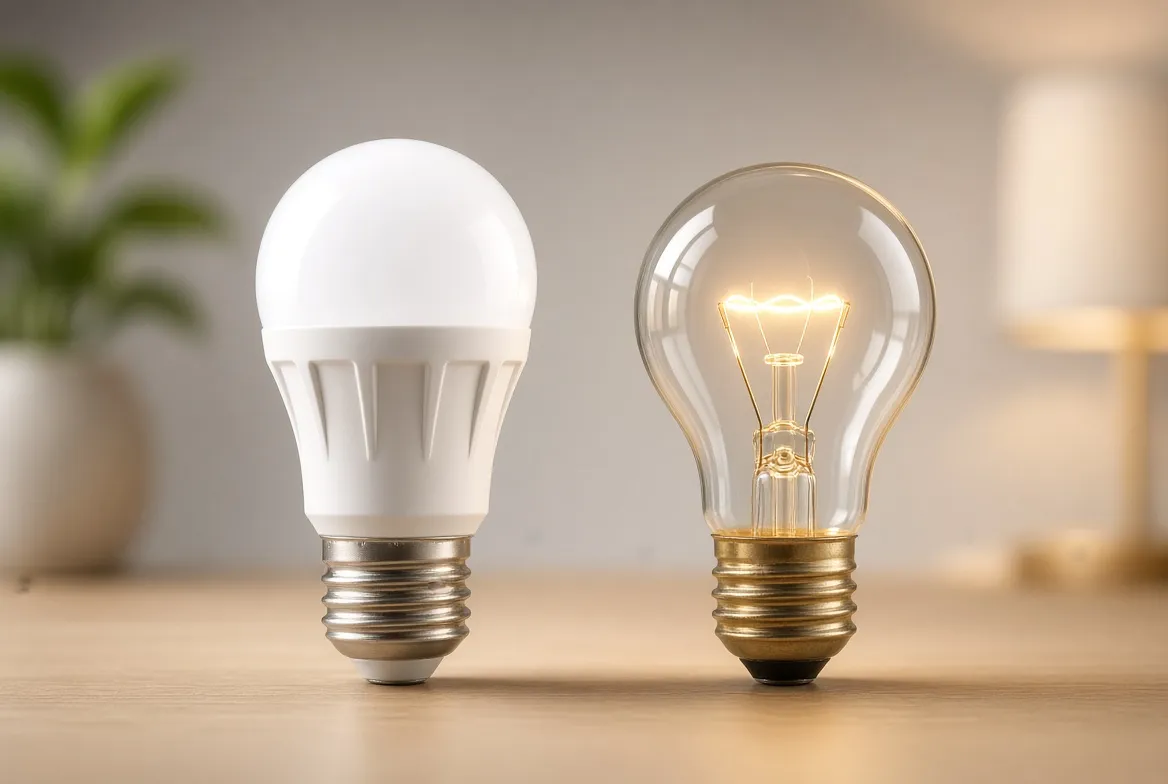
A standard LED light bulb uses 7-10 watts to produce the same brightness (800 lumens) as a 60-watt incandescent bulb - roughly 75-85% less electricity. Running a single 10W LED bulb for 8 hours a day at the U.S. average electricity rate of $0.16/kWh costs approximately $0.0128 per day, or about $4.67 per year. By comparison, the equivalent 60W incandescent bulb costs approximately $28.03 per year under the same conditions. Switching a typical home's 30 light sockets from incandescent to LED saves roughly $700 per year on electricity, according to the U.S. Department of Energy.
LED Wattage vs Brightness (Lumens)
Wattage measures energy consumption, not brightness. Brightness is measured in lumens. LEDs produce far more lumens per watt than older technologies, which is why a low-wattage LED can match a high-wattage incandescent. When shopping for LED bulbs, ignore the wattage and look at the lumen rating to get the brightness you need.
Brightness (Lumens) | LED Watts | Incandescent Watts | CFL Watts |
|---|---|---|---|
450 lm (40W equivalent) | 4-5W | 40W | 9-11W |
800 lm (60W equivalent) | 8-10W | 60W | 13-15W |
1,100 lm (75W equivalent) | 11-13W | 75W | 18-20W |
1,600 lm (100W equivalent) | 15-18W | 100W | 23-27W |
2,600 lm (150W equivalent) | 25-28W | 150W | 40-42W |
Calculating Your LED Electricity Cost
To calculate the annual electricity cost of any LED light, use this formula: (Watts × Hours per day × 365) ÷ 1,000 × Electricity rate = Annual cost. For example, a 10W LED running 8 hours per day: (10 × 8 × 365) ÷ 1,000 = 29.2 kWh per year. At $0.16/kWh, that is $4.67 per year. At California's higher rate of $0.30/kWh, the same bulb costs $8.76 per year.
The "÷ 1,000" step converts watt-hours to kilowatt-hours (kWh), which is the unit your electric utility uses for billing. One kilowatt-hour equals 1,000 watts running for one hour. Your local electricity rate appears on your utility bill, typically expressed as cents per kWh.
LED Electricity Use by Fixture Type
Fixture Type | Typical LED Wattage | Annual Cost (8 hrs/day, $0.16/kWh) |
|---|---|---|
Standard A19 bulb | 8-10W | $3.74-$4.67 |
BR30 recessed/flood | 8-12W | $3.74-$5.61 |
LED strip lights (16 ft) | 12-24W | $5.61-$11.21 |
LED tube (4 ft, T8 replacement) | 15-18W | $7.01-$8.41 |
LED flood/security light | 20-50W | $9.34-$23.36 |
LED high bay (warehouse) | 100-200W | $46.72-$93.44 |
Whole-Home LED Electricity Usage
The average U.S. home has approximately 30 light sockets. If all 30 use 10W LED bulbs running an average of 5 hours per day, total lighting electricity consumption is: 30 × 10W × 5 hours = 1,500 Wh (1.5 kWh) per day. That works out to 547.5 kWh per year, costing approximately $87.60 at $0.16/kWh. The same home using 60W incandescent bulbs would consume 3,285 kWh for lighting - six times more - costing $525.60 per year.
Lighting accounts for roughly 15% of a typical home's electricity consumption, according to the U.S. Energy Information Administration. Switching from incandescent to LED reduces that share to approximately 3-4% of total household electricity use, making lighting one of the smallest energy costs in an LED-equipped home.
Why LEDs Use So Little Electricity
Incandescent bulbs convert only about 5-10% of electrical energy into visible light. The remaining 90-95% becomes waste heat from the superheated tungsten filament. LEDs produce light through electroluminescence - electrons releasing photons as they cross a semiconductor junction - a process that generates very little heat. Modern commercial LEDs convert 40-50% of input electricity into visible light, with lab prototypes exceeding 60%.
This efficiency gap is not a matter of engineering refinement; it reflects a fundamental physics difference between thermal radiation (incandescent) and electroluminescence (LED). No amount of improvement can make incandescent bulbs approach LED efficiency because the thermal radiation process has an inherent efficiency ceiling far below what LEDs already achieve.
Conclusion:
Transitioning to LED lighting is one of the most straightforward ways to reduce a property's carbon footprint and monthly overhead. While the energy savings of a single bulb may seem small on a daily basis, the cumulative effect across an entire household result in hundreds of dollars saved annually. Because these bulbs generate so little heat, they also reduce the load on air conditioning systems during summer months, providing a secondary layer of energy efficiency.
To maximize your investment, prioritize replacing bulbs in high-traffic areas like kitchens and living rooms where lights remain on for the longest periods. As smart home technology becomes more accessible, pairing these efficient bulbs with dimmers and motion sensors can drive electricity costs even lower. The switch to LED is no longer just a trend; it is a fundamental upgrade for any modern, cost-conscious home.
Frequently Asked Questions
Q1: Do LED lights raise your electric bill?
A: LED lights add a very small amount to your electric bill. A 10W LED running 8 hours daily adds roughly $0.39 per month at average U.S. rates. If you are switching from incandescent bulbs, your bill will decrease significantly because LEDs use 75-85% less electricity for the same brightness. The only scenario where LEDs increase your bill is if you are adding lights to a space that previously had none, or if you leave them on much longer because of the perception that they use little power.
Q2: Do LED strip lights use a lot of electricity?
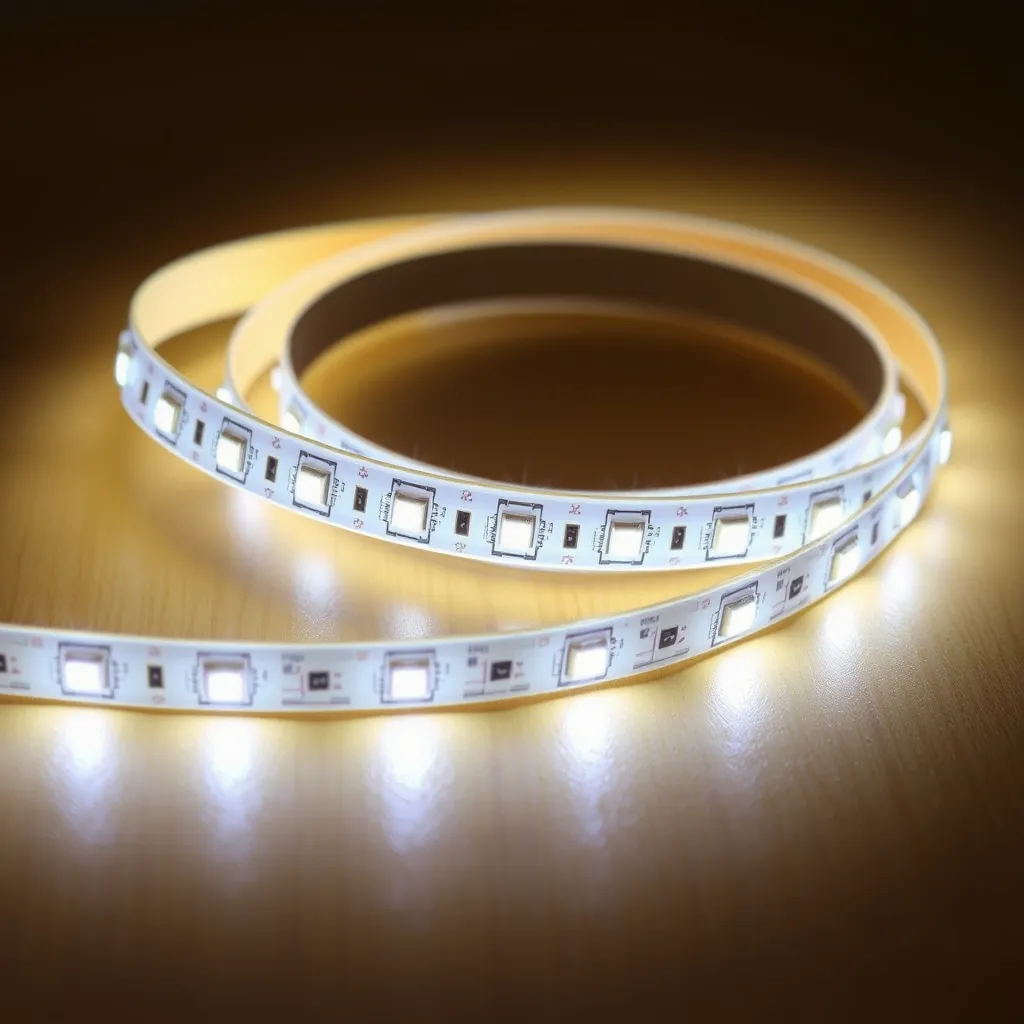
A: No. A standard 16-foot (5-meter) LED strip consumes 12-24 watts, depending on LED density and brightness. That costs $5.61-$11.21 per year running 8 hours daily. Even RGBIC strips with music sync and smart features rarely exceed 30W for a 16-foot segment. Compared to other household appliances - a microwave (1,000W), a hair dryer (1,500W), or an air conditioner (3,500W) - LED strips are negligible consumers of electricity.
Q3: How much does it cost to leave an LED light on 24/7?
A: A 10W LED bulb running 24 hours a day, 365 days a year, consumes 87.6 kWh. At the U.S. average rate of $0.16/kWh, that costs $14.02 per year, or about $1.17 per month. A 60W incandescent running 24/7 would cost $84.10 per year. While leaving LEDs on 24/7 is affordable, it is still recommended to turn off lights when not needed - or use occupancy sensors and timers - to minimize energy waste.