The pursuit of energy efficiency often leads to a single question: how low can a light source actually go? While standard household bulbs typically range from 6W to 15W, the specialized end of the market offers options that consume significantly less power. The lowest watt LED light bulb commercially available today is the 0.5-watt (0.5W) LED, primarily found in night lights and decorative accents. These units are engineered not to illuminate a room for work or reading, but to provide a visible point of reference in total darkness or to serve as a low-energy indicator.
Understanding these ultra-low wattage options requires shifting focus from power consumption (watts) to light output (lumens). While a 0.5W bulb uses almost no electricity, it produces a mere 5 to 10 lumens. For context, a standard 60W-equivalent LED produces about 800 lumens. This guide examines the tiers of low-wattage lighting, from the half-watt indicators to the 4W bulbs that bridge the gap between decorative and functional lighting.
The Spectrum of Ultra-Low Wattage Lighting
Low-wattage LEDs are categorized by their application. Because the energy draw is so minimal, the physical size of the bulb and the type of base it uses often dictate its use more than the wattage itself. Most of these bulbs utilize either the E12 (candelabra) base or the E26 (standard medium) base, though the internal electronics vary significantly between a 0.5W night light and a 3W accent bulb.
Bulb Category | Typical Wattage | Lumen Output | Common Base | Primary Application |
|---|---|---|---|---|
Night Light / C7 | 0.5W - 0.7W | 5 - 15 lm | E12 (Candelabra) | Hallway safety, nurseries |
Indicator / Sign (S14) | 1W - 1.5W | 50 - 90 lm | E26 / E12 | Outdoor strings, marquee signs |
Decorative Filament | 2W - 2.5W | 120 - 200 lm | E26 / E12 | Chandeliers, vintage pendants |
Small Appliance (A15) | 3W - 4W | 250 - 400 lm | E26 (Medium) | Refrigerators, closets, range hoods |
Standard Low-Power (A19) | 4W - 5W | 450 - 500 lm | E26 (Medium) | Bedside lamps, accent lighting |
0.5W to 1W: The Indicator Tier
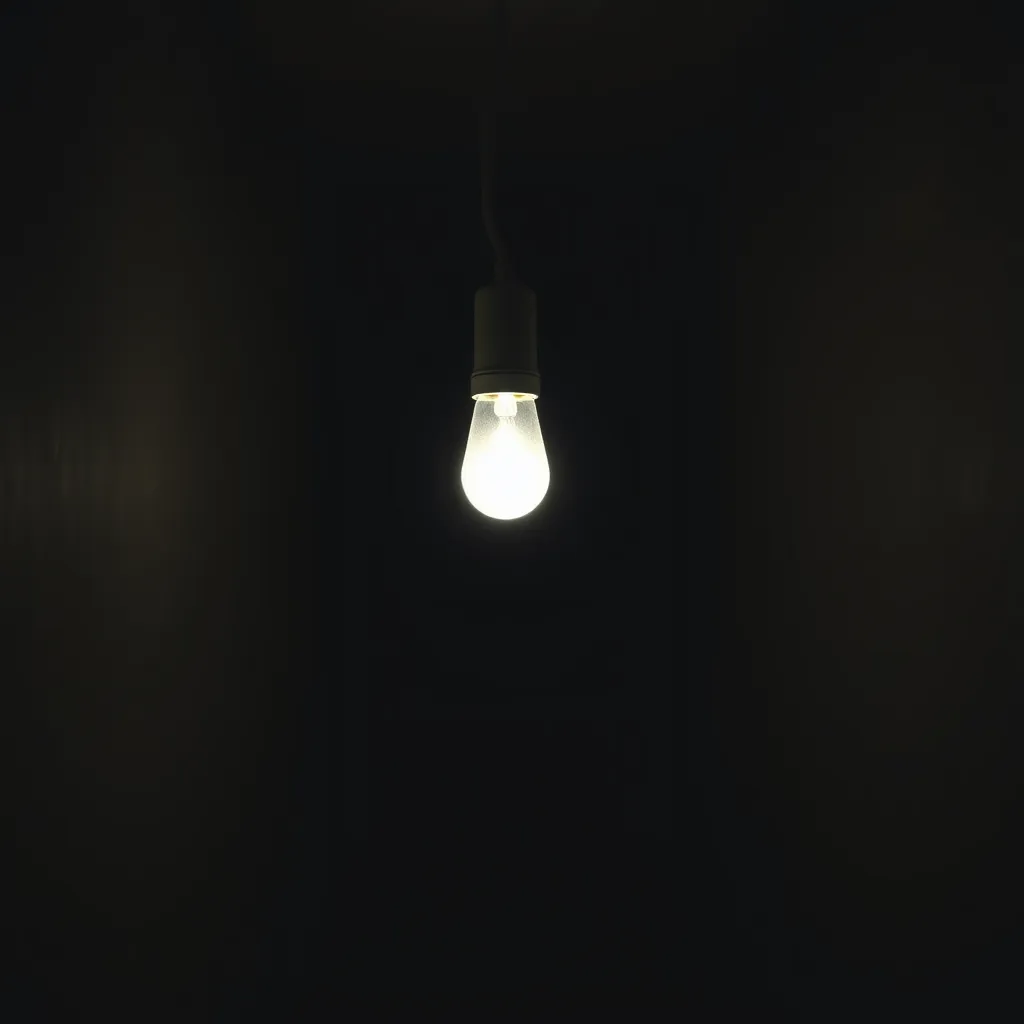
The 0.5W LED is the absolute floor for consumer-grade lighting. These bulbs typically use a C7 shape and an E12 base. Their primary purpose is "orientation lighting." In a dark room, the human eye can easily spot a 5-lumen source, making these ideal for navigating a hallway to the bathroom or providing a comforting glow in a child's bedroom without disrupting circadian rhythms.
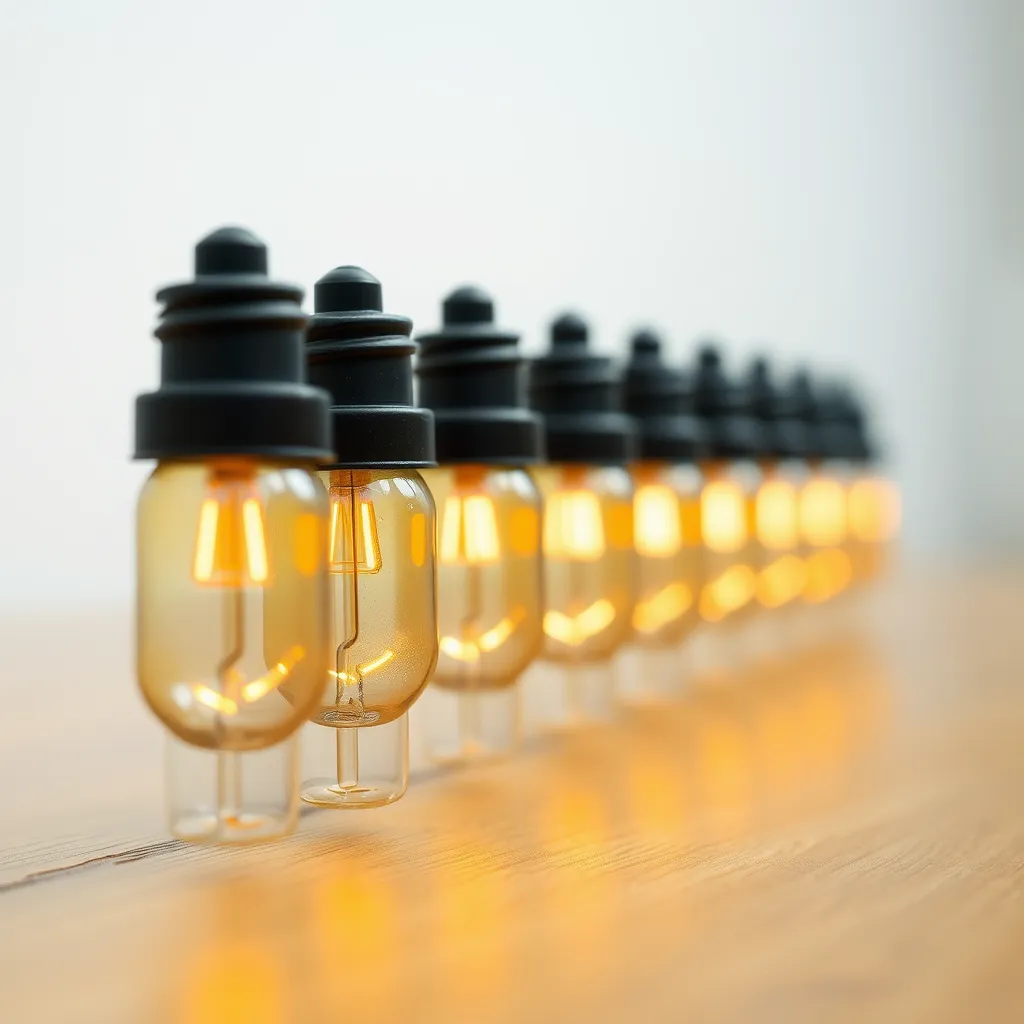
One-watt (1W) bulbs, often found in S14 "sign" shapes, are the workhorses of the decorative world. If you have ever seen outdoor bistro or patio string lights, those are likely 1W or 2W LEDs. A 1W LED produces approximately 50 to 80 lumens, which is roughly equivalent to a 7W or 10W incandescent bulb. These are designed to be looked at rather than to see by. They provide enough ambient light to create an atmosphere but are insufficient for reading or food preparation.
A technical challenge with these ultra-low wattages is "ghosting." Because they require so little current to illuminate, some smart switches or motion sensors that leak a tiny amount of "phantom" power can cause a 0.5W bulb to stay dimly lit even when the switch is technically off. This is not a defect in the bulb but a result of its extreme efficiency.
2W to 4W: Decorative and Accent Illumination
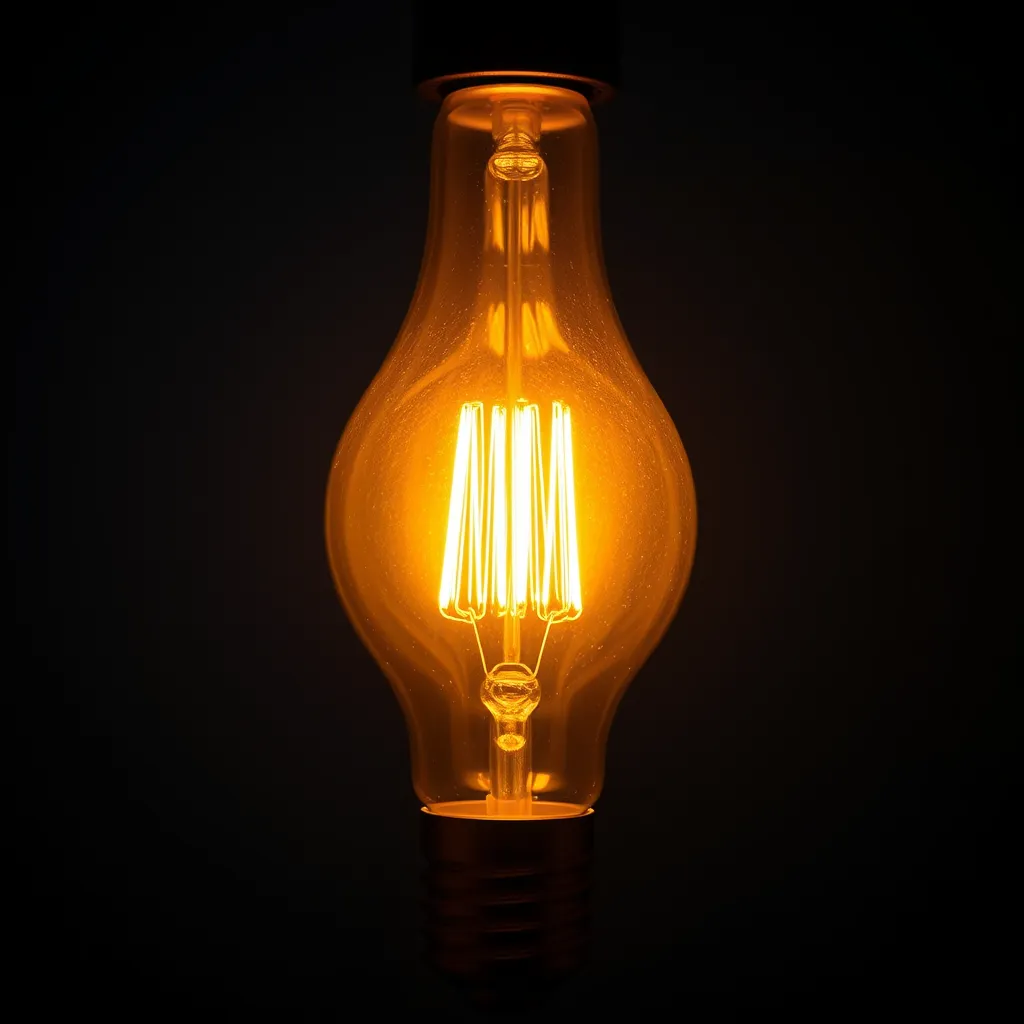
As wattage increases to the 2W and 3W range, the technology shifts toward LED filaments. These bulbs use long, thin strips of LEDs coated in yellow phosphor to mimic the look of vintage tungsten filaments. A 2W filament bulb typically produces around 180 to 200 lumens. This is the "sweet spot" for restaurant lighting and home chandeliers where multiple bulbs are used in a single fixture.
Three-watt (3W) and four-watt (4W) LEDs are where we begin to see functional light. A 4W LED is generally considered a 40W incandescent replacement, outputting between 350 and 450 lumens. These are common in A15 (smaller) and A19 (standard) shapes. They are excellent for:
Closets and Pantries: Where high-intensity light isn't required but visibility is essential.
Bedside Reading: Providing enough light to read without straining the eyes or waking a partner.
Multiple-Bulb Vanities: Reducing glare in bathrooms while maintaining high total light output.
Luminous Efficacy: Why Watts Are Deceptive
In the era of incandescents, wattage was a reliable proxy for brightness. With LEDs, this relationship is broken. The metric that truly matters is luminous efficacy, measured in lumens per watt (lm/W). This is a measure of how effectively a bulb converts electrons into visible photons rather than waste heat.
A high-quality 3W LED might use premium chips and a highly efficient driver, resulting in 100 lm/W (300 total lumens). A cheaper, poorly engineered 4W bulb might only achieve 60 lm/W (240 total lumens). In this scenario, the lower-wattage bulb is actually brighter. When hunting for the lowest-wattage option, always check the "Lighting Facts" label for the lumen count. If you find a 3W bulb and a 4W bulb both offering 350 lumens, the 3W bulb is the superior product from an engineering and efficiency standpoint.
Heat management also plays a role. Even though these bulbs use very little power, the driver (the circuit board that converts AC to DC) generates heat. In ultra-low wattage bulbs, the surface area is often small, meaning the components must be high-quality to survive the heat buildup in enclosed fixtures.
The Real-World Cost of Low-Wattage Operation
The financial impact of switching to ultra-low wattage LEDs is most apparent when bulbs are left on for long durations. The following table compares the annual cost of a 0.5W LED versus a traditional 7W incandescent night light, assuming 24/7 operation at an average utility rate of $0.16/kWh.
Bulb Type | Wattage | Annual Energy Use (24/7) | Annual Operating Cost |
|---|---|---|---|
LED Night Light | 0.5W | 4.38 kWh | $0.70 |
Incandescent Night Light | 7W | 61.32 kWh | $9.81 |
While the annual savings per bulb might seem small, the cumulative effect across a household is significant. Furthermore, the longevity of these LEDs (often rated for 25,000 hours) means you might not replace a 0.5W bulb for a decade, whereas an incandescent equivalent would burn out every few months.
Selecting the Right Base and Shape
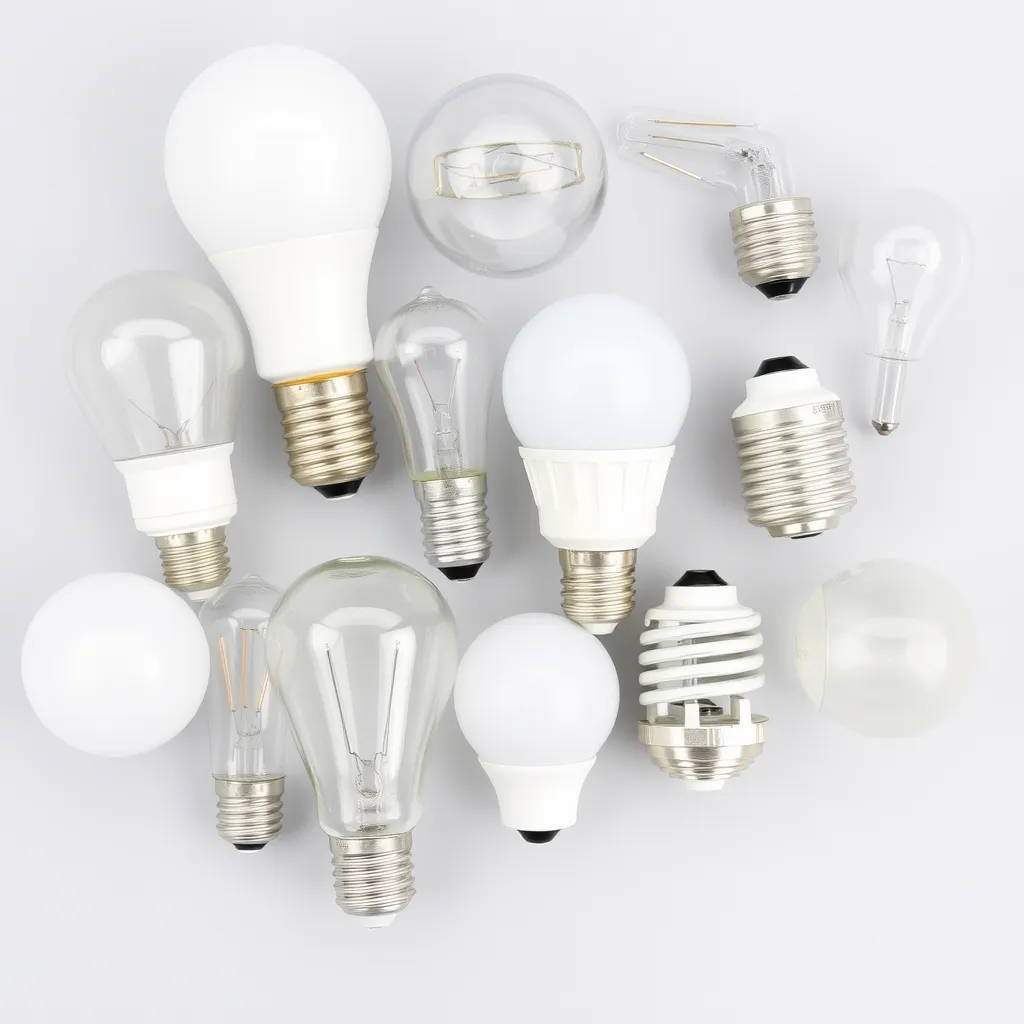
When searching for the lowest wattage possible, you must match the bulb to the fixture's socket. Using the wrong base or a bulb shape that doesn't fit the housing can lead to poor performance or safety hazards.
E12 (Candelabra): Found in night lights, chandeliers, and small decorative lamps. This is where most 0.5W to 2W bulbs reside.
E26 (Medium/Standard): The standard US household socket. 1W and 2W "sign" bulbs are common for this base.
C7 and C9: These refer to the cone-shaped bulb. C7 usually has an E12 base, while C9 often has an E17 or E26 base.
S14: The classic "Edison" sign bulb shape, typically used in outdoor strings with a 1W or 2W rating.
Be aware of voltage requirements. Most low-wattage bulbs are designed for standard 120V AC household current. However, in landscape lighting or RV applications, you may encounter 12V DC versions. Plugging a 12V bulb into a 120V socket will cause immediate failure.
Technical Limitations and Flickering
One common issue with ultra-low wattage LEDs is flickering. Because the driver circuit is so small, it may lack the robust capacitors needed to smooth out the electrical signal. This is particularly noticeable when using a dimmer switch. Most 0.5W and 1W bulbs are non-dimmable. Attempting to dim them will usually result in rapid flashing or the bulb simply cutting out.
If you require a low-wattage dimmable solution, look for 3W or 4W bulbs specifically labeled as "dimmable." These contain more sophisticated circuitry. Even then, you may need an LED-compatible dimmer switch, as older dimmers designed for 60W loads often have a "minimum load" requirement that a 3W bulb cannot meet.
Conclusion:
Choosing the lowest watt LED light bulb means understanding what you actually need the light to do. A 0.5W bulb is perfect for orientation and night lights, 1W to 2W LEDs excel at decorative ambiance, and 3W to 4W options offer genuine functional illumination. Rather than fixating on wattage alone, focus on lumens per watt to gauge true efficiency. Match the base type (E12, E26) and shape to your fixture and verify dimmability if needed. With proper selection, ultra-low wattage LEDs deliver decades of service, negligible energy costs, and the exact level of brightness your space genuinely requires.
Frequently Asked Questions
Q1: Is a 0.5W LED bright enough to read by?
A: No. A 0.5W LED produces roughly 5-10 lumens, which is equivalent to a very small candle. It is designed for visibility in the dark rather than task lighting. For comfortable reading, you should look for a bulb that produces at least 350-450 lumens, which typically requires a 4W LED.
Q2: Why does my 1W LED stay on slightly when the switch is off?
A: This is known as "ghosting." It occurs when a small amount of residual current leaks through the circuit-common with smart switches, lighted wall switches, or motion sensors. Because a 1W LED requires so little energy, this tiny leakage is enough to partially illuminate the chips.
Q3: Can I put a 1W LED in a fixture rated for 60W?
A: Yes. You can always use a lower wattage bulb than what a fixture is rated for. The "60W Max" label refers to the maximum amount of heat the fixture can safely dissipate. Since a 1W LED produces negligible heat, it is perfectly safe to use.
Q4: Do low-wattage LEDs work in cold weather?
A: Yes, LEDs actually perform better in cold environments. Unlike fluorescent bulbs, LEDs are solid-state components that operate efficiently in sub-zero temperatures, making 1W and 2W LED string lights an excellent choice for outdoor winter decorations.