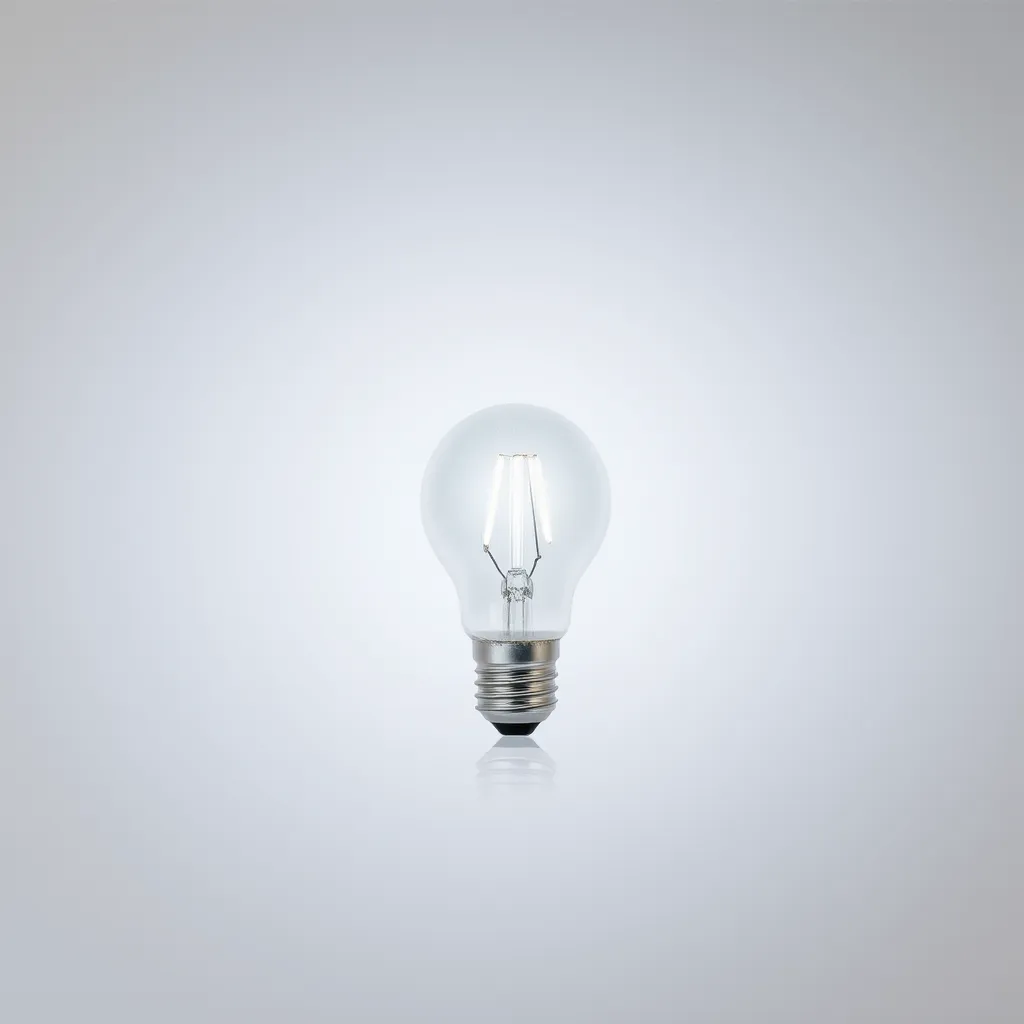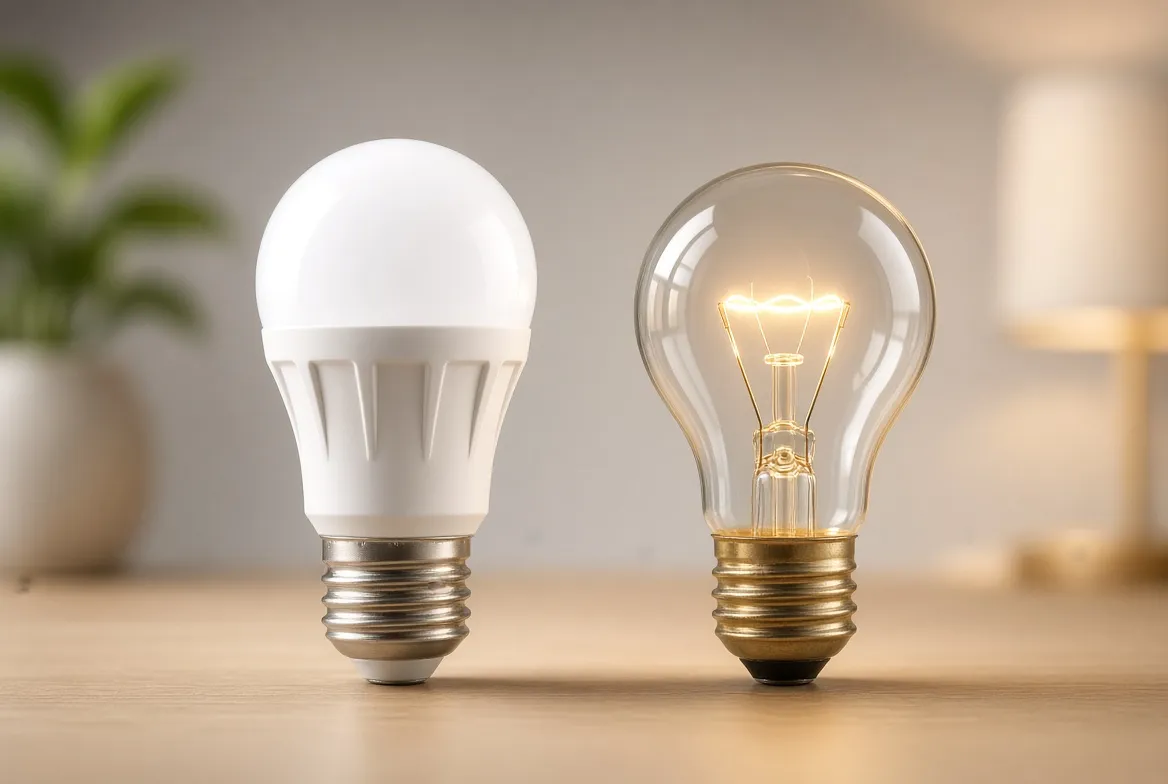
Even the most efficient LED bulb on the market still wastes some electricity, just not where most people assume. The real question isn't whether LEDs waste power, it's how little, and how that compares to what you switched away from.
LED lights waste 15 to 20% of their input electricity as heat, converting 40 to 50% into visible light. An incandescent bulb, by comparison, wastes roughly 90% as heat. A 10W LED matching a 60W incandescent means that old bulb was burning 50 watts of pure waste heat for the same brightness. See how many watts LED lights use for the full breakdown by fixture.
Where the Energy Actually Goes:
Energy Destination | LED (10W bulb) | Incandescent (60W bulb) |
|---|---|---|
Visible light output | 4-5W (40-50%) | 3-6W (5-10%) |
Heat from chip/junction | 3-4W (30-40%) | 48-51W (80-85%) |
Heat from driver circuit | 1-2W (10-15%) | N/A |
Infrared radiation | ~0W | 3-6W (5-10%) |
LED heat comes from two places: resistive losses at the semiconductor junction, and conversion losses in the driver circuit that steps 120V AC down to low-voltage DC. A better driver wastes less, which is exactly why premium bulbs run cooler and outlast cheap ones. See how hot LED lights actually get for real measured temperatures.
How LEDs Compare to Every Other Technology:
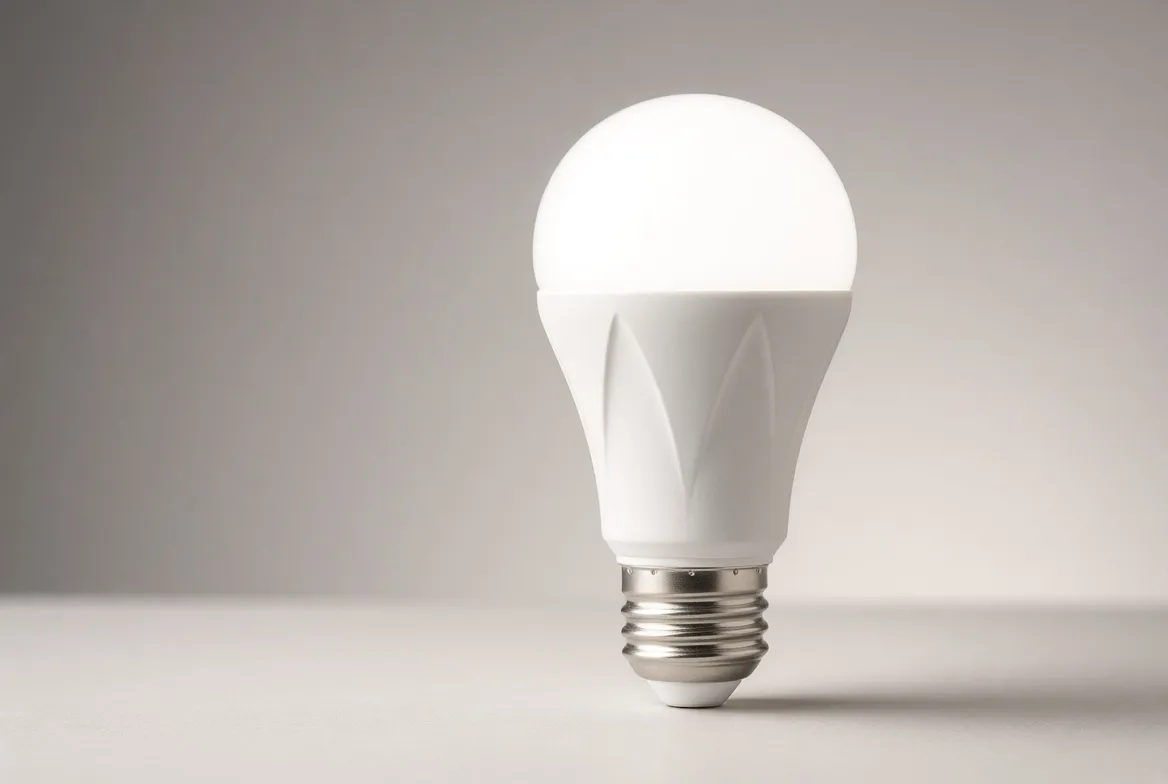
Technology | Efficiency (lm/W) | Wasted as Heat |
|---|---|---|
Incandescent | 10-17 | ~90% |
Halogen | 15-25 | ~85% |
CFL | 45-75 | ~60-65% |
Fluorescent tube (T8) | 80-100 | ~55-60% |
LED (commercial) | 80-150 | ~15-20% |
LED (lab record) | 300+ | <5% |
Commercial LEDs already hit 80 to 150 lumens per watt, and lab prototypes have topped 300, approaching the theoretical ceiling for white light (~350 lm/W). Real headroom still exists, but LEDs already beat every competing technology by a wide margin.
Why This Small Waste Barely Matters:
The percentage sounds notable, but the absolute amount is tiny. A 10W LED wasting 2W as heat produces less warmth than a human hand. A 60W incandescent wasting 54W is a genuine small space heater, hot enough to burn skin on contact.
That old bulb-heat even raised your air conditioning bill. The DOE notes that switching to LEDs lowers cooling loads too, since less waste heat enters the room in the first place, often adding another 10 to 15% in savings on top of the direct electricity cut. This is also why so many LEDs can safely share one circuit, low heat output means low current draw.
Do LEDs Waste Power When They're Off?
A standard LED on a normal switch draws zero watts when off. Two real exceptions exist: smart bulbs (WiFi, Bluetooth, Zigbee) draw 0.3 to 0.5W to stay connected, and a driver left plugged in with nothing attached can draw 0.1 to 0.3W. Over a year, that adds pennies to your bill, genuinely not worth worrying about.
A separate issue, an LED faintly glowing when "off," isn't phantom power at all. It's leakage current through an incompatible dimmer or illuminated wall switch, wasting fractions of a watt. Annoying, not a real energy concern.
Conclusion:
LEDs have fundamentally changed what "waste" means in lighting: most of your electricity now becomes light, not heat. The remaining 15 to 20% loss is a fair trade for the control and longevity these systems provide. For the least waste possible, buy quality bulbs with reputable drivers, that's what actually moves the number.
(FAQs):
Q1. Are LEDs 100% efficient?
A: No lighting technology is. The theoretical ceiling for white light is about 350 lm/W, and commercial LEDs hit 80 to 150, roughly 25 to 45% of that maximum. Lab-grade LEDs have exceeded 300 lm/W in controlled conditions.
Q2. Do LED lights waste less electricity than fluorescent?
A: Yes, and not just in raw output. LEDs also skip warm-up losses entirely and avoid ballast losses (5 to 15% wasted on fluorescent), a total system advantage of roughly 25 to 40% once every factor is counted.
Q3. Is it more wasteful to leave LEDs on or switch them often?
A: Always turn them off when not needed. Unlike fluorescent tubes, LED lifespan isn't hurt by frequent switching, and there's no warm-up penalty. Even one unnecessary minute on wastes more than the switching itself.