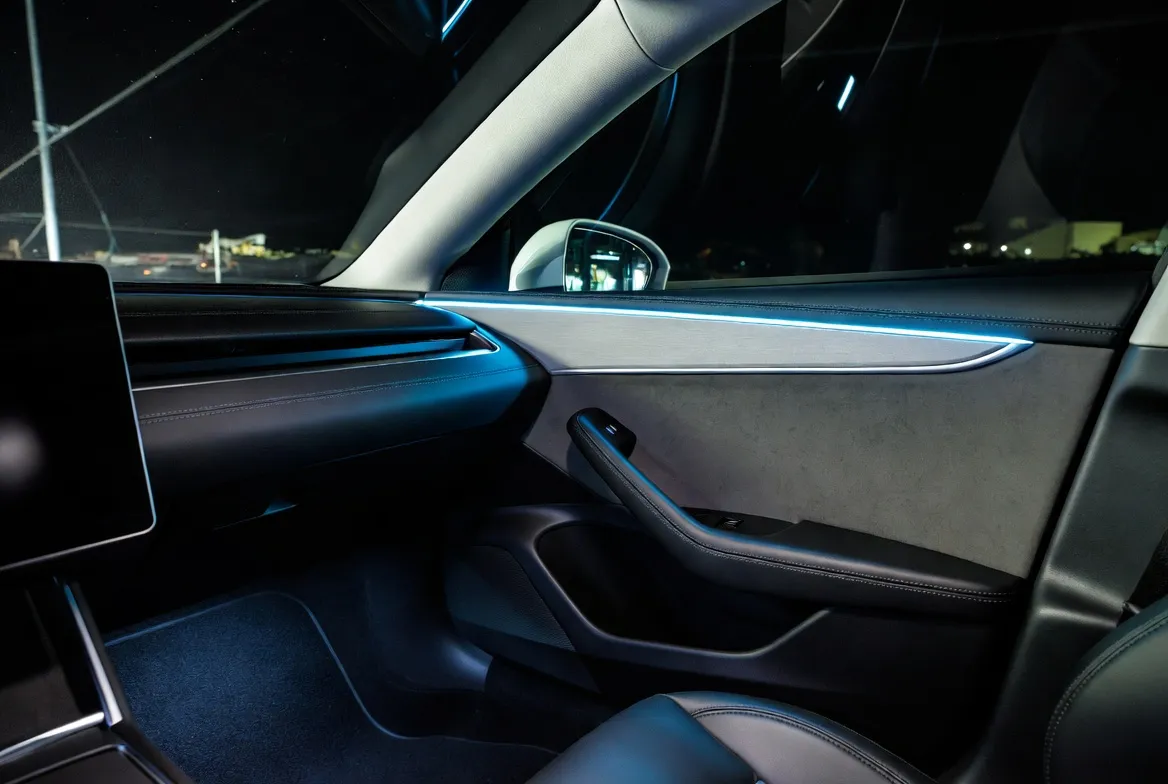
Adding ambient lighting to a vehicle cabin transforms the driving experience from a standard commute into a personalized environment. While many modern luxury vehicles include integrated accent lighting from the factory, older models or base trims often lack this feature. Installing aftermarket kits is a straightforward project that bridges this gap, providing a sophisticated look without requiring professional electrical skills.
Choosing the Right Lighting Hardware
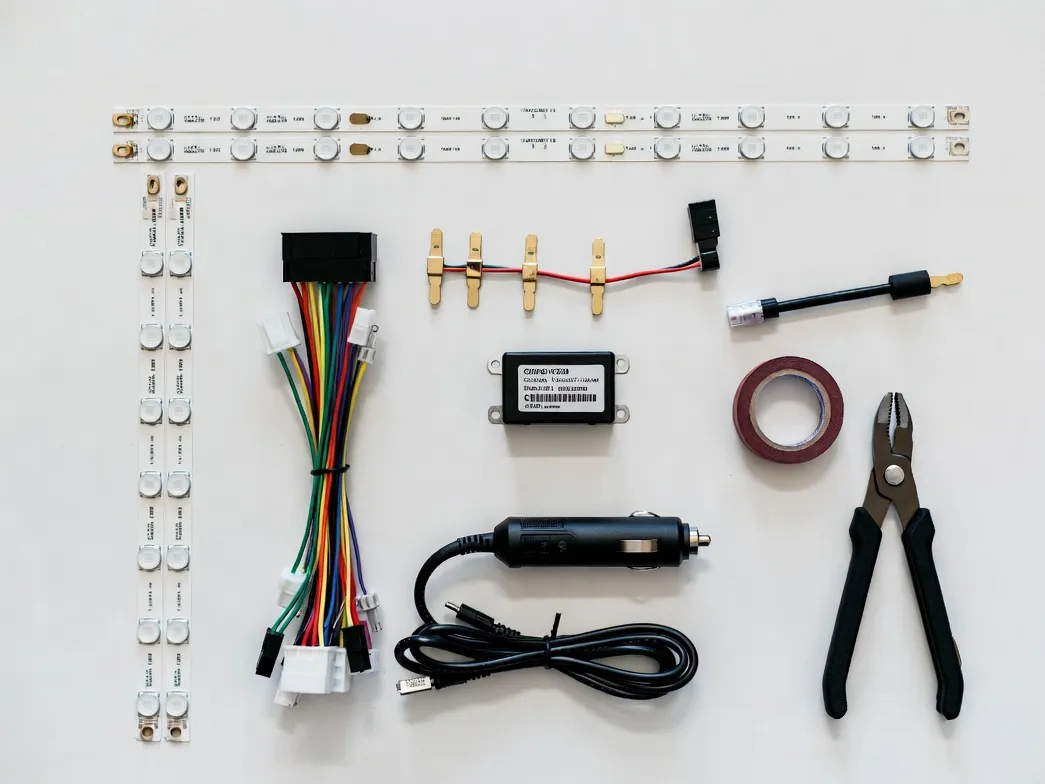
Before starting the installation, selecting the correct type of lighting is critical for both aesthetics and longevity. Most automotive interior kits use flexible strips containing SMD (Surface Mounted Device) LEDs. The two most common types are 5050 and 2835 chips. For interior use, 5050 chips are preferred because they house three light-emitting diodes in a single housing, allowing for better color mixing and higher brightness.
Another decision involves choosing between standard RGB and RGBIC (Addressable) strips. Standard RGB strips change the entire strip to one color at a time. RGBIC strips contain an integrated circuit (IC) that allows different segments of the same strip to display different colors simultaneously, enabling "chasing" or "rainbow" effects.
Key Specifications to Consider
Feature | Standard RGB | RGBIC (Addressable) |
|---|---|---|
Color Capability | Single color at a time | Multiple colors simultaneously |
Cut Points | Usually every 2-3 inches | Often cannot be cut without breaking the circuit |
Power Draw | Approx. 1.2A - 1.5A per 4-strip kit | Approx. 1.5A - 2.0A per 4-strip kit |
Best Use Case | Clean, single-color ambient glow | Dynamic lighting and "show" modes |
Essential Tools and Materials
A successful installation relies on preparation. While most kits claim to be "plug-and-play," having a few additional supplies ensures the strips stay attached and the wires remain hidden.
LED Interior Kit: Typically a 4-piece set with 9-inch or 12-inch segments.
Isopropyl Alcohol (70% or higher): Essential for removing interior protectants that prevent adhesive from sticking.
Plastic Trim Removal Tool: Helps tuck wires behind panels without scratching the plastic.
Heavy-Duty Zip Ties: Specifically 4-inch black ties for securing wires under seats.
Adhesion Promoter (Optional): Recommended for textured plastics where standard 3M tape struggles.
Multimeter or Test Light: Only required if you plan to hardwire the system into the fuse box.
Strategic Placement for Indirect Lighting
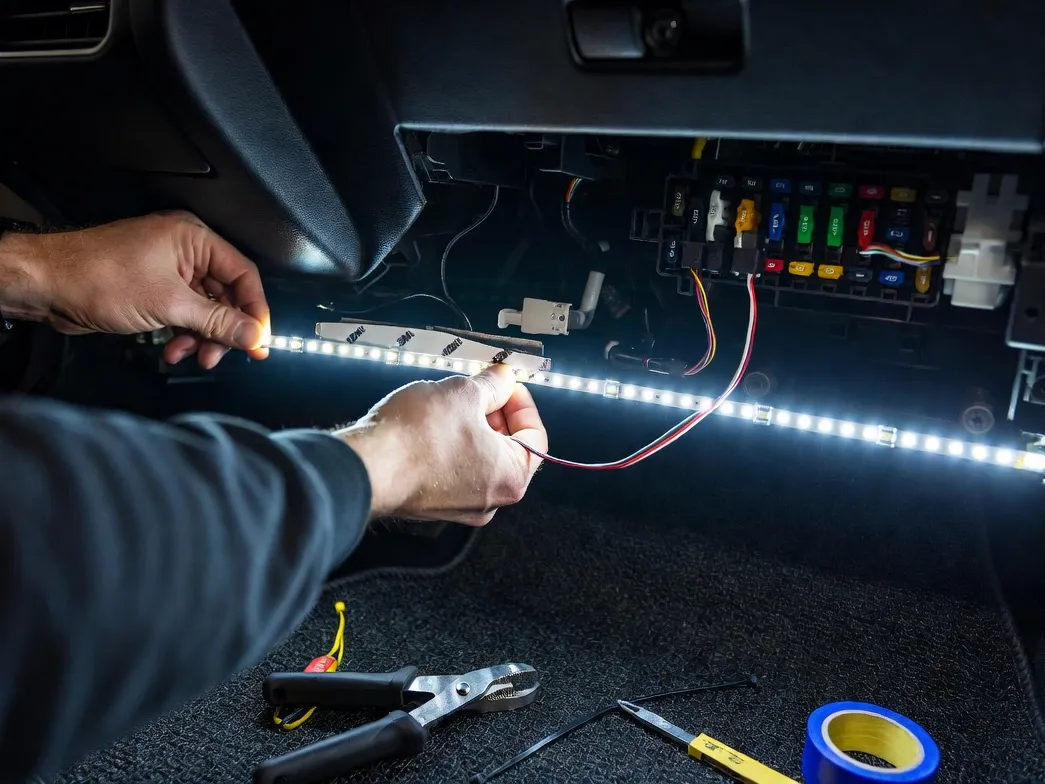
The goal of a high-quality installation is to see the glow, not the light source. Direct view of the LED chips can be distracting and looks "cheap." Aim for indirect lighting where the LEDs face downward, reflecting light off the floor mats or the underside of the seats.
Front Footwells
Mount the strips on the underside of the dashboard. On the driver's side, ensure the strip and its wiring are well clear of the brake, gas, and clutch pedals. Use zip ties to secure the wire to existing factory looms high up in the footwell. On the passenger side, there is usually a plastic panel under the glovebox that provides a perfect flat surface.
Rear Footwells
The best location for rear lighting is the underside of the front seats. However, seats move forward and backward. When mounting here, leave enough "slack" in the wiring to allow the seat to move through its full range of travel without tensioning the cable. Attach the strips to the metal seat frame using zip ties rather than relying on adhesive, as the fabric or carpet underside of a seat will not hold tape.
Step-by-Step Installation Process
Once the layout is planned, follow these steps to ensure a permanent and clean result.
1. Surface Preparation
Clean the mounting areas thoroughly with isopropyl alcohol. Car interiors are often treated with silicone-based cleaners that make surfaces extremely slick. If you skip this step, the strips will likely fall off within 24 hours due to heat and vibration.
2. Mounting the Strips
Peel the backing from the adhesive tape and press the strip firmly against the surface for at least 30 seconds. If the surface is curved or textured, apply a small amount of adhesion promoter first. For under-seat installations, thread zip ties through the ends of the strip and around a solid part of the seat frame.
3. Routing the Wires
Run the wires from the strips toward the center console. Use the trim removal tool to pry the edge of the plastic panels slightly and tuck the wire inside. For the rear seats, run the wires under the floor mats or along the plastic door sill protectors. Keep the control box hidden but accessible.
Powering Your Setup: Two Methods
How you provide electricity to the system determines how "factory" the installation looks.
Method A: The 12V Accessory Plug (Cigarette Lighter)
This is the fastest method. Most kits include a 12V adapter with a built-in switch. Simply plug it into the car's power port.
Pros: No permanent changes to the car; easily removable for leased vehicles.
Cons: Occupies a power port; visible wires near the plug.
Method B: Hardwiring to the Fuse Box
For a professional look, you can "tap" into the vehicle's fuse box. This hides all wires and allows the lights to turn on automatically with the car.
Locate the interior fuse box (usually under the dash or behind a side panel).
Use a multimeter to find a "switched" fuse-one that only has power when the key is in the 'ACC' or 'ON' position.
Use an "Add-a-Circuit" fuse tap. Insert the original fuse into the tap, add a new 5A fuse for the LEDs, and crimp the LED power wire to the tap.
Connect the ground wire (black) to a clean, unpainted metal bolt on the car's chassis.
Configuring Control and Safety
Most modern kits use a smartphone app via Bluetooth. This allows for infinite color selection and brightness dimming.
A note on brightness: While bright lights look great in photos, they can be dangerous while driving at night. High interior light levels cause the pupils to constrict, significantly reducing your ability to see the dark road ahead. Always dim the interior accents to a low level (around 10-20% brightness) during nighttime driving.
Music Sync Mode: Many controllers feature a built-in microphone that pulses the lights to the beat of the music. If you use this feature, ensure the control box is not buried too deep behind sound-dampening material, or the microphone will struggle to pick up the audio.
Legal Regulations and Compliance
While interior lighting is generally legal, there are specific rules to follow to avoid a "fix-it" ticket:
No Flashing Lights: In most jurisdictions, flashing or strobing lights while the vehicle is in motion is prohibited.
Color Restrictions: Avoid displaying solid red or blue light that is visible from the front or rear windows, as these are reserved for emergency services.
Driver Visibility: The lights must not be positioned in a way that creates a glare on the windshield or side mirrors.
Troubleshooting Common Issues
If the lights fail to turn on, check the following in order:
The Plug: Ensure the 12V adapter is pushed all the way in.
The Fuse: If hardwired, check both the original fuse and the new fuse in the tap.
Ground Connection: A loose ground wire is the most common cause of flickering. Ensure the ground bolt is tightened against bare metal.
App Connectivity: Ensure Bluetooth is enabled and you are within 10 feet of the control box.
Conclusion:
Once your installation is complete, evaluate the lighting from the driver's seat during a nighttime drive. The primary goal is to enhance the cabin's atmosphere without creating distracting glare on the windows or windshield. If the glow is too intense, use your controller to dim the brightness to a level that feels comfortable and safe for long-distance travel.
Regular maintenance will keep your setup looking professional for years. Car interiors experience significant temperature swings and constant vibration, which can eventually weaken even the strongest adhesives. Every few months, quickly inspect the strips and wires to ensure nothing has sagged near the pedals or passenger foot area, and re-secure any loose segments with a fresh zip tie or a dab of automotive-grade adhesive.
Frequently Asked Questions
Q1: Will these lights drain my battery if I leave them on?
A: If you use a "switched" power source, they cannot drain the battery because they receive no power when the car is off. If connected to a "constant" power source, a standard kit could drain a typical car battery in about 24-48 hours if left on at full brightness.
Q2: Can I cut the strips if they are too long?
A: Standard RGB strips usually have copper pads marked with a "scissor" icon where they can be safely cut. However, RGBIC (addressable) strips often cannot be cut without disabling the remaining LEDs or causing a controller error.
Q3: Is it safe to stick these to the carpet?
A: Adhesive tape will not stick to carpet effectively. If you must mount a strip to a carpeted surface, use "hook and loop" (Velcro) strips. The "hook" side will often grab the car's carpet directly, providing a secure mount.
Q4: Do I need an electrician to install LED lights inside a car?
A: No. For the cigarette lighter method, no electrical knowledge is required. For the hardwire method, you only need to understand how to use a fuse tap and a ground bolt. Both are considered entry-level DIY tasks.