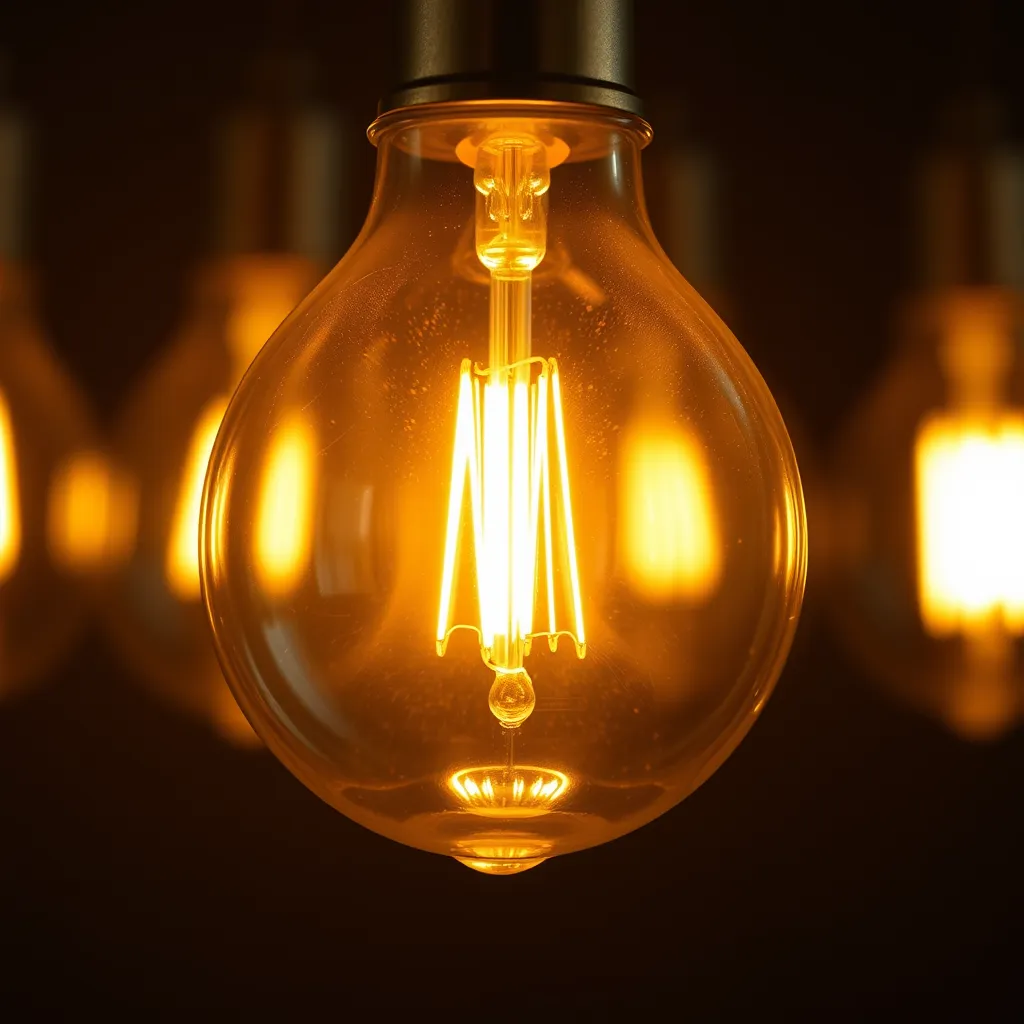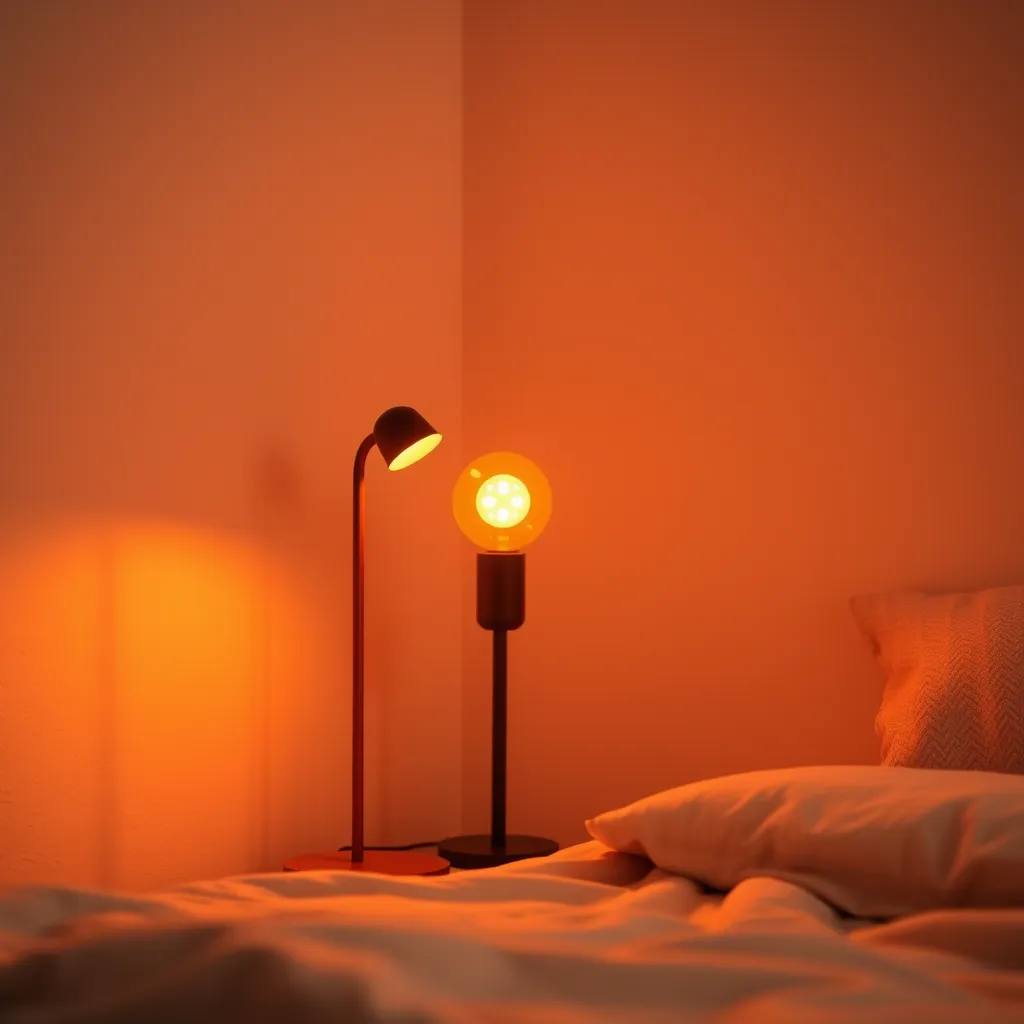
Golden hour - that warm, glowing light right after sunrise and just before sunset - is really just three things working together: warm color, low brightness, and soft light coming in low from the side. Recreate those three with your LEDs and almost any setup, whether it's a strip, a smart bulb, or a single lamp, can make a room feel like 6 p.m. in late summer. Real golden hour sits around 2,000-3,000K on the color scale with the sun only 0-6° above the horizon, and this guide shows you exactly how to fake all of it indoors.
The whole recipe in one line: warm + dim + diffused + low and to the side. Everything below is just how to hit each of those four.
The Golden Hour Cheat Sheet
Setting | What to dial in |
|---|---|
Color temperature (warm white) | 2,000-3,000K (2,700K is the safe default) |
RGB color (color strips/bulbs) | hex #F1B457 / RGB (241, 180, 87) for golden |
Deeper sunset look | push toward hex #F97316 / RGB (249, 115, 22) |
Brightness | 30-50% - never 100% |
Light angle | low, about 45° from the side |
Light sources | at least 2 (one key, one fill) |
Diffusion | always - bounce, frost, or shade it |
How to Dial It In (Step by Step)
1. Warm up the color first
This is the part that does most of the work. If you're on warm-white LEDs, set them to 2,700K or lower - 2,200K gets you that deep, candle-like sunset. On RGB or RGBIC lights, start around hex #F1B457 - RGB (241, 180, 87) - which is lots of red, a fair bit of green, and only a little blue. Kill the blue almost entirely; even 10-15 points of extra blue drags the glow toward white and ruins it.
2. Dim it way down
Golden hour is never bright. Midday light is around 5,500K and blazing; golden hour is soft and low. Drop your brightness to 30-50%. If your light only does full blast, that's your single biggest obstacle - a glaring 100% LED reads as "lamp," not "sunset," no matter how warm the color is.
3. Diffuse it
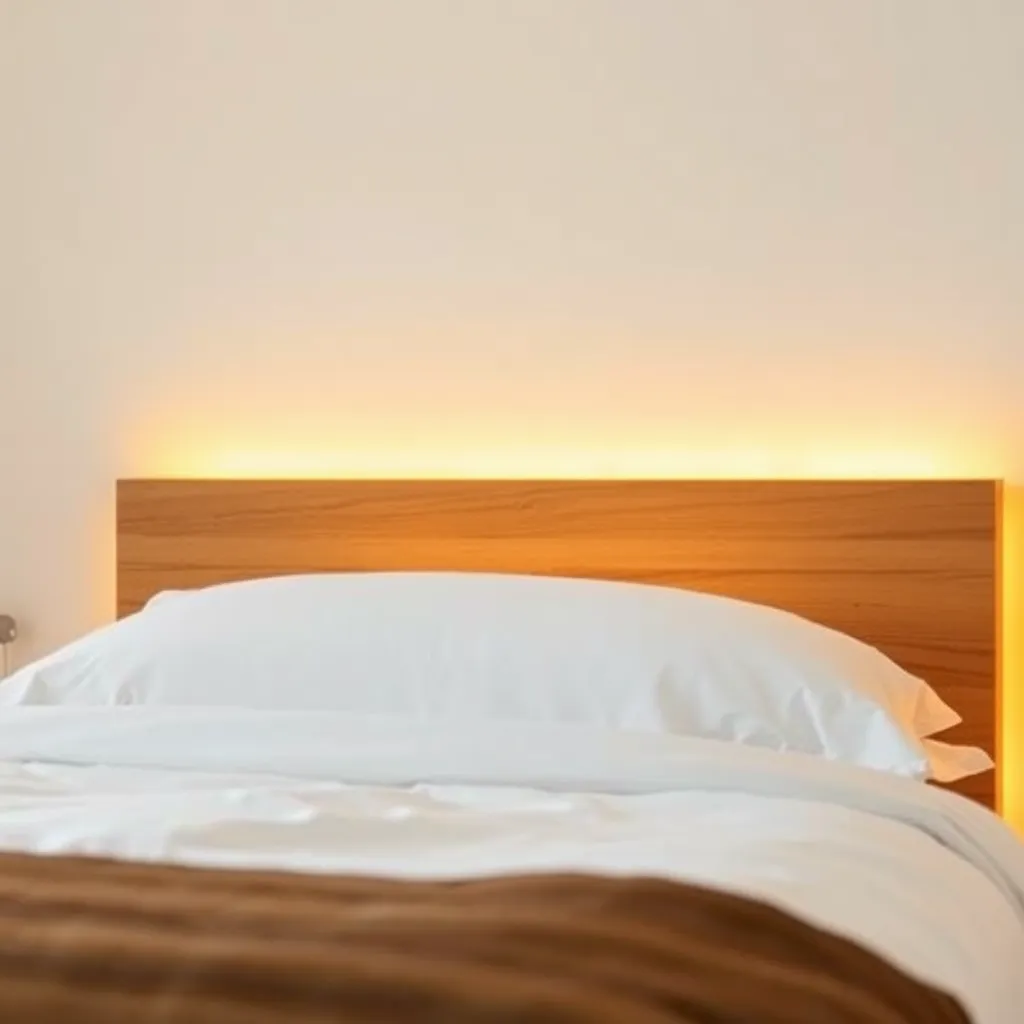
Bare LEDs are a hard point source; real golden hour is soft and wrapping. Never aim a naked strip or bulb straight at the room. Instead, bounce it off a white wall or ceiling, tuck a strip behind a headboard or shelf, throw it through a sheer curtain, or put it behind a fabric lampshade. Diffusion is what turns "orange light" into "glow."
4. Drop it low and to the side
The magic of golden hour comes from the sun sitting low on the horizon, so the light rakes in sideways and casts long, soft shadows. Copy that: put your light at or below eye level - on the floor, a low table, or a windowsill - and off to one side, roughly 45° to your face if you're filming or taking selfies. Overhead light is the opposite of golden hour, so get it down low.
5. Layer at least two sources
One light gives you a flat wash. Use 2 or more: a main "key" light to one side at 40-50%, and a softer, dimmer fill on the other side at maybe 20% to lift the shadows just a little. This depth is what separates a convincing golden-hour room from a single orange bulb.
Doing It With Your Specific Lights
Warm-white dimmable LEDs
Easiest case. Set the color to 2,700K (or 2,200K for a richer sunset), dim to 30-50%, and bounce or shade the light. If your bulbs are a fixed cool white (4,000K+), you can't truly warm them - swap them for warm-white or "dim-to-warm" bulbs that drop in color as you lower the brightness, mimicking a real sunset.
RGB and RGBIC strips
Set a custom color around hex #F1B457 - RGB (241, 180, 87) - for classic golden, or push toward #F97316 (deep sunset orange) for drama. Avoid the strip's preset "orange," which is often too saturated and neon. On RGBIC strips you can run a soft gradient from amber to a touch of pink - #E5793F to #FDCF5A - to mimic the way a real sky shifts. Keep brightness low and diffuse it; cheap strips with weak color rendering look best bounced off a wall rather than seen directly.
Smart bulbs (Hue, Govee, and similar)
Most have a built-in "Sunset," "Golden Hour," or "Candle" scene - start there, then nudge it warmer and dimmer to taste. If you're setting it manually, aim for about 2,200-2,700K at 30-40% brightness. Group 2-3 bulbs at different heights for the layered look from Step 5.
Common Mistakes That Kill the Effect
1. Leaving it too bright
A warm color at 100% still looks like a regular light. Dim first, always.
2. Too much blue or green
Golden hour has almost no blue. If your glow looks white or sickly, pull blue down to near zero and ease off the green until it warms up.
3. Pointing the light straight at the room
Direct, undiffused LEDs read as harsh and artificial. Bounce, frost, or shade every source.
4. Lighting from overhead
Ceiling light flattens everything and casts shadows the wrong way. Golden hour is a low, side angle - keep your sources down at or below eye level.
Where This Looks Best
Bedrooms and lounges - a warm, dim, layered glow makes a space feel calm and cozy.
Selfies, photos, and video - a warm key light at 45° and about face height gives that flattering, skin-softening golden glow with no editing.
Dinners and gatherings - low amber light at 30% sets an instant relaxed mood.
Wind-down routines - warm, dim light in the evening is gentler on your eyes and sleep than bright cool white.
Conclusion
Faking golden hour on LEDs isn't about one magic setting - it's about stacking four small things: a warm color near 2,700K (or RGB around 241, 180, 87), brightness pulled down to 30-50%, light that's softened instead of pointed, and a source kept low and off to one side. Nail those and even a single strip can make a room glow like the last hour of daylight. Start with the cheat-sheet values, then tweak by eye until it feels like 6 p.m. instead of noon - your eyes will tell you the moment it lands.
Frequently Asked Questions
Q1: What color temperature is golden hour?
A: Roughly 2,000-3,500K, with the sweet spot around 2,500-3,000K. For LEDs, 2,700K is an easy default and 2,200K gives a deeper, more sunset-like warmth. For reference, harsh midday light is about 5,500K.
Q2: What RGB or hex makes golden hour on color LEDs?
A: Start with the named golden-hour hex #F1B457 (RGB 241, 180, 87). For a punchier glow on a strip, nudge it to about RGB (255, 150, 50); for a richer, deep-sunset look, push toward #F97316 (RGB 249, 115, 22). Keep blue very low - it's the fastest way to lose the glow.
Q3: Can I get golden hour with cheap RGB strips?
A: Yes, with two tricks. First, dim them to 30-50%. Second, bounce the light off a wall or through fabric rather than viewing the LEDs directly - cheaper strips have weaker color rendering, and diffusion hides that while keeping the warm glow.
Q4: Why does mine look orange and muddy instead of golden?
A: Usually too much saturation, too much brightness, or no diffusion. Back the color off pure orange toward amber (#F1B457), drop brightness to around 40%, and soften the light by bouncing it. Golden hour is a soft glow, not a solid block of orange.