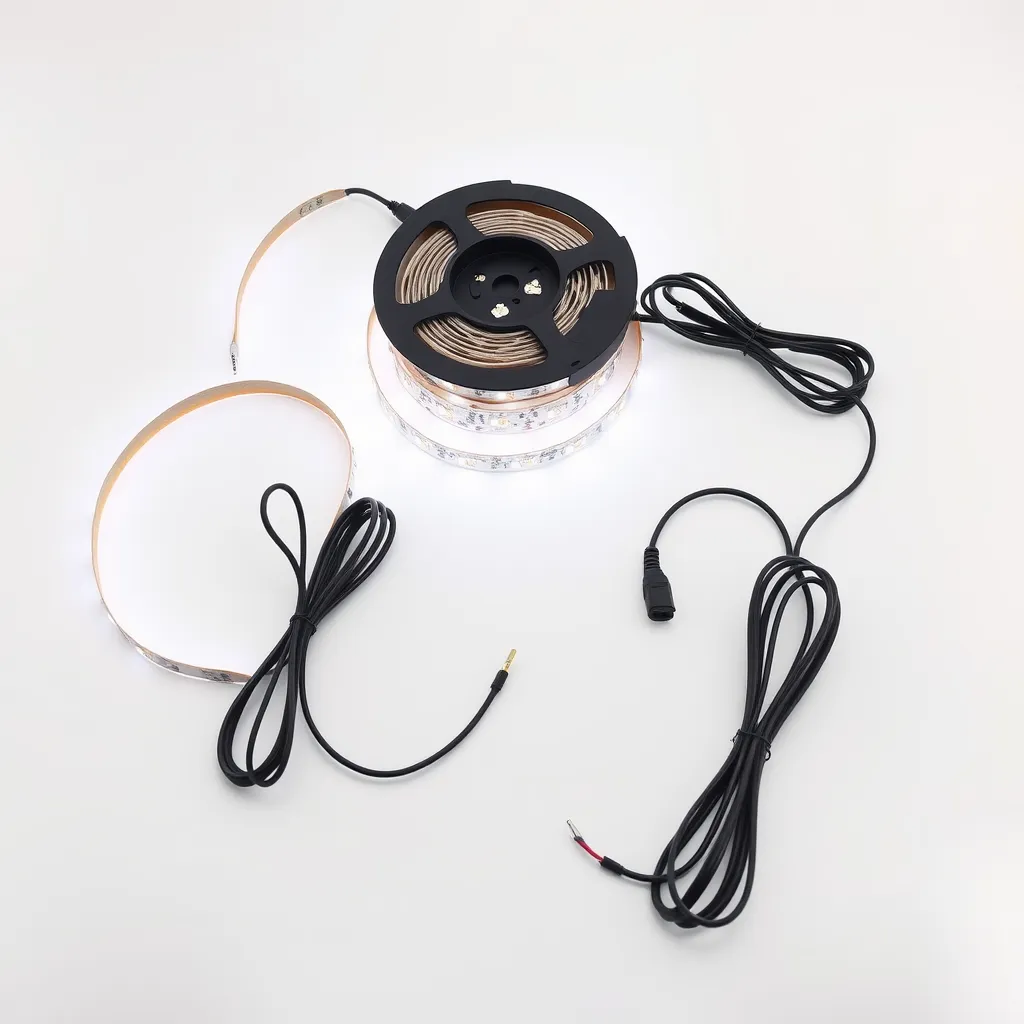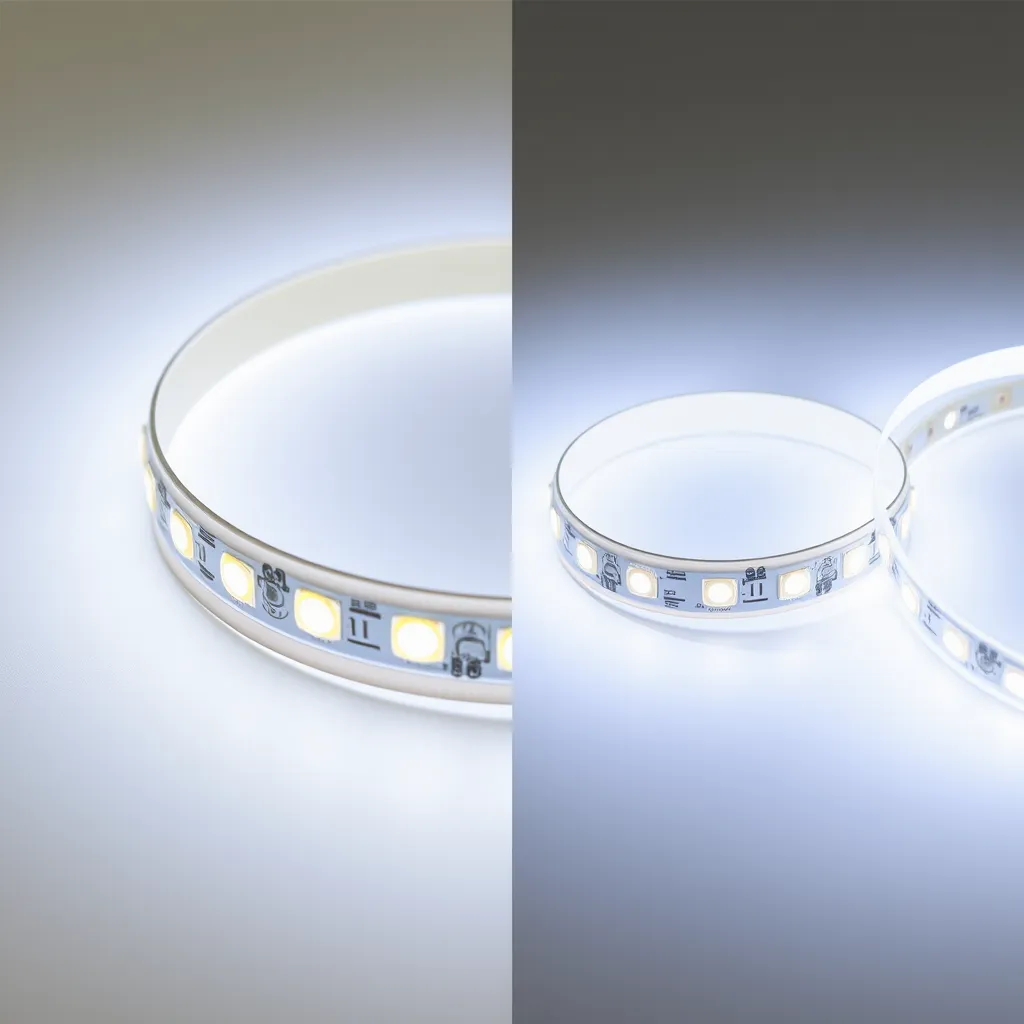
For most short, simple, or automotive projects, 12V LED strips are the easy pick - cheaper, more widely available, and ready to wire straight to a car battery. For long runs, cove lighting, and professional installs, 24V wins, because it suffers far less voltage drop and can run about twice as far before the far end starts dimming. Here's the part that surprises people: both produce the same brightness and the same light quality per meter. The voltage only changes how far and how cleanly you can run them, not how the light looks. This guide walks through the real differences so you can pick the right one without overthinking it.
The one-line difference: a 24V strip wires its LEDs in longer series groups (typically 6 at a time) and draws half the current of a 12V strip for the same brightness. Lower current means less voltage lost along the strip - and that single fact drives almost every tradeoff below.
Quick Comparison
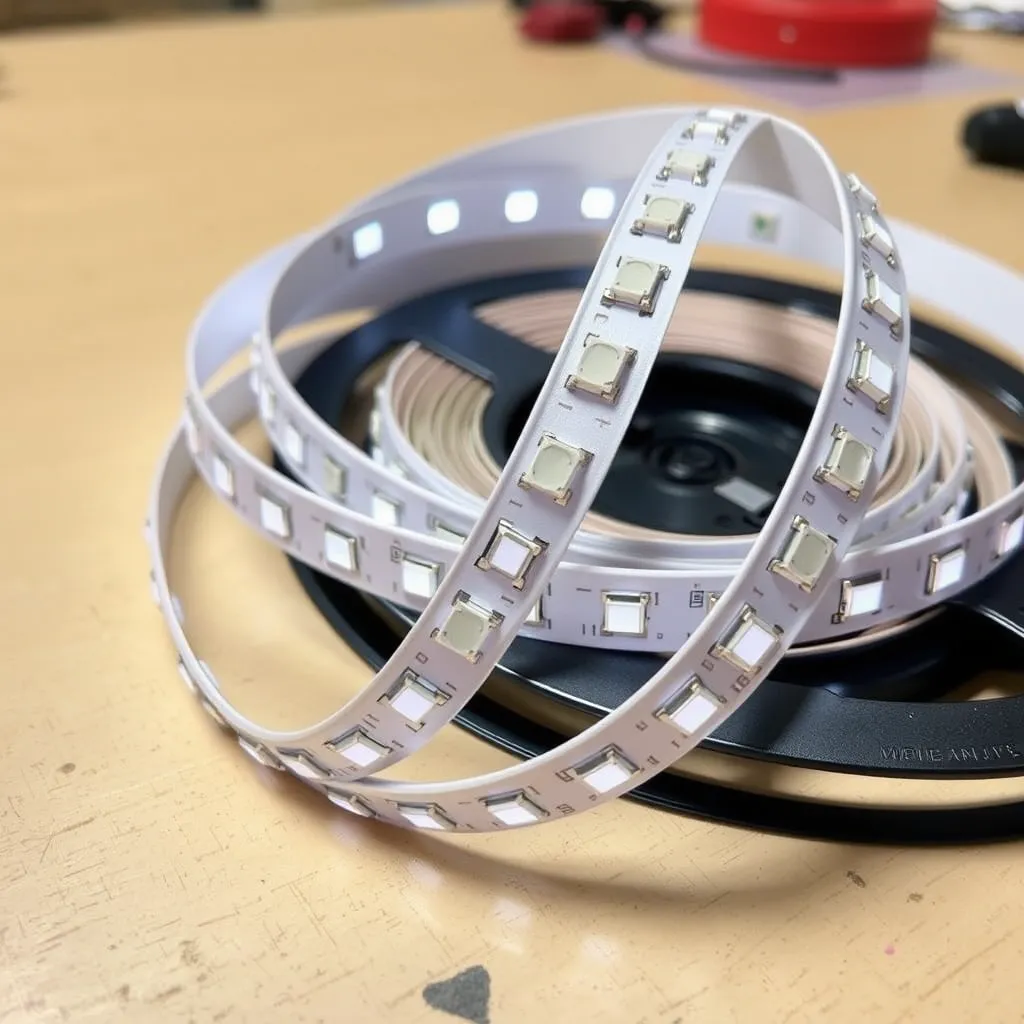
Feature | 12V LED Strip | 24V LED Strip |
|---|---|---|
Voltage drop over 16 ft | ~10% (noticeable dimming) | ~5% (minimal dimming) |
Max single run without injection | 16 ft (5m) | 32 ft (10m) |
Cut point spacing | Every 3 LEDs (~2 inches) | Every 6 LEDs (~4 inches) |
Current draw (same wattage) | Higher (W ÷ 12V) | Lower (W ÷ 24V) |
Wire gauge needed | Thicker (higher amps) | Thinner (lower amps) |
Product variety | Widest selection | Fewer options |
Automotive/marine compatible | Yes (direct from battery) | No (needs a converter) |
Price | Slightly lower | Slightly higher |
Safety | Both SELV (under 60V DC) | Both SELV (under 60V DC) |
Voltage Drop: The One Thing That Decides It

Voltage drop is the gradual loss of voltage along the strip caused by resistance in the copper traces - and it's the single biggest reason to choose one voltage over the other. At 12V, a run of about 16 feet from a single feed point can lose roughly 10% of its voltage by the far end, so the last LEDs get noticeably less than the 12V they want. The result is visible dimming, and on RGB strips a slight color shift, toward the end of the run.
Because a 24V strip pulls half the current for the same brightness, it loses roughly half as much voltage over that same distance - around 5%. And since LED output is very sensitive to voltage, even a 10% drop shows up as a clearly larger drop in apparent brightness, which is exactly what you're trying to avoid. That's why 24V can run to about 32 feet before it needs extra power injected, while 12V taps out around 16 feet.
The Case for 24V (Best for Long, Clean Runs)
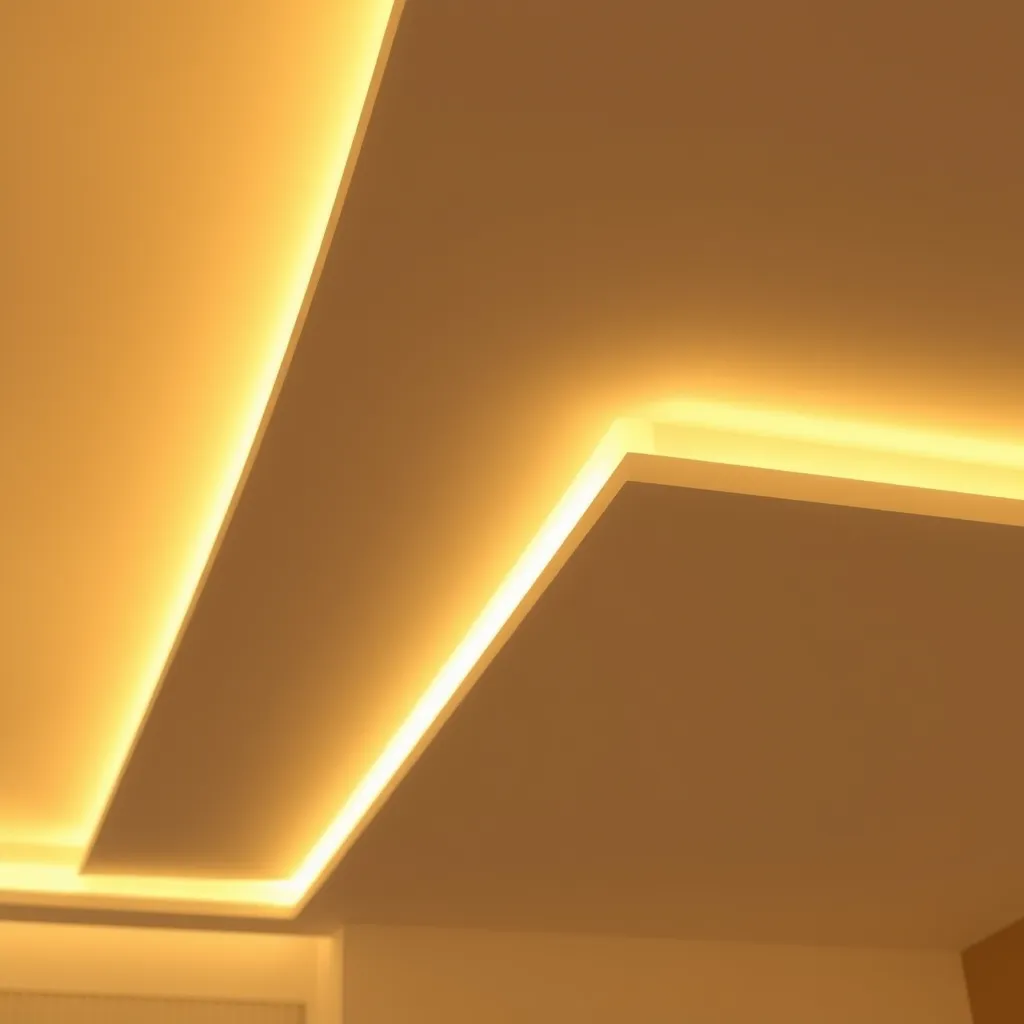
1. Room perimeters and cove lighting
A typical 12 × 12 ft room has a perimeter of about 48 feet. With 24V, you can feed power at two points (opposite corners) and get even brightness the whole way around. A 12V version would need a feed roughly every 16 feet - several more connection points to wire and hide for the same room.
2. Professional and commercial installs
Retail, restaurants, and hotels use 24V almost exclusively. The half-current draw means thinner wire, longer runs, and easier installation, and the small price premium is a rounding error in a commercial budget.
3. High-density and high-power strips
Dense strips (120+ LEDs/m) pull a lot of current. At 12V that demands heavy-gauge wire; at 24V the same strip draws half the current, so standard 18 AWG wire handles most runs comfortably.
The Case for 12V (Where It Still Makes Sense)
1. Automotive and marine
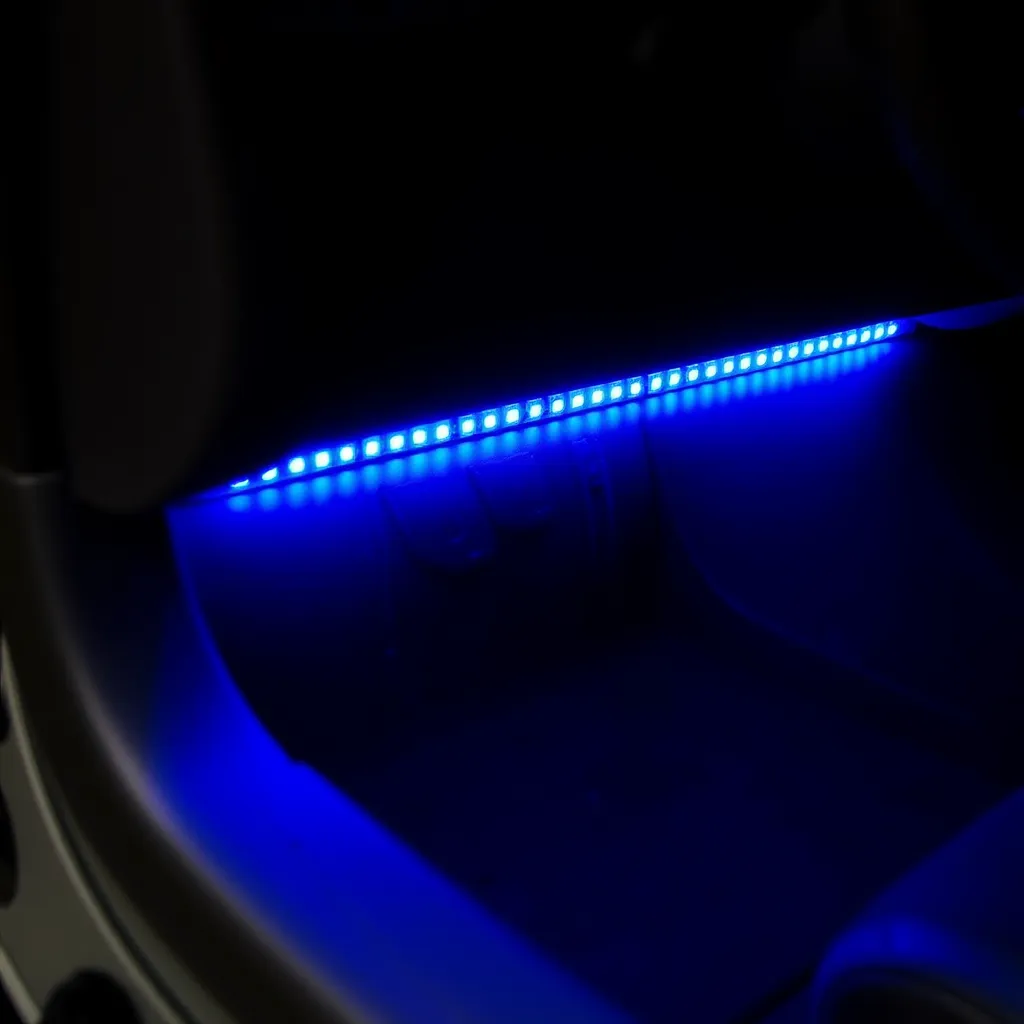
Cars, boats, and RVs run on 12V systems, so a 12V strip wires straight to the battery or accessory circuit with no converter. This is the simplest and most common reason to choose 12V.
2. Short runs under 10 feet
For desk underglow, monitor backlighting, and small accent pieces, voltage drop over a short distance is tiny - which erases 24V's main advantage. 12V works perfectly here.
3. Budget and variety
12V strips and controllers have the widest selection and the lowest prices. Most budget RGBIC strips, music-sync controllers, and plug-and-play kits are 12V.
4. Precise short cuts
12V strips can be cut every 3 LEDs (about every 2 inches / 5cm), versus every 6 LEDs (about 4 inches / 10cm) on 24V. For most installs that gap is irrelevant, but for tight spots - inside narrow shelves or small display cases - the shorter cut interval gives you finer length control.
Can You Mix or Swap Voltages?
No - and this is the one mistake that fries strips. A 12V strip and a 24V strip each need their own matching power supply, controller, and wiring. They can't be connected together, because the voltage mismatch damages the lower-voltage strip. If a single project needs both (say 12V in a vehicle and 24V for a room), run them as two completely separate systems. And never put a 24V supply on a 12V strip - it overvolts the LEDs and burns them out almost instantly.
Who Should Choose What?
Go with 24V if you:
Need a long continuous run - cove lighting, room perimeters, staircases, or anything over about 10 feet.
Are doing a professional or commercial install where clean wiring and few power supplies matter.
Are running high-density or high-power strips and want to keep wire gauge sane.
Go with 12V if you:
Are wiring a car, boat, or RV that already runs on 12V.
Have a short run under 10 feet - a desk, monitor, or small accent.
Want the cheapest option and the widest choice of strips and controllers.
Need very precise short cuts for tight spaces.
Conclusion
There's no universally "better" voltage - there's the right one for your run. Pick 12V for short, automotive, and budget projects where its lower cost, huge product range, and tighter cut spacing shine. Pick 24V for long runs, cove and perimeter lighting, and professional installs, where half the current and far less voltage drop keep the whole strip evenly bright. Since both look identical at the same brightness per meter, you're really just choosing the voltage that fits your distance, your power source, and your budget - so match it once, match it correctly, and the strip will do the rest.
Frequently Asked Questions
Q1: Can I use a 24V power supply on a 12V strip (or vice versa)?
A: No. Putting 24V into a 12V strip overvolts the LEDs and burns them out almost immediately. Going the other way, a 12V supply on a 24V strip won't light it properly - it'll glow dimly or not at all, because there isn't enough voltage to drive the series groups. Always match the supply voltage exactly to the strip's rating.
Q2: Is 24V safer than 12V?
A: Both are equally safe. 12V and 24V are both classed as SELV (Safety Extra Low Voltage), well under the 60V DC hazard threshold, so neither can shock you under normal conditions. Their shared advantage over 120V line voltage is that the wiring doesn't need conduit or strict code compliance and poses no shock risk.
Q3: Can I connect 12V and 24V strips together?
A: No. They must run on separate circuits with their own matching power supplies - they can't be wired in series or parallel, since the mismatch would damage the 12V strip. If you need both voltages in one project, build two fully independent systems with their own supplies, controllers, and wiring.
Q4: Will 24V look brighter than 12V?
A: No. At the same wattage per meter, 12V and 24V strips produce identical brightness and light quality. Voltage affects how far you can run the strip and how much it dims at the far end - not how bright or what color the light is.