COB is a type of LED, not a rival to it. The label "COB vs LED" is really COB vs SMD, the two main ways LED chips are arranged. COB (Chip on Board) packs many chips tightly under one shared phosphor layer for a dense, dot-free light. SMD (Surface Mounted Diode) spaces individual chips out for spread-out lighting like strips and bulbs.
So the real question is not whether COB beats LED, since all COB lights are LED. The catch is that picking the wrong one for the job costs you either money or light quality, and which one wins flips depending on what you are lighting.
COB vs SMD at a Glance:
COB gives intense, uniform, high-CRI light from one point, best for spotlights, downlights, and grow lights. SMD spreads light cheaply across strips, panels, and bulbs. COB costs more and runs hotter. Both last equally long when cooled well.
What Is the Difference Between COB and SMD LEDs?
The difference is chip packaging. Standard SMD LEDs are single chips mounted apart on a circuit board, so you see individual points of light up close.
A COB LED packs many chips close together on one base under a single phosphor layer. That creates a smooth, uniform light source with no visible dots, and a very high output from a small area.
Feature | COB LED | SMD LED |
|---|---|---|
Chip layout | Many chips packed on one base | Single chips spaced on a board |
Appearance | Uniform, no dots | Visible dots up close |
Light per area | Very high, concentrated | Moderate, spread out |
Heat | High, needs a heat sink | Moderate |
Color uniformity | Excellent, one phosphor layer | Good, varies by chip |
CRI | 85 to 97, often high | 70 to 95, varies |
Best for | Spotlights, downlights, grow lights | Strips, panels, bulbs |
Cost | Higher per unit | Lower per unit |
When Should You Choose COB LEDs?
COB wins when you need intense, uniform light from a single point, with accurate color. Its shared phosphor layer and dense chips are built for exactly that.
Spotlights and track lighting. A single point source gives crisp, focused beams that lenses can aim precisely, ideal for accent and display lighting. SMD spotlights look softer and less defined.
High-CRI work. One phosphor layer means consistent color across the whole output, often CRI 90 to 97. That suits photo studios, video, and retail displays where color has to be true.
Grow lights. COB modules deliver high light intensity (PPFD) from a compact source, driving light deeper into plant canopies. Many premium grow brands build COB modules for horticulture.
When Should You Choose SMD LEDs?
SMD wins whenever you need to spread light out, or keep costs down. Its spaced chips are made for even, distributed lighting.
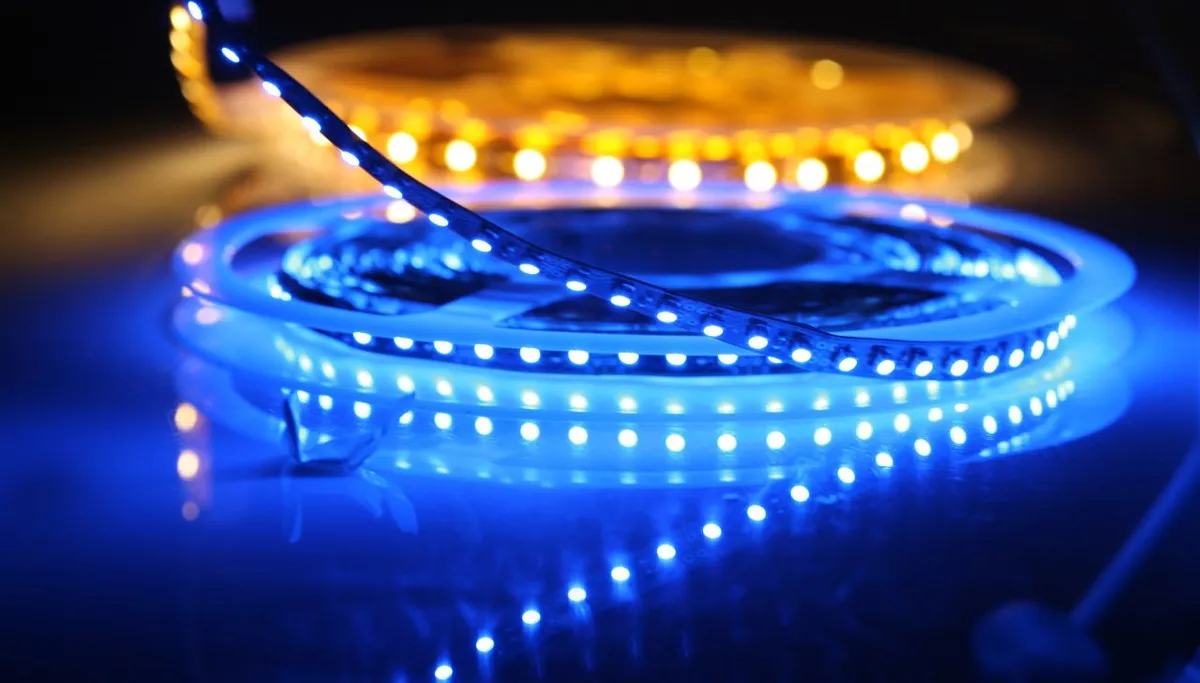
Strip and linear lighting. Individual chips along a flexible board create the LED strips used under cabinets and in cove lighting. COB cannot spread over long lengths the same way, though COB strips are changing that.
General bulbs. Standard bulbs use SMD chips on a small board, so the light spreads evenly in all directions. COB's tight point source suits that job less well.
Budget projects. SMD costs less per lumen for most homes and offices. When you do not need tight beams or top color accuracy, it is excellent value, which is why most bulbs, strips, and panels use it.
What Are COB LED Strip Lights?
COB strips are a newer category worth knowing about. They line up tiny COB chips in a continuous row on a flexible board, so instead of the visible dots of an SMD strip, you get a perfectly smooth, dot-free line of light.
That makes them ideal where the strip itself is on show, like glass shelves, signage, or architectural profiles, where dots would look cheap. COB strips cost about 2 to 3 times more than SMD, but the polished, seamless look is often worth it.
Conclusion:
COB and SMD are both LED, just packaged differently. Choose COB for intense, uniform, high-color light in spotlights, downlights, and grow lights. Choose SMD for spread-out, budget-friendly lighting in strips, panels, and bulbs. Either way, good cooling is what makes the light last.
(FAQs):
Q1. Is COB brighter than a regular LED?
A: Per unit area, yes. One COB module can make 5,000 to 15,000+ lumens from about a square inch, which would take many spaced SMD chips to match. But total brightness depends on how many modules or chips a fixture uses, so a large SMD array can be just as bright overall.
Q2. Do COB LEDs run hotter than SMD?
A: Yes. Packing chips into a small area makes more heat per square inch, so COB modules need a solid aluminum or copper heat sink. Without good cooling they dim and fail faster, which is why COB fixtures are built with heavy heat sinks.
Q3. Which lasts longer, COB or SMD?
A: Both are rated around 25,000 to 50,000+ hours when cooled properly. The deciding factor is heat management, not the chip type. Judge a fixture by its heat sink and thermal rating rather than whether it is COB or SMD.
Q4. Is COB or SMD better for a kitchen under-cabinet strip?
A: For a visible under-cabinet run on a glossy counter, a COB strip looks cleaner since it has no dots. For hidden cove or accent lighting where you never see the strip, SMD does the job for less.