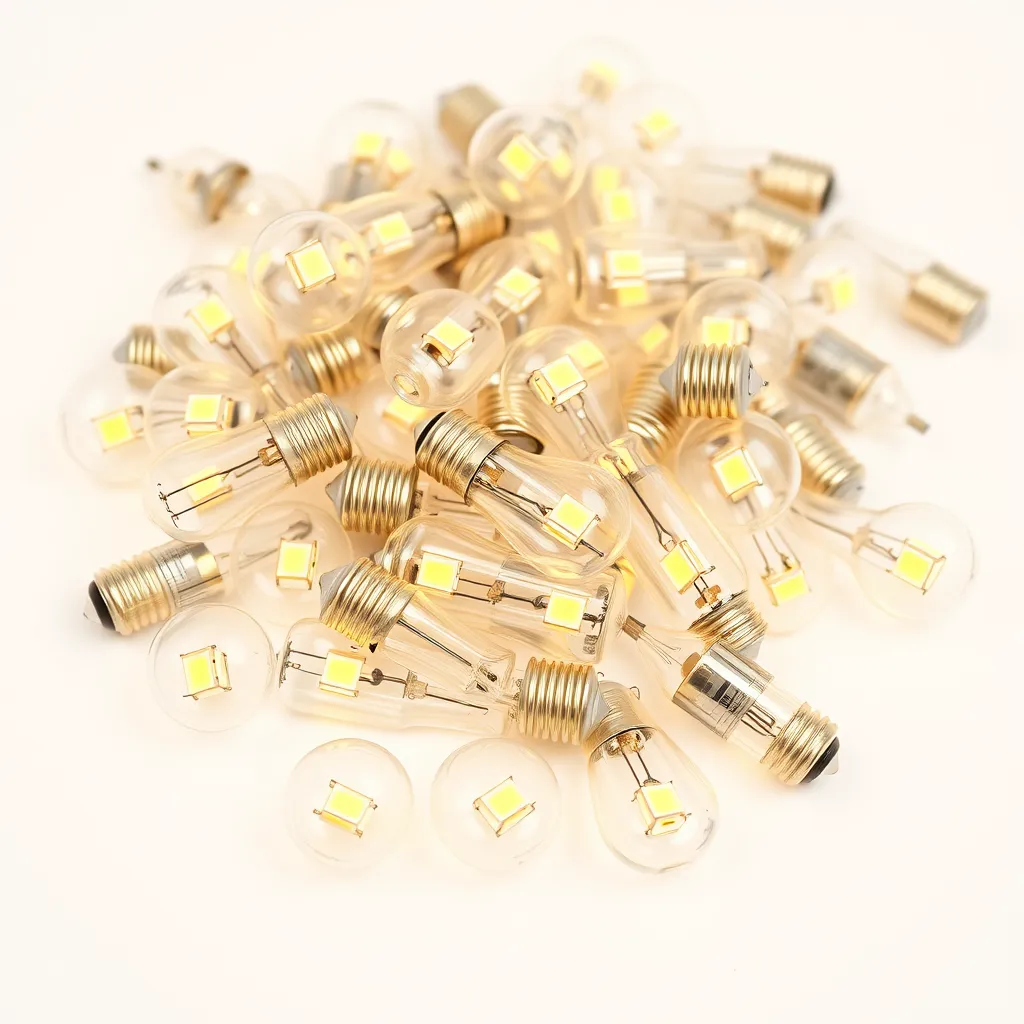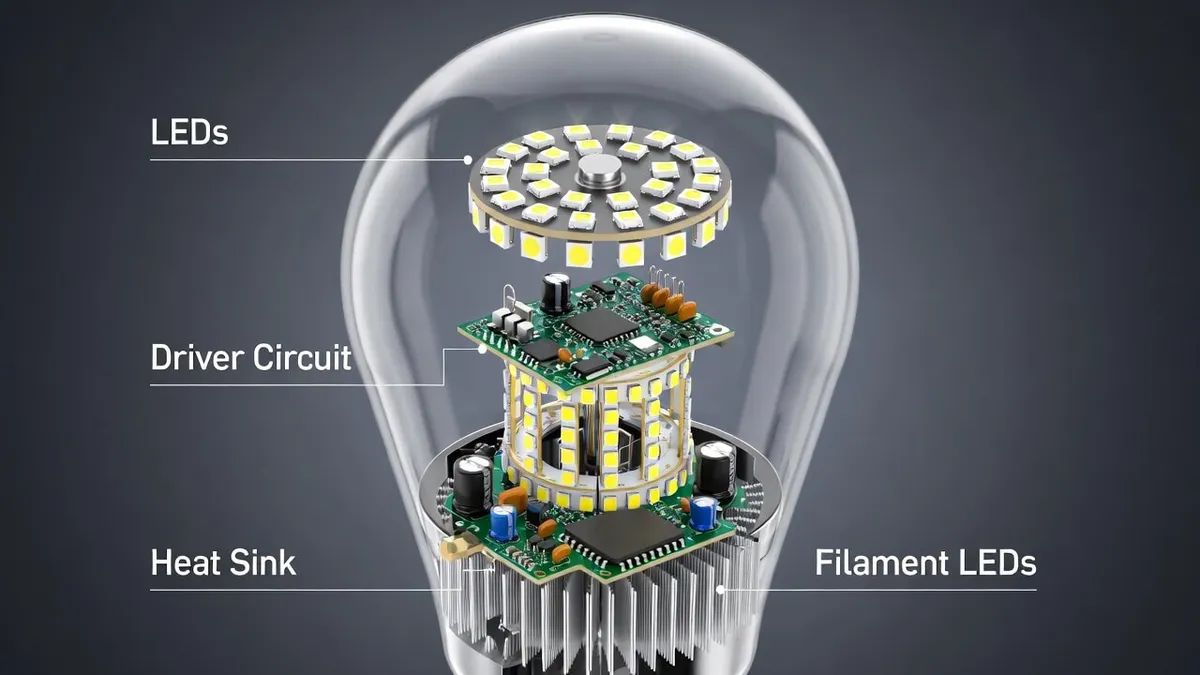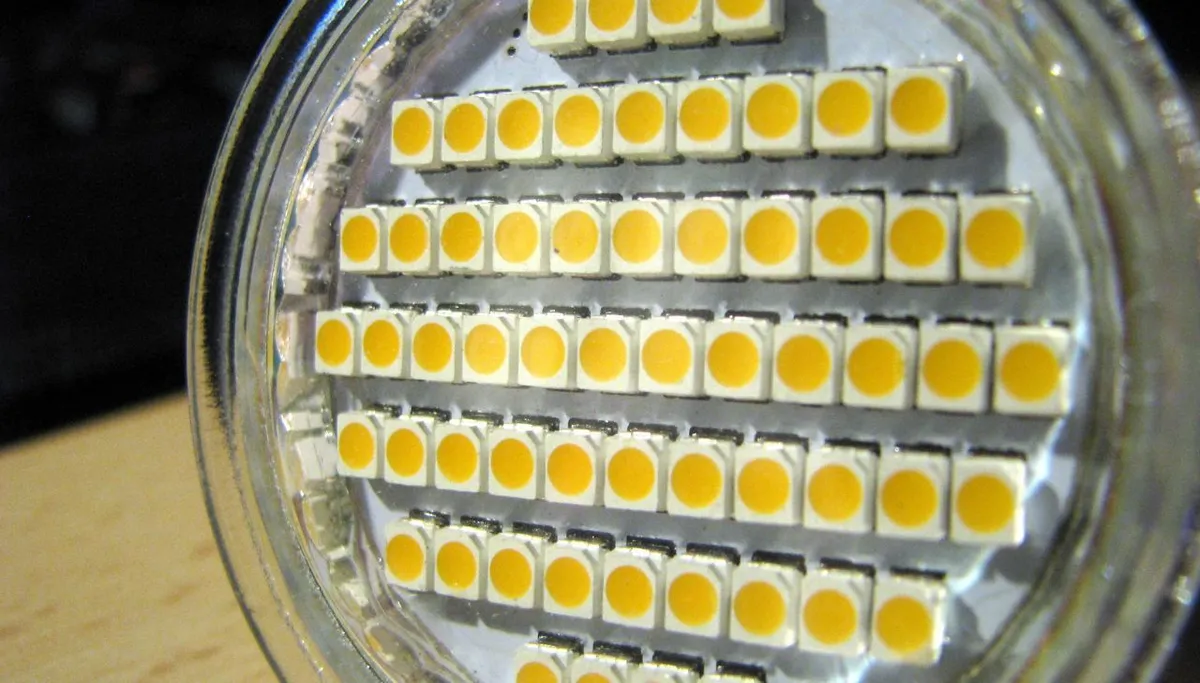
An SMD LED is a light chip soldered flat onto a circuit board, where SMD means surface-mounted device. It is the most common LED type, used in most strip lights, bulbs, and panels. Each chip is named by a four-digit code, like 2835 or 5050, that gives its size in millimeters. But the size only hints at the format - real brightness comes from the chip's power and efficiency, not its dimensions.
What Do SMD LED Numbers Like 2835 and 5050 Mean?
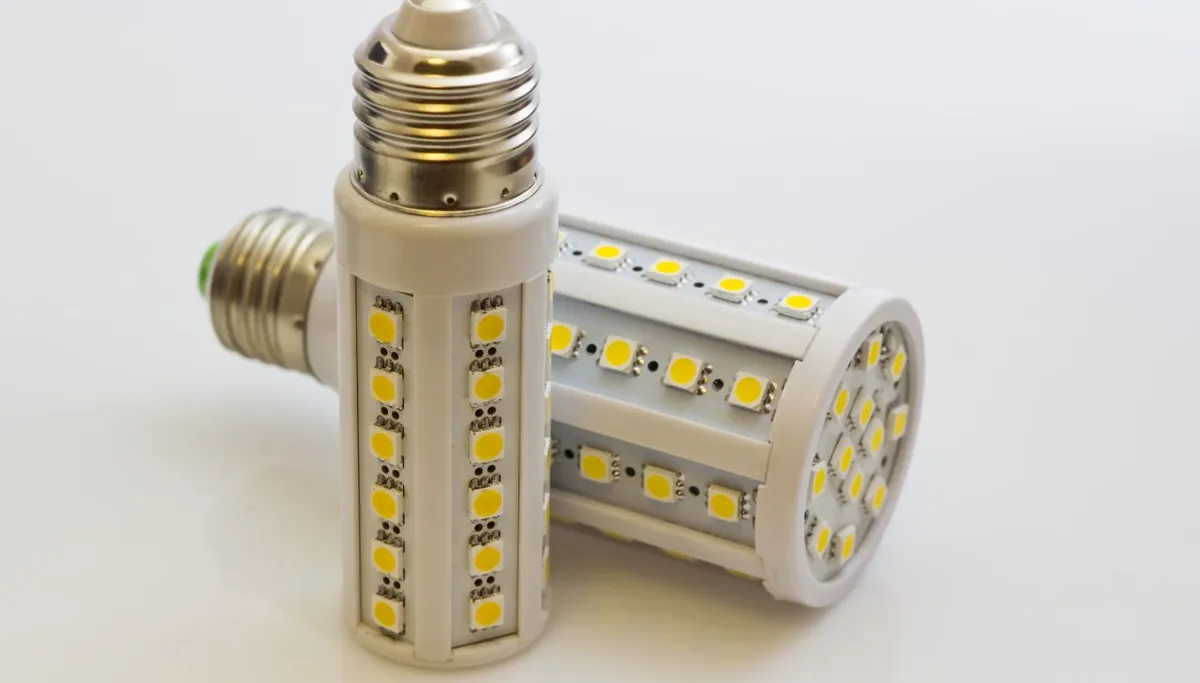
The four digits are the chip's footprint in tenths of a millimeter. A 5050 chip is 5.0mm by 5.0mm, a 2835 is 2.8mm by 3.5mm, and a 3528 is 3.5mm by 2.8mm.
Here is the trap: the size code tells you nothing certain about output. A modern 2835 can be brighter than a larger 5050, because newer chip technology squeezes more light from less space. Always check the lumen and wattage figures, not just the number.
SMD LED Sizes Compared: 3528 vs 2835 vs 5050 vs 5630:
These four cover the vast majority of strips and bulbs you will meet. The figures below are per single chip, from published datasheets.
Chip | Size (mm) | Diodes | Power | Output (typical) | Best Use |
|---|---|---|---|---|---|
3528 | 3.5 x 2.8 | 1 | ~0.1W | 5-8 lm | Accent and decorative light |
2835 | 2.8 x 3.5 | 1 | 0.2-1W | 20-180 lm | Bright, efficient white light |
5050 | 5.0 x 5.0 | 3 | 0.2W | 10-18 lm | RGB color-changing strips |
5630 | 5.6 x 3.0 | 1 | 0.5W | 45-60 lm | High-brightness area light |
Notice the 2835 range is enormous. Budget strips use weak 0.2W versions, while quality strips use 0.5-1W versions that outshine everything else here. Same number, very different light.
SMD 3528: The Accent Chip
The 3528 holds one diode and sips power at around 0.1W. It gives a soft, low-heat glow, which suits cove lighting, display cases, and gentle backlighting rather than lighting a room.
SMD 2835: The Efficiency Winner
The 2835 looks almost identical to a 3528 but uses newer technology to run far more efficiently. A good one produces roughly twice the light of a 3528 for similar power, which is why it now dominates modern white strips and bulbs.
SMD 5050: The RGB Chip
The 5050 packs three diodes, one red, one green, one blue, into a single housing. Mixing their brightness creates millions of colors, so this is the chip behind almost every RGB and color-changing strip.
SMD 5630: The Bright One
The 5630 is a single high-output diode built for brightness and heat spreading. Its wide, flat body helps it shed heat, making it a fit for larger jobs like garages, task areas, and commercial strips.
Does a Bigger SMD Chip Mean Brighter Light?
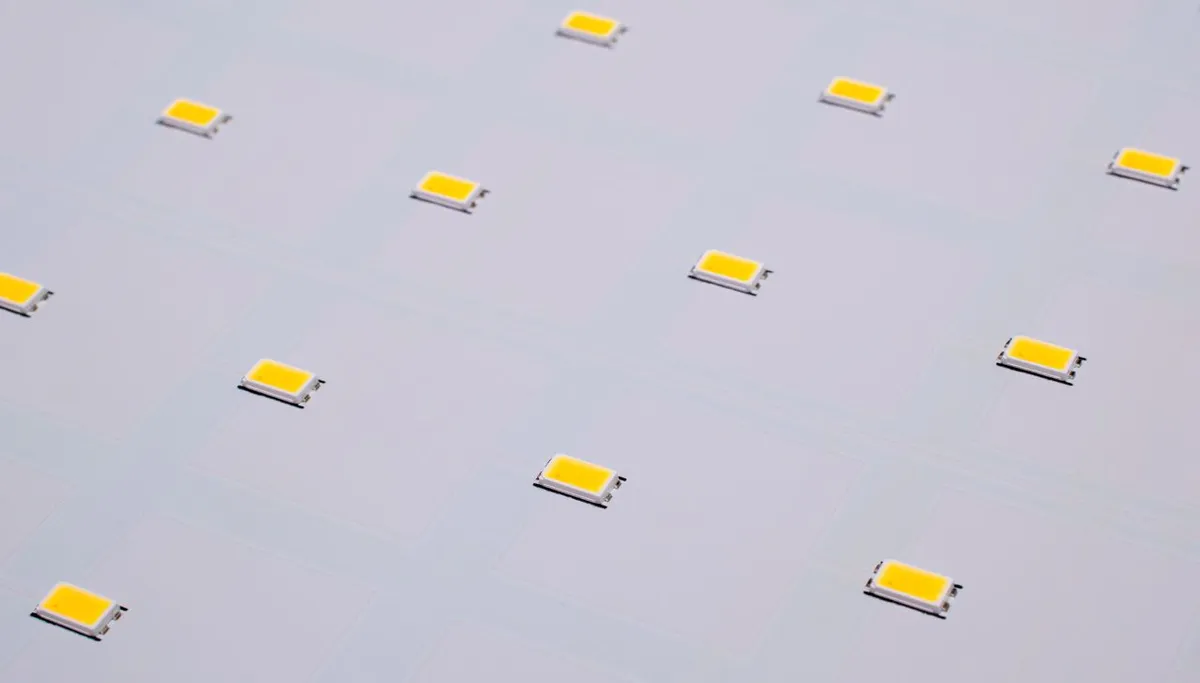
Not on its own. It is a common myth that a higher number always means more light, but the 2835 disproves it by often beating the larger 5050 on lumens per watt.
What actually sets brightness: the chip's drive current, its wattage, and its efficiency grade - not the size code. Two strips both labeled "5050" can differ by a factor of three in real output.
This is exactly why cheap and premium strips can share the same chip name yet look nothing alike. Judge the lumens-per-meter and wattage on the spec sheet.
SMD vs COB LED: What Is the Difference?
COB, or chip on board, is the main rival to SMD, and you can spot the difference instantly. SMD spaces separate chips with small gaps, so a strip shows individual points of light. COB packs many tiny chips under one phosphor coating, giving a smooth, dotless line.
Each wins somewhere. SMD is cheaper, runs cooler by spreading heat across the board, and comes in RGB. COB looks seamless and dense but concentrates heat in a small area. For the full comparison, see our guide on what a COB LED light is.
How to Choose the Right SMD LED
Match the chip to the job rather than chasing the biggest number:
For color-changing light: choose 5050 (RGB), since only the multi-diode chips mix colors.
For bright, efficient white: choose a high-power 2835, the best lumens per watt here.
For soft accent light: a 3528 is cheap and cool-running for coves and displays.
For maximum brightness: a 5630 pushes the most light for large or task areas.
Always check the spec sheet: compare lumens per meter, wattage, and LED count, not just the size code.
Ready to compare real strips by chip type? See our roundup of the best LED strip lights, or learn how output is measured in our guide to warm vs cool LED lights.
Frequently Asked Questions
Q1. Which SMD LED is the brightest?
A: Among common chips, a high-power 5630 or a premium 2835 produces the most usable light. The 2835 usually wins on efficiency, giving the most lumens per watt, while the 5630 pushes raw brightness for large areas.
Q2. Is SMD 5050 or 2835 better?
A: It depends on the goal. 5050 is better for RGB color because it holds three diodes. 2835 is better for bright, efficient white light and usually gives more lumens per watt, so it is the stronger pick for everyday lighting.
Q3. What does the number on an SMD LED mean?
A: It is the chip's size in tenths of a millimeter. A 2835 measures 2.8mm by 3.5mm and a 5050 measures 5.0mm by 5.0mm. The code gives dimensions only, not a guaranteed brightness.
Q4. How many lumens does one SMD LED produce?
A: It varies widely by chip and grade. A tiny 3528 gives around 5-8 lumens, while a high-power 2835 can reach 180 lumens. That is why the strip's total lumens-per-meter figure matters more than any single chip.