LED Christmas tree lights are rated for 50,000 to 75,000 hours, which at 300 hours a season works out to 165 to 250 holidays. In real life they last 7 to 15 seasons, still two to five times longer than incandescent strings, which manage 3 to 5.
So why the huge gap between 165 seasons and 15? Because the part that gives out is almost never the LED. Something else on the string wears out first, and once you know what, you can double how long your lights survive.
Why the Rating and Reality Are So Far Apart:
The 50,000-hour rating is for the LED chip alone, tested in a lab with steady power and no stress. Your lights live outdoors in freezing rain, get wound around branches, and sit crushed in a bin for eleven months. The chip outlives all of it. The wiring around it does not.
It's Never the LED Chip That Dies First:
This is the key to the whole question. The semiconductor chip keeps making light for decades, so when a string fails, look at everything except the LED.
Cracked wire insulation. UV and temperature swings make the PVC brittle, then it splits and lets moisture in.
Corroded sockets. Outdoor damp and condensation build high-resistance contacts, causing flicker and dead sections.
Worn connectors. Repeated plugging and unplugging bends and flattens the prongs.
Broken wires. Sharp bends around branches and tangling in storage snap the thin conductors.
Every one of these is a wiring or hardware failure, not a chip failure, which is why a "dead" string usually has plenty of working LEDs still on it.
How Much Does Outdoor Use Cut Their Life?
Outdoor exposure is the single biggest factor, and it roughly halves lifespan. Strings used only outside last about 5 to 10 seasons, while indoor-only strings routinely pass 15.
The reason is stress the chip never feels. UV bakes the insulation brittle, the freeze-to-warm cycle micro-fractures solder joints, and rain and snow corrode the sockets and pins. Indoors, none of that happens, so the same string lasts far longer.
Where Used | Typical Life |
|---|---|
Indoor only | 15+ seasons |
Outdoor, budget string | 5 to 8 seasons |
Outdoor, premium string | 10 to 15 seasons |
The Surprise: Storage Kills More Strings Than Use:
Here is the part most people get wrong. More strings die in the bin than on the tree. Eleven months of bad storage does more damage than the few weeks they are lit.
Winding lights tight around cardboard deforms the wire for good. Cramming them into packed boxes strains connectors. And a non-climate-controlled attic that hits 120 to 150°F [49 to 66°C] in summer cooks the insulation all year. Loose coiling in a cool indoor closet avoids all three.
How Do You Make LED Christmas Lights Last Longer?
A few habits stretch a string from single digits into the teens of seasons:
Store loose and cool. Coil gently around a reel, keep them in a cool, dry indoor spot, and drop in a silica gel packet for moisture.
Install gently. Use light clips, never staples through the wire, and avoid sharp bends tighter than a 1-inch radius.
Protect the plugs. Outdoors, tuck connections under eaves or into a weatherproof box.
Do not overload the chain. Stay under the maker's max end-to-end count (usually 40 to 90 strings) to avoid voltage stress.
Test before you hang. Run each string 10 to 15 minutes and look for dim, flickering, or dark sections.
When a string does show cracked insulation or corrosion, replace it rather than fight it. A new string costs $5 to $15, and our guide on how to fix LED Christmas lights covers what is worth repairing first.
Do LED Christmas Lights Really Outlast Incandescent?
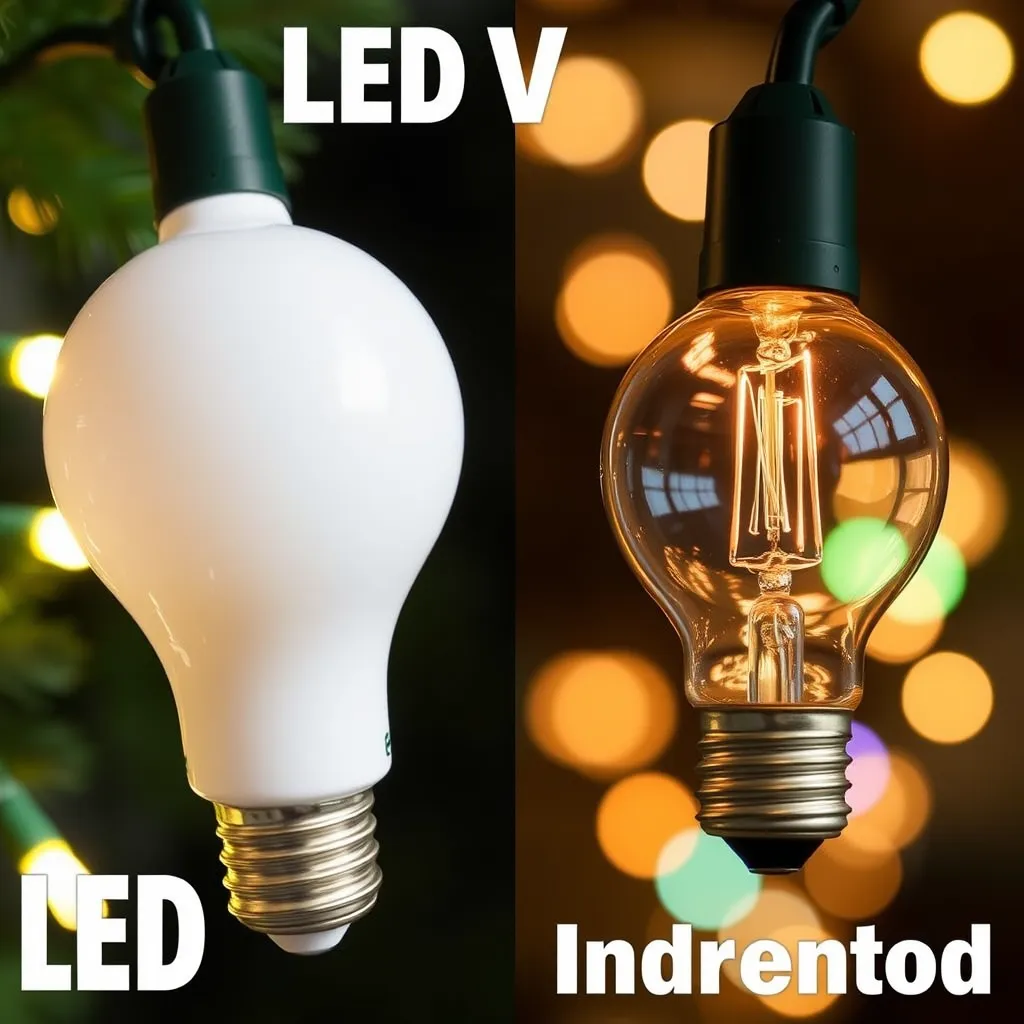
By a wide margin. Incandescent strings are rated for just 2,000 to 3,000 hours, and in practice fail in 3 to 5 seasons as glass bulbs break, filaments burn out, and their higher current corrodes contacts faster.
LED strings last at least 2 times and usually 3 to 5 times longer in the same conditions, on top of using far less power. For the full trade-off, see our comparison of LED vs traditional Christmas tree lights, and for lifespan across every LED type, how long LED lights last.
Conclusion:
LED Christmas lights are rated for over 160 seasons but really last 7 to 15, and the LED is almost never why. Wiring, sockets, connectors, and bad storage are what wear out. Store them loose and cool, install them gently, and you will get years more from every string.
(FAQs):
Q1. Do LED Christmas lights dim over time?
A: Yes, but so slowly you will never see it. At 50,000 hours the chips still make 70% of their original light, which at holiday use is over 160 seasons away. Any dimming you notice is dirty lenses, corroded contacts, or too many strings chained together.
Q2. When should you replace LED Christmas lights?
A: When you see multiple dead sections, brittle or cracked insulation, green or white corrosion on prongs, or sockets that no longer grip bulbs. Any of these means the string is done, even if parts still light. Budget replacement every 8 to 12 seasons outdoors, 12 to 20 indoors.
Q3. Are pricier LED Christmas lights worth it?
A: Usually, especially outdoors. Premium strings ($10 to $20) use thicker insulation, sealed sockets, and UV-stable materials that last 10 to 15 outdoor seasons against 5 to 8 for budget ones. They also hold color better.
Q4. Can you leave LED Christmas lights up all year?
A: You can, but leaving them outdoors year-round speeds up UV and moisture damage, so they fade faster. If you like permanent lights, buy strings rated for permanent outdoor use, which have tougher insulation built for constant exposure.